Inspiring Wishes

Mindful living, relationships, and spirituality

  • Home
  • Life Events
  • Spirituality
  • Lifestyle

7 Signs of a Toxic Family Dynamic

September 3, 2026 · Mind & Body

7 Signs of a Toxic Family Dynamic

Recognizing the warning signs of family dysfunction allows you to assess your relationships with objective clarity. The following seven patterns highlight systemic relational problems rather than ordinary, temporary disagreements.

Review each pattern with self-compassion. Each sign includes an actionable practice to help you restore balance and self-respect in your daily routine.

1. Chronic Boundary Violations

Unhealthy families often treat personal boundaries as acts of betrayal or hostility. Family members may drop by uninvited, demand access to your private finances, or share your confidential stories.

In these systems, independence threatens the collective control of the group. Relatives may mock your privacy or insist that family members should never keep personal secrets.

Healthy relationships always adapt when someone requests space or privacy. Chronic violators ignore your polite requests and continue to overstep your clear limits.

Actionable Practice: Use a clear and direct boundary statement during your next interaction. Say calmly: I am not available to discuss this topic, so let us talk about something else.

Observe your internal emotional state after you speak. Notice that stating your limit requires no justification, debate, or apology.

2. Emotional Triangulation and Whispering

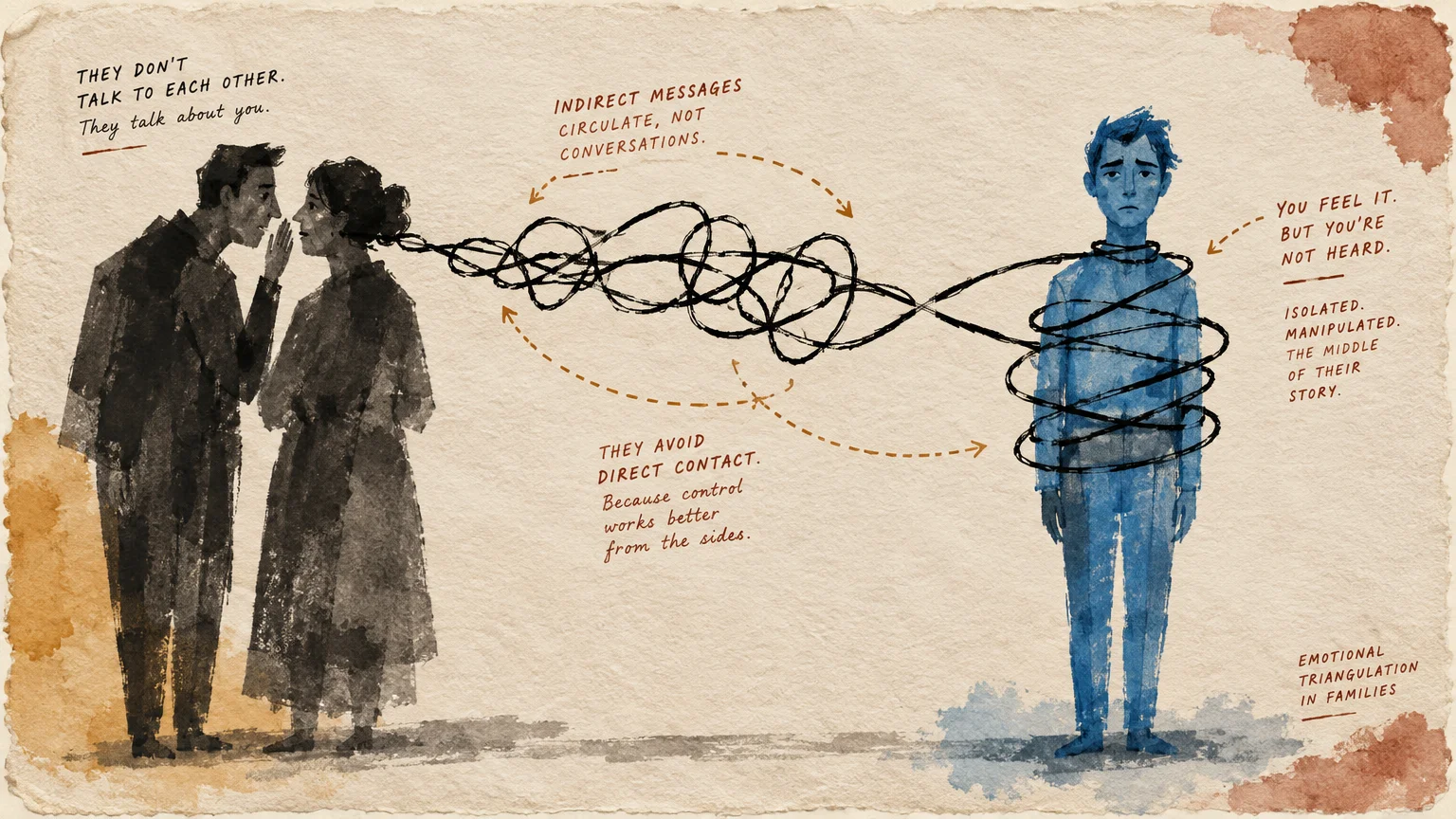
Triangulation occurs when two family members resolve their conflict through a third person. Instead of speaking directly to you, an upset relative complains to a sibling or parent.

This tactic breeds suspicion, rivalry, and isolation within the wider family network. It allows the original instigator to control the narrative while avoiding direct personal vulnerability.

Over decades, triangulation creates deep rifts among siblings and extended relatives. You may find yourself mediating conflicts that have nothing to do with you.

Actionable Practice: Institute the direct communication rule in your personal life. When a relative complains to you about another family member, decline to participate.

Respond with steady neutrality: That sounds important, so please discuss it directly with them. This brief response halts gossip and removes you from the middle of their conflict.

3. Persistent Gaslighting and Reality Denial

Gaslighting is a pattern of psychological manipulation that causes you to doubt your own sanity, judgment, or memories. A relative may flatly deny events that clearly occurred.

Common phrases include claims that you are overly sensitive or that you remember things wrong. These comments destabilize your confidence and make you dependent on their version of reality.

Over time, chronic denial erodes your trust in your own intuition. You might catch yourself constantly replaying past conversations to verify your own perception.

Actionable Practice: Keep a private reality anchor notebook in a secure location. Record factual notes about stressful interactions immediately after they occur.

Write down what was said without emotional embellishment. Reviewing these notes reinforces your trust in your own senses when someone attempts to rewrite the truth.

4. Conditional Approval and Shifting Standards

In unhealthy households, love and acceptance depend entirely on your compliance with family expectations. Approval vanishes the moment you express an independent opinion or make an unconventional lifestyle choice.

The standards for acceptance also change without warning. Whatever achievement you offer never feels entirely sufficient to earn lasting warmth from the family leaders.

This dynamic keeps you in a state of performance anxiety. You might work endlessly to please relatives who refuse to acknowledge your true value.

Actionable Practice: Conduct a self-validation check-in at the end of each day. Place your hand over your heart and take three slow, steady breaths.

State aloud: My worth exists independent of other people’s approval. This short ritual trains your mind to generate internal validation rather than chasing external praise.

5. Rigid Scapegoating and Golden Child Roles

Many dysfunctional systems assign rigid roles to preserve the family hierarchy. One person becomes the scapegoat, absorbing the blame for every domestic problem and emotional outburst.

Another relative receives the golden child label. This individual can do no wrong and receives constant praise, which creates quiet resentment among siblings.

These roles prevent genuine intimacy between relatives. Both roles are unfair, because neither role allows the person to exist as an authentic, flawed human being.

Actionable Practice: Write a role release statement on a piece of paper. You might write: I release the burden of being the family problem, and I claim my genuine self.

Fold the paper, sit quietly for two minutes, and discard it safely. This simple symbolic act separates your authentic identity from your assigned family role.

6. Chronic Blame Shifting and Missing Remorse

Accountability cannot survive in an emotionally harmful environment. When a destructive event occurs, family leaders immediately shift the responsibility onto someone else.

You will rarely hear a genuine apology that acknowledges harm and offers restitution. Instead, you hear defensive statements that blame your reaction rather than the initial offensive behavior.

This pattern forces victims to carry the emotional fallout of another person’s misconduct. It leaves relationships stagnant because genuine reconciliation requires honest accountability.

Actionable Practice: Use the neutral pause technique during heated family moments. When someone blames you for their behavior, count backward from five in your mind.

Do not defend yourself or offer an explanation. Simply state: I see you view it that way, and leave the room to protect your calm state.

7. Control Through Guilt, Obligation, and Finances

Unhealthy relatives often treat gifts, favors, and inheritances as tools for leverage. Financial generosity arrives with unspoken strings and expectations of total loyalty.

Guilt serves as the preferred emotional currency. Relatives remind you of past sacrifices to coerce your attendance at events or your agreement with their demands.

This dynamic infantilizes adult children and robs mature adults of their independence. You deserve relationships based on genuine affection rather than manufactured obligation.

Actionable Practice: Complete an autonomy inventory for your current living situation. List every area where a relative provides financial or logistical support.

Identify one small area where you can assume full financial or practical independence this month. Reducing practical dependence directly decreases their leverage over your personal decisions.

Pages: 1 2 3 4 5 6 7

Share this article

Facebook Twitter Pinterest LinkedIn Email

Leave a Reply Cancel reply

You must be logged in to post a comment.

Search

Latest Posts

  • A man sits alone on wooden back porch steps holding a mug while a family eats dinner inside. 7 Signs of a Toxic Family Dynamic
  • An editorial watercolor illustration of a person walking along a winding meadow path toward a warm golden sunset. 7 Signs You're Building the Life You Actually Want
  • A warm mixed-media collage of a human silhouette with a glowing gold heart, surrounded by pressed eucalyptus leaves on textured paper. 8 Signs Your Intuition Is Trying to Tell You Something
  • An elegant watercolor illustration of an open hand releasing paper origami cranes that dissolve into soft, colorful washes of ink. 9 Signs You're Finally Letting Go of Control
  • An illustration of a person in a cozy sweater sitting on a window seat, holding a warm mug as soft sunlight streams into the room. 7 Signs You're Living With More Gratitude Than You Realize
  • A mixed-media paper collage of a human profile with a gold-mended tear down the center, symbolizing healing and self-forgiveness. 8 Signs You've Finally Forgiven Yourself
  • 9 Signs a Past Relationship Came Back Into Your Life for a Reason 9 Signs a Past Relationship Came Back Into Your Life for a Reason
  • Watercolor illustration of a person's silhouette filled with cool silver flowers on one side and warm gold flowers on the other. 10 Signs You're Ready to Date Again After Losing a Spouse
  • An ink and watercolor illustration showing a golden line drawn on a table, separating a bowl of golden eggs from a stack of bills. 10 Boundaries Retirees Should Set With Adult Children Financially
  • 7 Signs You’re Searching for a Sign From Someone Who Died 7 Signs You're Searching for a Sign From Someone Who Died

Newsletter

Get the latest posts delivered to your inbox.

Related Articles

dreams

6 Hidden Reasons Why You Can’t Remember Your Dreams

But really now, why do we dream? First things first. Who dreams? Do we all…

Read More →
spirit

What’s The Deal With Spirit Animals? 8 Facts Explained

How Do You Find Your Spirit Animal? Keep an eye out for the animal or…

Read More →
rainy-days

Rainy Days Make You Sad? Here Are 9 Instant Ways To Feel Better

If it starts raining and your mood goes down the drain, you’re not the only…

Read More →
Watercolor illustration of a person reading peacefully inside a glowing glass dome that shields them from external noise.

8 Common Stereotypes About Introverts That Aren’t True

Discover the truth behind 8 common stereotypes about introverts, grounded in science, with practical steps…

Read More →

10 Things That Affect Your Personality

Physique The term “physique” doesn’t refer to the physical body, but it’s actually about the…

Read More →
An editorial watercolor illustration of an older adult walking along a pathway supported by a glowing bridge of floating memory fragments.

Psychologists Say Nostalgia May Be a Powerful Tool Against Loneliness

Discover how the psychology of nostalgia acts as a powerful tool against loneliness in retirement…

Read More →
A mixed-media collage of a silhouette carrying a heavy, layered bundle of old maps, letters, and red thread on a cream background.

8 Signs You’re Carrying Too Much Emotional Baggage

Discover eight gentle signs you are carrying too much emotional baggage and explore practical ways…

Read More →
A peaceful watercolor illustration of a person sitting on a bench under a willow tree by a calm pond, evoking inner peace.

9 Signs You’re Exactly Where You’re Supposed to Be Right Now

Discover 9 gentle signs you are exactly where you are supposed to be, backed by…

Read More →
energy

Sacred Self-Care: Mystical Rituals to Balance Your Energy

In the dynamic of modern life, we find ourselves pulled in many directions, easily caught…

Read More →

Inspiring Wishes

Mindful living, relationships, and spirituality

Inedit Agency S.R.L.
Bucharest, Romania

contact@inspiringwishes.com

Explore

  • Subscribe
  • Unsubscribe
  • Privacy policy
  • Terms & Conditions
  • Request To Know
  • Request To Delete
  • CA Privacy Policy
  • Contact

Categories

  • Lifestyle
  • Spirituality
  • Life Events
  • Mind & Body

© 2026 Inspiring Wishes. All rights reserved.