Recognizing indirect hostility helps you protect your emotional peace and set healthy boundaries. Learning these subtle cues gives you clarity when words and actions do not match.
Many people struggle with hidden tension in long-term relationships, family ties, or work environments. Unspoken resentment can leave you feeling confused, drained, and uncertain of your footing.
This guide explains nine clear signs of passive aggression to help you respond with calm wisdom. You will discover practical ways to protect your well-being without escalating conflict.

Understanding Passive-Aggressive Behavior
Passive-aggressive behavior occurs when someone expresses negative feelings indirectly rather than openly. The person hides genuine anger behind agreeable words, compliance, or cold silence.
This dynamic often creates confusion for the person on the receiving end. You sense the underlying hostility, yet the speaker denies that anything is wrong.
Psychiatrists first recorded this behavioral pattern during the Second World War. Clinical staff used the phrase to describe soldiers who resisted daily military duties through intentional stalling.
Over subsequent decades, therapists realized that this communication pattern affects homes, workplaces, and spiritual communities. It reflects an ongoing difficulty with handling conflict honestly.
Many people develop this communication style during childhood. Growing up in homes where honest anger was punished teaches children that direct honesty is dangerous.
As adults, they continue using indirect resistance to defend themselves. They try to express resentment without risking open disagreement or emotional rejection.
Our minds often rely on confirmation bias when interpreting human behavior. Confirmation bias means we notice evidence that confirms our existing beliefs while overlooking alternative explanations.
For example, you might assume every late reply from a friend indicates hidden hostility. Sometimes, however, delayed communication simply stems from fatigue or unexpected life stress.
True passive aggression involves a repeated pattern across various situations. Looking for ongoing consistency prevents you from jumping to premature conclusions.
Examining clear passive aggressive examples helps you spot indirect hostility in daily conversations. You can then respond with calm intention rather than confusion.
Why People Mask Their Anger
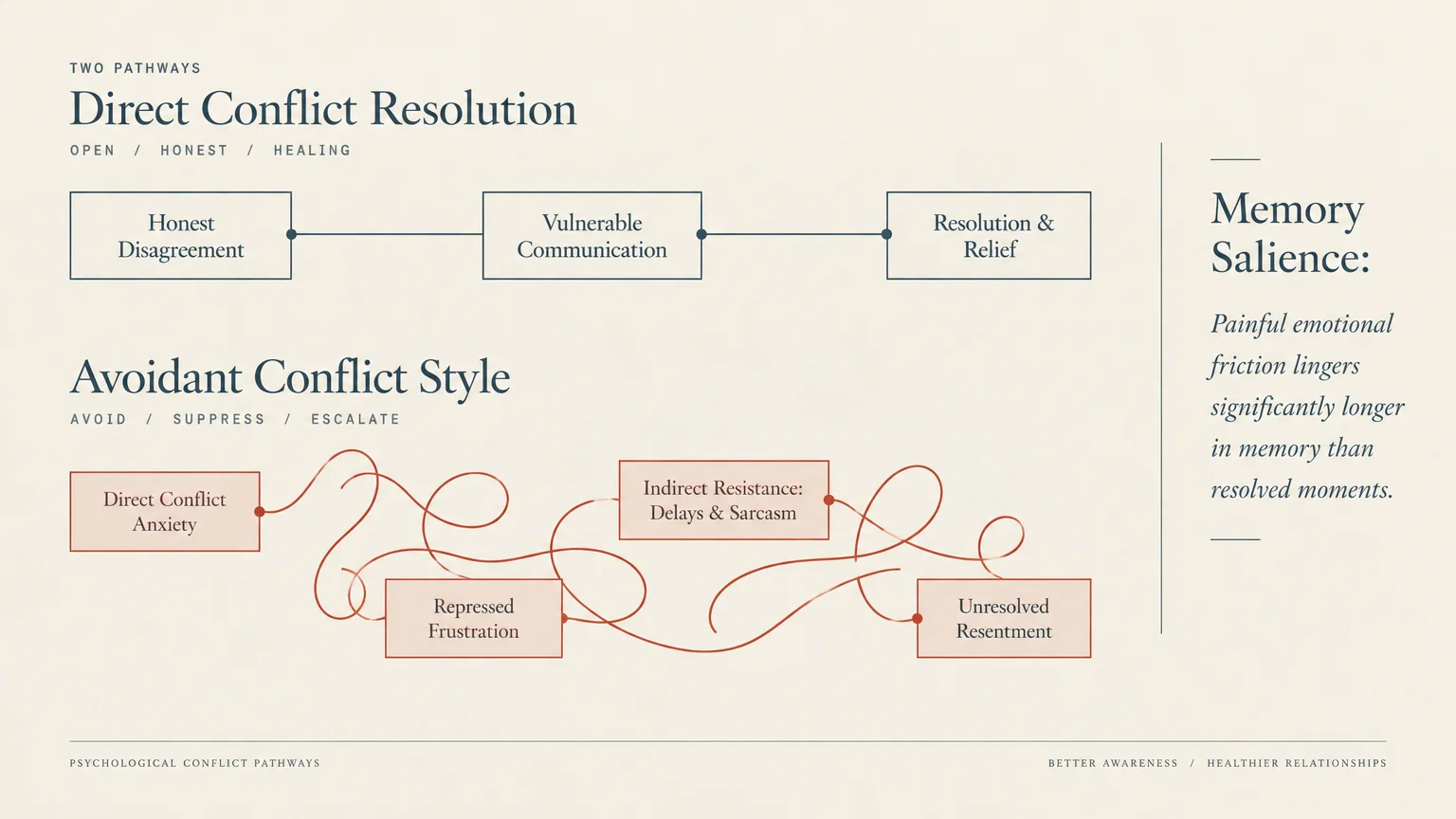
Direct conflict triggers anxiety in individuals who lack assertive communication skills. They view disagreements as dangerous battles rather than opportunities for understanding.
Because direct expression feels unsafe, they release their frustration through subtle resistance. Sarcasm, deliberate delays, and cold detachment become convenient emotional weapons.
Psychologists call this pattern an avoidant conflict style. The individual attempts to control the situation while evading direct accountability for their anger.
Human beings naturally seek patterns in everyday social interactions. In psychology, researchers refer to this natural tendency as relational pattern-seeking.
Memory salience can also shape how you experience these interactions. Memory salience means that painful emotional memories stand out far more brightly than peaceful moments.
When someone hurts you indirectly, your memory preserves that discomfort vividly. Your nervous system stays alert to protect you from similar future pain.
You can honor your instincts without letting past distress control your present reactions. Observing interactions with calm detachment helps you evaluate the facts clearly.
Understanding the roots of indirect hostility does not mean you must tolerate mistreatment. It simply allows you to view the behavior without absorbing the emotional weight.
9 Signs of Passive-Aggressive Behavior
1. The Silent Treatment and Subtle Withdrawal
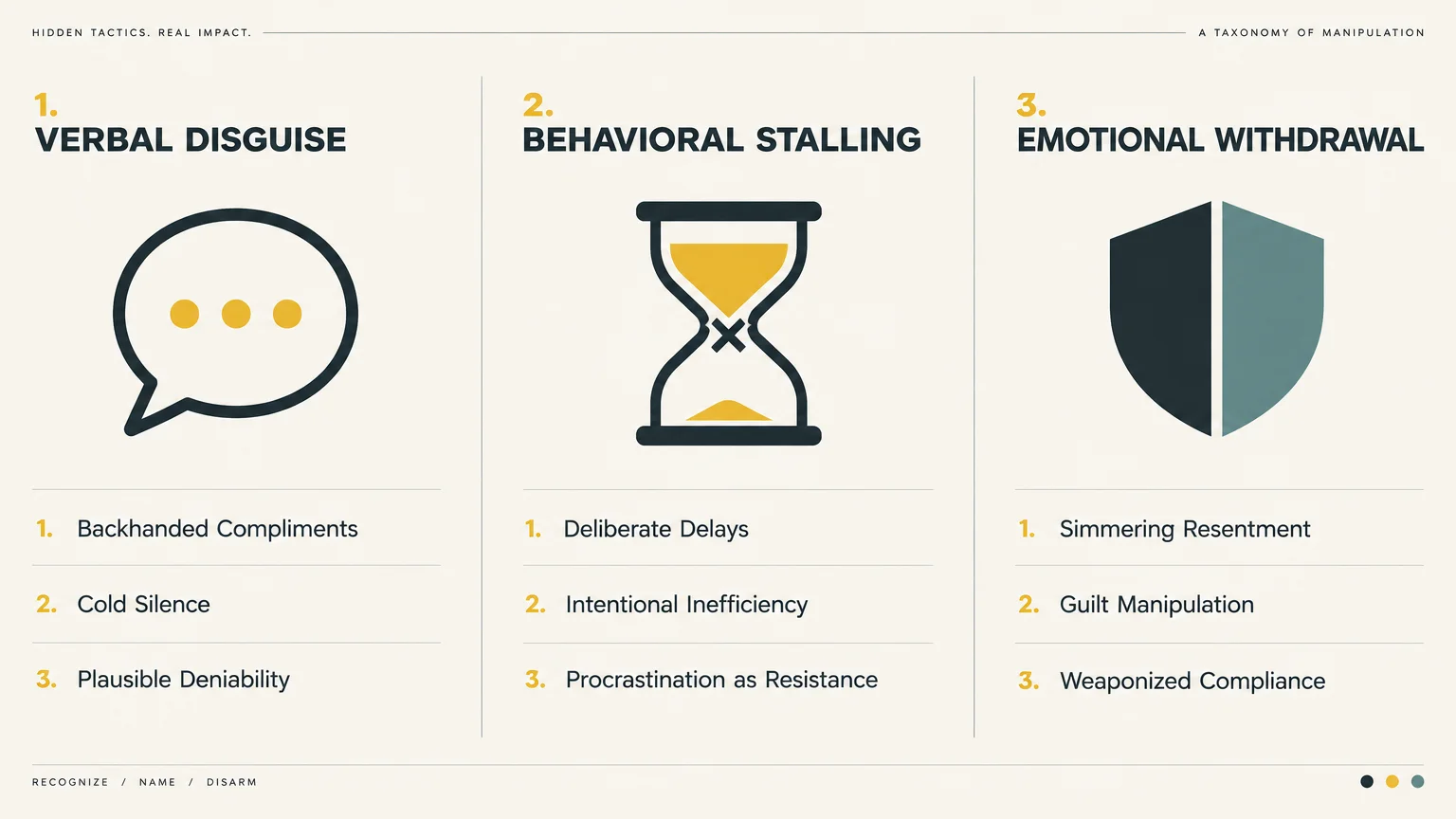
The silent treatment happens when someone abruptly cuts off emotional communication without explanation. They withdraw their warmth to punish you while pretending that nothing is wrong.
If you ask what happened, they often give a chilly, one-word response. Their cold demeanor leaves you feeling anxious, isolated, and desperate to fix the relationship.
This tactic forces you to guess their hidden thoughts and appease their unvoiced anger. It shifts all emotional labor onto your shoulders while avoiding honest conversation.
Notice your internal reaction when someone withdraws into intentional silence. Remind yourself silently that their emotional shutdown belongs to them, not to you.
Step outside for a short mindful walk instead of pleading for answers. Focusing on the ground beneath your feet restores your inner calm and clarity.
2. Sullen Compliance and Deliberate Inefficiency
Some individuals agree to requests quickly but perform the tasks poorly on purpose. They procrastinate, make sloppy errors, or leave tasks half-finished to register their quiet protest.
This habit allows them to express defiance without voicing open disagreement. They preserve their polite image while forcing you to handle the fallout of their neglect.
Eventually, you may stop asking them for assistance altogether out of pure frustration. This outcome rewards their avoidance and leaves you feeling overburdened and resentful.
Journal about your shared responsibilities using this simple reflection prompt: What domestic or professional burdens am I carrying that belong to another capable person?
Write down your honest answers to identify where you must return responsibility back to others.
3. Backhanded Compliments and Veiled Insults
A backhanded compliment delivers a sharp criticism wrapped inside sweet flattery. You feel an unexpected sting even though the speaker smiles warmly at you.
For example, a relative might praise your bravery for wearing clothes that do not fit your age. The remark insults you while pretending to offer sincere admiration.
If you question the comment, the speaker often accuses you of taking things the wrong way. This manipulative response makes you doubt your own emotional perception.
Use a calm clarifying question as your primary safety cue. Ask quietly, What did you mean by that remark, to bring the veiled insult into the open.
Holding steady eye contact without anger encourages the speaker to abandon their indirect games.
4. Sarcasm and Feigned Innocence
Hostile humor offers a convenient hiding spot for unresolved personal resentment. A passive-aggressive person often directs cutting jokes toward your vulnerabilities or past mistakes.
When their words hurt your feelings, they quickly dismiss your pain. They claim they were only joking and insist that you need a better sense of humor.
This maneuver places the fault on your sensitivity rather than on their cruelty. It allows them to inflict emotional damage while avoiding ownership of their hostility.
Pay attention to your physical body whenever sharp sarcasm enters a discussion. If your chest feels tight, trust that your nervous system recognizes genuine hostility.
Respond with steady composure by saying: That remark felt hurtful, even if you meant it as a joke.
5. The Habitual Excuse of Forgetting
We all forget obligations occasionally because of heavy schedules or simple human fatigue. Passive-aggressive forgetting, however, targets commitments that the individual resented making from the start.
They may consistently forget important promises, appointments, or shared financial agreements. Their selective memory serves as a quiet weapon to avoid unwanted obligations.
Because memory slips appear accidental, confronting the person feels difficult. You worry that holding them accountable will make you appear unforgiving or overly demanding.
Establish written agreements to eliminate excuses and maintain practical clarity. Sending a brief email summary or shared calendar entry confirms the commitment without emotional drama.
If they continue to forget, you possess concrete evidence to address the pattern directly.
6. Feigned Helplessness
Feigned helplessness happens when an adult pretends to lack the skill needed for a simple task. They perform the task so badly that you quickly take over to finish it.
Relationship counselors call this manipulative pattern weaponized incompetence. It forces spouses, friends, or adult children into exhausting caretaker roles.
The individual escapes the labor while avoiding blame for refusing to help. Meanwhile, you end up feeling depleted, overworked, and emotionally isolated.
Step back calmly and allow natural consequences to occur without rescuing them. Offer gentle encouragement instead: I know you have the ability to master this task yourself.
Leaving the responsibility in their hands disrupts the cycle of convenient helplessness.
7. Keeping Score and Indirect Retaliation
Some individuals maintain an unvoiced mental ledger of every perceived slight. Rather than addressing grievances when they occur, they save them to justify future retaliation.
They might arrive intentionally late to an event that matters to you. When you voice disappointment, they bring up an unrelated mistake you made years ago.
This retaliatory habit keeps relationships trapped in an endless pattern of unspoken payback. Genuine peace cannot survive when past grievances serve as concealed weapons.
Examine your interactions using this journaling prompt: Where am I accepting indirect payback instead of demanding open resolution of past conflicts?
Writing about these patterns helps you recognize when someone is punishing you unfairly.
8. Playing the Innocent Martyr
The martyr stance allows someone to turn every fair disagreement into an attack on their character. They dramatize their sacrifices while portraying you as ungrateful or cold.
If you state a clear boundary, they reply that they can never please you. They may sigh heavily or weep to shift the focus back to their suffering.
This emotional display distracts everyone from their original unhelpful behavior. You find yourself apologizing and offering comfort even though they caused the initial harm.
Maintain steady boundaries whenever someone attempts to play the innocent martyr. Validate their feelings gently without dropping your original, necessary request.
You can state: I appreciate your efforts, but we still need to resolve this specific issue together.
9. Subtle Sabotage and Gossip
Subtle sabotage involves undermining your reputation, relationships, or happiness behind your back. The individual spreads damaging rumors or reveals confidential information to mutual acquaintances.
They frame this gossip as loving concern for your well-being. In reality, they are attempting to diminish your standing and alienate your community.
This covert hostility isolates you while keeping the instigator looking kind and helpful. If you confront them, they claim they were only trying to assist you.
Set a protective boundary by withholding sensitive personal information from chronic gossips. Confide your hopes and vulnerabilities only to individuals who have earned your trust.
Limiting their access to your personal life protects your emotional safety and peace.

Healthy Ways to Respond and Protect Your Peace
Dealing with passive aggressive people requires calm emotional grounding. If you respond with raw fury, you give them the exact conflict they wanted to provoke.
A grounded response interrupts the cycle of indirect manipulation. It demonstrates that you will not participate in unspoken games or subtle emotional traps.
Address specific behaviors directly using neutral, non-confrontational phrasing. Describe observable actions rather than attempting to analyze the person’s secret motivations.
Use a calm conversation opener when you sense rising tension. You might say: I notice that you seem upset with me, and I want to understand your perspective.
If the person insists that everything is fine, do not argue with their answer. Simply reply: I am ready to talk whenever you want to discuss things directly.
This simple reply places responsibility for communication where it belongs. It releases you from playing detective or carrying unnecessary emotional burdens.
Consider adopting a seven-day practice plan to build personal resilience against indirect hostility. On day one, practice observing social interactions without offering immediate defensive reactions.
On day two, practice slow, rhythmic breathing whenever indirect tension arises in conversation. Grounding your breath helps calm your nervous system and stops emotional panic.
On day three, practice a brief silent walk in nature to clear your thoughts. Mindful movement helps release emotional tension stored in your body.
Complementary health practices can offer restorative support for chronic stress. You can explore evidence-based complementary approaches at the NCCIH website.
On day four, journal about your personal values and core relationship expectations. Clarify what kind of communication you want to cultivate in your daily life.
On day five, practice reciting gentle Ho’oponopono phrases during quiet meditation. Repeating messages of peace and reconciliation helps release lingering bitterness toward difficult individuals.
On day six, establish one clear, protective boundary with someone who uses indirect hostility. Communicate the boundary using concise, respectful language.
On day seven, celebrate your inner strength and emotional progress. Acknowledge your ability to remain calm even when others choose indirect conflict.

Setting Safe Boundaries and Recognizing Red Flags
Establishing boundaries can feel daunting, especially for adults navigating grief or loneliness. Life changes like retirement or the loss of a spouse can make you tolerate unhealthy relationships.
However, chronic passive hostility can damage your mental well-being over time. Living under constant emotional tension drains your vitality and diminishes your confidence.
Learn to distinguish between mild communication flaws and severe toxic behavior signs. Toxic patterns include persistent emotional manipulation, deliberate isolation, and relentless financial exploitation.
If someone uses covert hostility to control your life or independence, seek outside assistance. A licensed counselor can help you design a safe and practical boundary strategy.
You can discover valuable mental health resources and crisis support at SAMHSA.
Grief support and psychological coping resources are available at the American Psychological Association (APA) and the NIH.
Quality rest is vital when healing from relational strain. Explore research-backed sleep guidance at the Sleep Foundation.
Be prudent when considering paid seminars, life coaches, or spiritual programs. Avoid practitioners who charge exorbitant fees, promise instant emotional cures, or demand complete secrecy.
Reliable mentors and licensed clinicians support your autonomy and encourage honest inquiry. They never pressure you to abandon medical care or sever connections with caring loved ones.
Frequently Asked Questions
Can passive-aggressive behavior change over time?
A person can change their communication style if they acknowledge their unhealthy patterns. Genuine transformation requires personal motivation, dedicated effort, and often professional guidance.
However, you cannot force another individual to change if they refuse to see the problem. Focus on maintaining your own boundaries rather than attempting to reform their behavior.
Is passive aggression always intentional?
Many people engage in indirect hostility without full conscious awareness. The behavior often functions as an automatic survival mechanism learned during difficult childhood experiences.
Even when unintentional, indirect hostility still inflicts genuine damage on relationships. You have every right to protect your emotional well-being regardless of the other person’s intent.
How can I tell the difference between forgetfulness and passive aggression?
Occasional forgetfulness happens randomly and touches many unrelated areas of daily life. A person with genuine memory slips usually expresses remorse and attempts to rectify the issue.
Passive-aggressive forgetting targets specific promises that the individual disliked making. The pattern repeats regularly without any sincere effort to improve the situation.
Why does dealing with passive aggression feel so exhausting?
This dynamic is mentally exhausting because it presents conflicting emotional signals. The speaker offers pleasant words while their nonverbal cues radiate cold frustration.
Your brain works overtime trying to interpret the hidden truth behind the contradiction. This constant guesswork creates mental exhaustion and keeps your nervous system in survival mode.
How should I respond if an aging parent uses passive-aggressive tactics?
Approach aging loved ones with gentle compassion while holding necessary boundaries firmly. Older adults often resort to indirect resistance when facing declining independence or fear of loneliness.
Listen with patience to their unspoken fears, but do not surrender your personal peace. Provide clear, respectful choices that allow them to feel valued and in control.
Nurturing Clarity and Compassion Moving Forward
Reclaiming your peace around indirect hostility requires steady patience and self-respect. You do not need to attend every emotional conflict you are invited to join.
When you choose direct, kind communication, you model emotional maturity for everyone around you. You create space for genuine connection while protecting your inner quiet.
This week, begin by observing subtle relational patterns without judging yourself or others. Notice moments when you feel pressured to placate someone who uses cold silence.
Track your physical sensations during tense conversations in a personal notebook. Recording bodily reactions helps you recognize manipulation before anxiety takes over.
Verify important agreements through concise written messages to maintain clarity and prevent misunderstandings. Clear documentation protects shared expectations and keeps everyone honest.
Practice taking deep, calming breaths whenever you sense unspoken hostility in your environment. Remember that your peace of mind is your most valuable possession.
This article is provided for informational and educational purposes only. It does not constitute medical, psychological, financial, or legal advice.
If you are experiencing severe anxiety, depression, or relational distress, consult a licensed healthcare professional or trusted counselor.