
Dreams offer a clear window into your waking emotions, memories, and inner life. Learning their true meanings helps you ease everyday worry, process major transitions, and regain peace.
Many common nighttime themes reflect universal human needs rather than literal future predictions. You will discover what gentle spiritual traditions and modern sleep science reveal about your mind.
This guide outlines twenty universal dream patterns alongside simple, grounded practices. You can interpret your nightly stories safely and use their practical lessons to support your emotional health.
Understanding How Your Mind Dreams
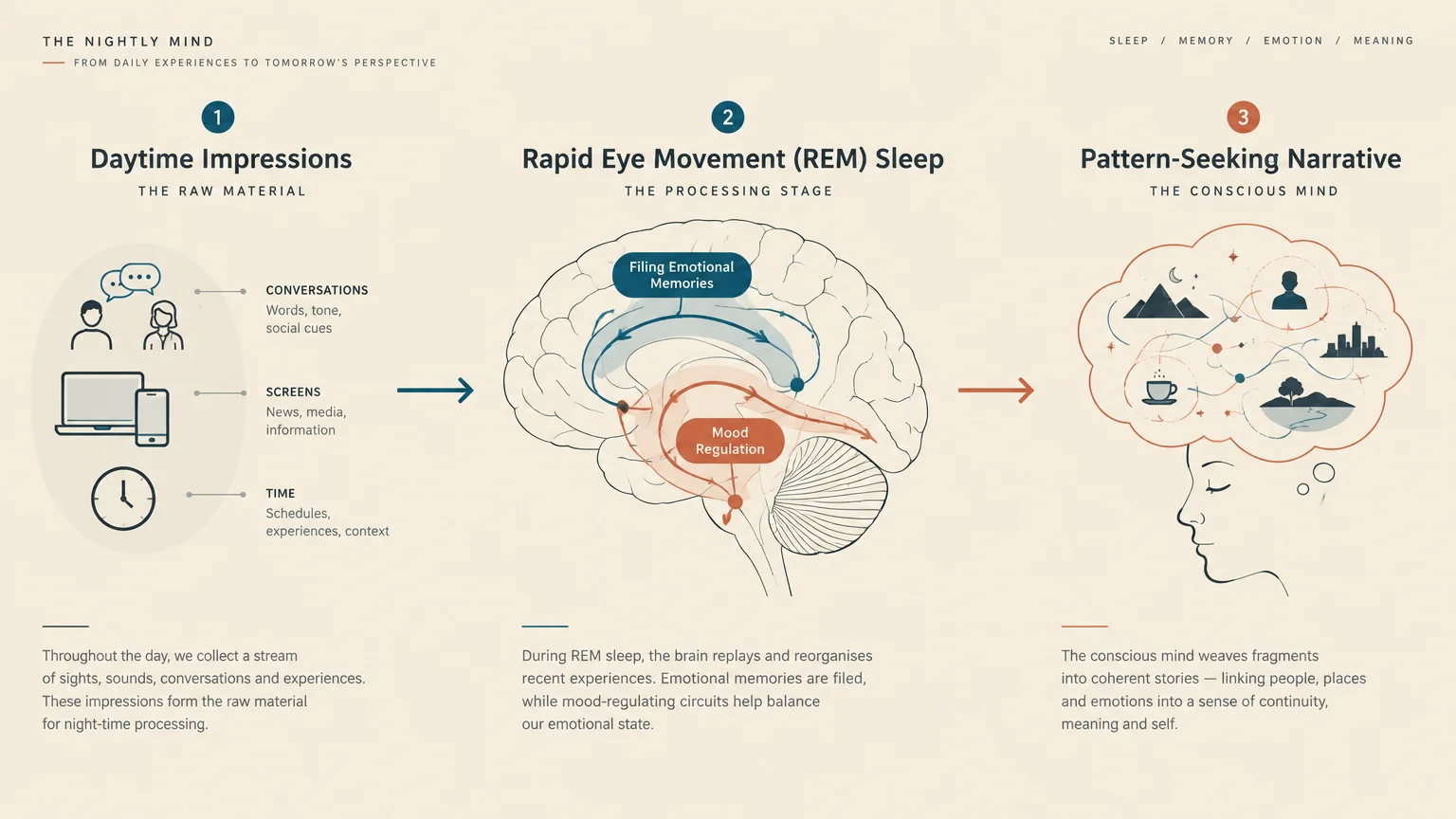
Sleep researchers view dreaming as a form of nocturnal memory processing. Your brain sorts daytime impressions, files emotional memories, and regulates mood during rapid eye movement sleep.
Check sleep facts at the Sleep Foundation to see how sleep cycles shape dreams.
Spiritual traditions often treat dreams as symbolic guidance from your deeper intuition. Both perspectives agree that dreams carry personal emotional significance.
A cognitive pattern called pattern-seeking explains why you find meaning in nighttime stories. Your awake mind naturally builds a narrative to make sense of random emotional signals.

The 20 Most Common Dreams Explained
1. Falling from Heights
Dreams of plunging into open space often signal a feeling of lost control. You may feel unmoored by recent changes in your health, retirement, or relationships.
Sleep researchers link this sensation to sudden muscle twitches during early sleep stages. Ground yourself by writing down one current life area where you need extra stability.
2. Teeth Falling Out or Breaking
Teeth often represent power, age, and self-confidence. Losing teeth in a dream usually reflects anxiety about aging, physical vitality, or public communication.
Notice if you hold back your words in waking conversations. Try a simple practice of speaking your honest opinion in a low-stakes talk today.
3. Being Chased
Running from an unseen pursuer indicates that you avoid an uncomfortable waking issue. Your mind turns avoidance into a dramatic pursuit.
Name the specific bill, conversation, or decision you postpone. Facing the challenge in daylight dissolves the nightly pursuit.
4. Flying Unassisted
Soaring through the sky reflects a desire for personal freedom. This dream often appears when you release a heavy burden or solve a lingering dilemma.
Notice how you steered your flight. Use that sense of ease to navigate an upcoming decision with confidence.
5. Being Unprepared for an Exam
Sitting at an exam desk without answers points to self-doubt or impostor feelings. You may worry that others will judge your skills or competence.
Remind yourself of your life experience. Write down three hard challenges that you resolved through your own wisdom.
6. Dying or Facing Death
Dreaming of death rarely predicts a physical event. Instead, death symbolizes the natural end of an old identity, habit, or life stage.
Find grief and coping resources at the American Psychological Association (APA) and NIH. Ask yourself what outdated role you need to release to invite personal growth.
7. Visits from Deceased Loved Ones
Seeing a departed loved one can feel vivid and emotionally profound. Many spiritual traditions view these encounters as comforting connections across realms.
Psychology views these dreams as a healthy part of grief processing. Hold a beloved keepsake and write down the gentle message you felt in the dream.
8. Appearing Naked in Public
Standing exposed before a crowd reflects vulnerability or shame. You may fear that others see your private flaws or true thoughts.
Counter this fear by showing yourself kindness. Acknowledge that all human beings carry imperfections and moments of self-consciousness.
9. Driving an Out-of-Control Car
A speeding car with failing brakes indicates that your daily life moves too fast. You might feel that someone else directs your choices.
Identify one obligation that you can step away from this week. Reclaim your right to set your own daily pace.
10. Finding Secret or Empty Rooms
Houses in dreams often symbolize your inner self. Discovering an unknown room shows that you possess untapped gifts, interests, or creativity.
Dedicate fifteen minutes this week to an old hobby. You can paint, read, or explore gardening with a fresh eye.
11. Running Late for an Important Event
Rushing against the clock reflects anxiety about missed opportunities. Older adults often experience this dream when reflecting on long-term life goals.
Remind yourself that life unfolds at its own pace. Focus on one rewarding activity you can savor right now.
12. Losing Money or Valuables
Misplacing your wallet or jewelry signals a fear of diminished security. You may question your personal value or worry about financial shifts.
List three enduring strengths that money cannot buy. Your resilience and kindness remain your most dependable assets.
13. Drowning or Tidal Waves
Towering waves and rising water mirror emotional overwhelm. You may carry unresolved sorrow, intense family stress, or unexpressed anger.
Give your feelings a safe outlet through journaling. Let the words flow without judging your natural reactions.
14. Encountering Snakes
Snakes carry complex dual meanings across cultures. A snake can represent a toxic relationship, or it can symbolize bodily renewal and healing.
Complementary practices via NCCIH help balance mind and body. Reflect on who drains your energy in waking hours and set clear boundaries.
15. Inability to Move
Waking up frozen in bed usually stems from sleep paralysis. This temporary state occurs when your motor control wakes more slowly than your conscious mind.
Stay calm and focus your attention on moving one finger or toe. The physical paralysis will pass within a few seconds.
16. Losing Your Voice
Trying to scream without making a sound mirrors waking powerlessness. You may feel that your opinions go unnoticed by friends or family.
Practice expressing your preferences clearly today. Start with small choices, like picking a restaurant or choosing an activity.
17. Partner Infidelity
Dreaming that your partner betrays you rarely indicates literal cheating. More often, this dream reflects feeling emotionally disconnected or neglected.
Initiate an honest conversation with your spouse or friend. Share your desire for deeper emotional connection and shared time.
18. Missing a Flight or Train
Standing on an empty platform highlights a fear of being left behind. You may worry that your peers move ahead while you remain stagnant.
Compare yourself only to your own journey. Celebrate one small step of personal progress you made this month.
19. A Burning or Damaged House
A damaged dwelling reveals high levels of chronic stress or burnout. Your emotional foundation needs attention and gentle repair.
Declutter a single shelf or corner of your bedroom today. Creating physical order helps soothe your nervous system.
20. Searching for a Lost Person
Wandering through dreamscapes seeking someone shows a yearning for connection. This dream often touches on loneliness or nostalgia for bygone years.
Reach out to an old acquaintance or attend a community gathering. Human warmth counteracts feelings of isolation.

Safe and Grounded Ways to Explore Your Dreams
Exploring your dream life should bring clarity rather than anxiety. You do not need expensive readings or complicated rituals to understand your nighttime thoughts.
Start with simple, no-cost practices that support reflection. Mindful morning walks, gentle breathing, and quiet contemplation give your subconscious mind room to settle.
Many people find comfort in forgiveness exercises when dreams bring up old conflicts. You can silently recite gentle Ho’oponopono phrases like “please forgive me” and “thank you” to ease lingering regrets.
Keep a notebook beside your bed to capture impressions. Write down symbols, dominant colors, and your immediate emotional tone before you get out of bed.
Use this simple journaling prompt: Which waking feeling resembles the main emotion in this dream? Answering this question anchors abstract nighttime stories in daytime reality.
You can follow a simple seven-day dream plan. On days one and two, write down three keywords immediately after waking up.
On days three and four, record the strongest emotion you felt during the dream. Focus only on feelings like fear, joy, relief, or confusion.
On days five through seven, review your daily entries for recurring themes. Notice how your daytime stress directly shapes your nightly visions.
If you prefer outside guidance, research reputable books on dream psychology. Set a modest budget of fifteen to twenty dollars rather than spending money on costly intuitive readings.
Mental health support and resources at SAMHSA can help if disturbing dreams disrupt your daily life. Consider speaking with a licensed therapist or your faith leader to unpack difficult themes safely.
Here is a gentle conversation opener: I have had recurring dreams about past grief, and I would appreciate your guidance in processing these emotions.
Boundaries and Consumer Safeguards
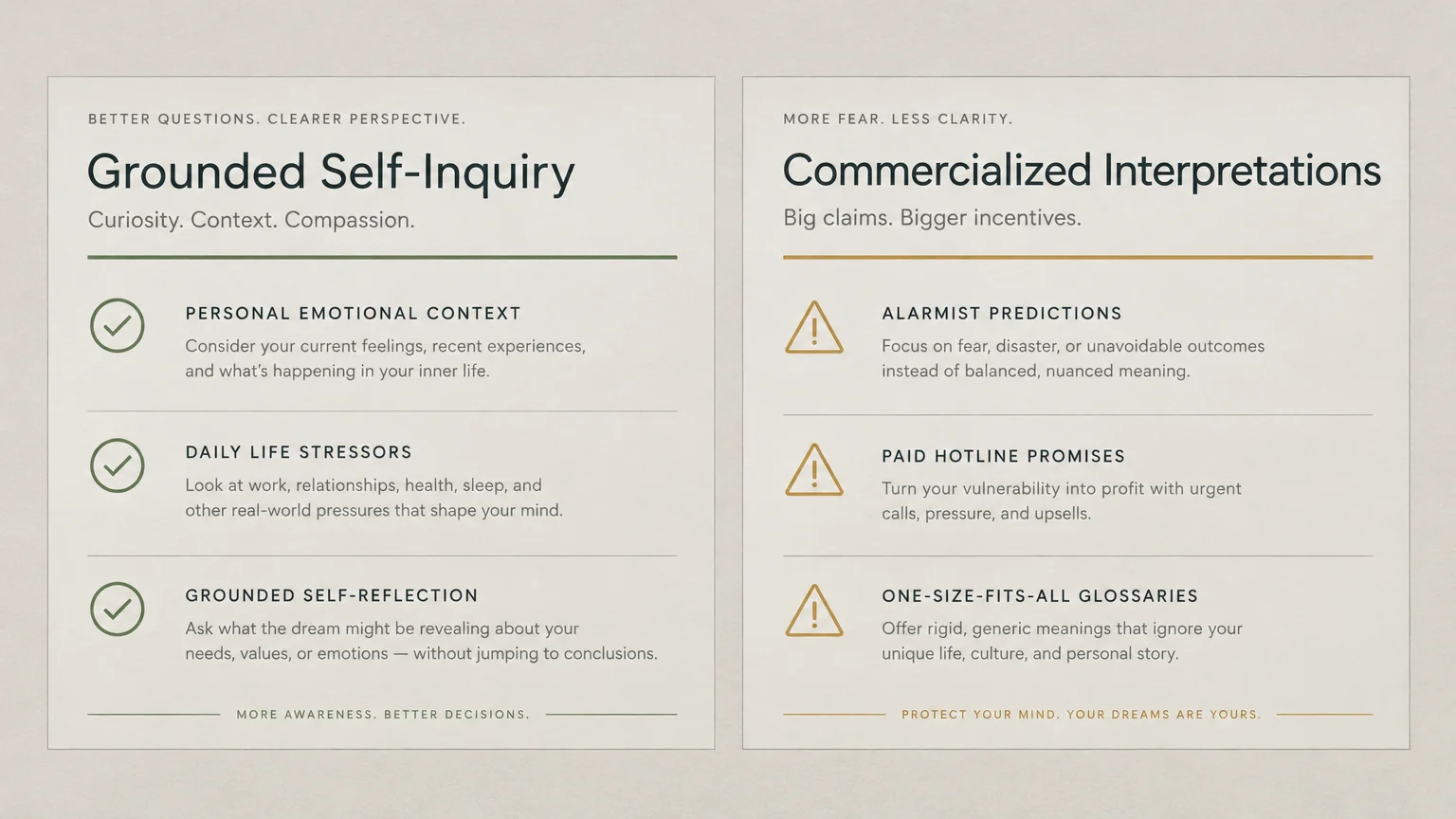
Dream interpretation requires healthy emotional boundaries, especially during times of bereavement. Grief makes the heart tender and vulnerable to exploitation.
Be wary of commercial readers who claim to contact deceased relatives for a fee. Genuine spiritual exploration should never feel coercive or expensive.
Watch for red flags such as guarantees of future events, pressure for immediate payment, or enforced secrecy. Walk away if someone claims you carry a spiritual curse that requires paid clearing.
A cognitive habit called confirmation bias often causes people to remember hits while forgetting misses. Keep a balanced perspective by testing dream messages against common sense and lived experience.
Never stop medical treatments or mental health therapy based on dream symbols. Dreams offer psychological reflections, not medical diagnoses or prescriptive legal advice.

Spiritual Traditions and Grounded Alternatives
Many faith traditions view dreams as holy whispers or intuitive warnings. In these traditions, dreams provide spiritual correction, comfort, or moral direction.
You can apply these traditional teachings through daily self-reflection and values alignment. Use inspiring dreams to reaffirm your commitment to kindness, integrity, and patience.
Modern psychology offers a grounded alternative perspective for secular readers. Cognitive science explains that dreams synthesize daily experiences and regulate mood without mystical intervention.
Both views hold practical merit for your personal wellbeing. You may embrace symbolic mystery while keeping both feet planted firmly on empirical ground.
Frequently Asked Questions
Do dreams predict the future?
Dreams do not predict future events. Research shows that dreams process past memories and current emotions rather than upcoming realities.
Why do the same dreams recur for decades?
Recurring dreams point to unresolved emotional needs or coping styles. The recurring story ceases once you resolve the underlying waking issue.
Are visitation dreams genuine contact with loved ones?
Neuroscience attributes visitation dreams to memory consolidation during mourning, while many spiritual traditions consider them real soul encounters. You may choose whichever explanation brings you comfort.
How can I tell a meaningful dream from random noise?
Pay attention to dreams that evoke strong emotions upon waking. The dreams that linger in your thoughts usually point to significant waking concerns.
What should I do if a dream frightens me?
Practice deep breathing and remind yourself that you are safe in bed. Write down the frightening image to strip away its mysterious power.
Grounded Next Steps for Peaceful Nights
Understanding your dreams is a gentle journey of self-discovery. You do not need to analyze every nighttime fragment to enjoy better sleep.
Place a notebook and pen beside your bed tonight. Record your immediate feelings before your feet touch the floor tomorrow morning.
Track recurring symbols across the next two weeks. Identify any connections between your daytime worries and your nighttime visions.
Share your discoveries with a trusted friend, counselor, or spiritual director. Speaking your truths aloud brings clarity and emotional ease.
Disclaimer
Disclaimer: This article provides educational information and does not offer medical, psychological, legal, or financial advice. Consult a qualified professional or physician if you experience sleep disorders, chronic nightmares, or severe distress.