
Your body might feel ready for a brisk walk, yet your mind feels weighed down and stalled. Recognizing this specific divide helps you restore your mental focus without forcing physical rest you do not need.
You will discover how to identify the subtle signals of mental depletion before it disrupts your daily peace. You will also learn practical, low-cost ways to replenish your cognitive reserves.
Understanding your inner boundaries offers a direct path toward emotional balance. A clear mind allows your spirit to feel steady and grounded again.

Understanding Mental Fatigue and the Restless Mind
Many people confuse physical exhaustion with being mentally tired. You might spend a day sitting at a desk or caregiving and feel utterly drained despite minimal physical labor.
Mental exhaustion happens when your brain sustains high levels of effort without adequate recovery. Cognitive fatigue describes this temporary drop in mental stamina and working memory.
Many people interpret this weariness as a spiritual dry spell or personal weakness. Research suggests it often reflects prolonged emotional stress, multi-tasking, and constant problem-solving.
Your body remains capable of movement, but your executive processing center needs quiet restoration. Identifying mental fatigue signs early protects both your daily well-being and your peace of mind.
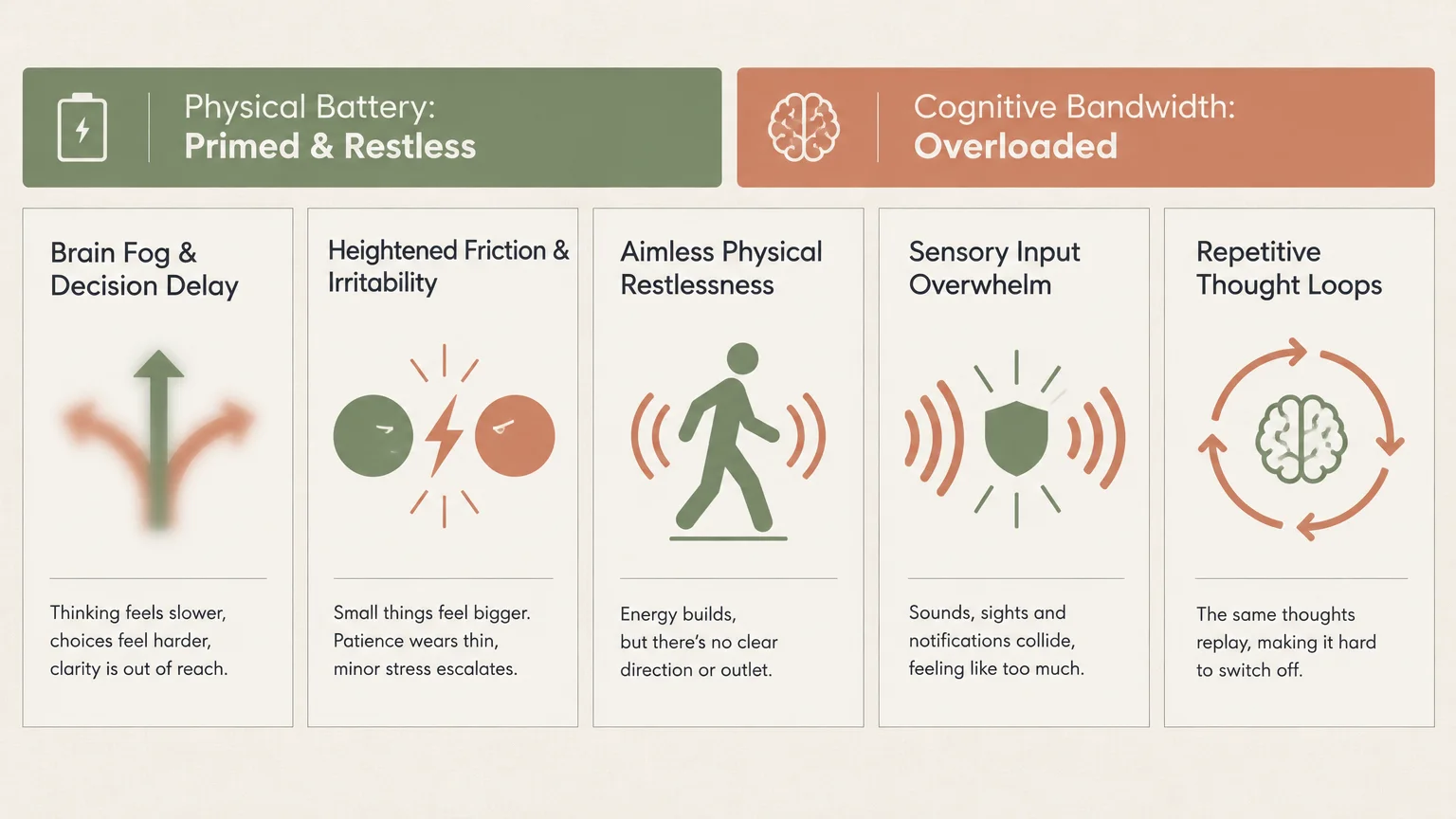
9 Signs You’re Mentally Tired but Not Physically Tired
1. Brain Fog Clouds Simple Choices
Brain fog describes a subjective feeling of mental confusion and slowed thinking. When you face mental exhaustion, choosing a dinner recipe or deciding what to wear feels overwhelming.
Your intellect has not vanished. Your mental bandwidth is simply occupied with backlogged stress.
Actionable practice: Write your top two choices on a slip of paper. Walk away for ten minutes, and let your subconscious mind clarify the right answer.
2. Minor Friction Triggers Heightened Irritability
A dropped fork or a slow driver can spark unexpected frustration when you are mentally tired. Your prefrontal cortex regulates your emotional responses, but fatigue weakens this self-control.
You may find yourself snapping at family members or close friends over trivial matters. This irritability reflects a taxed nervous system rather than a shift in your core character.
Actionable practice: Place one hand gently on your collarbone when irritation rises. Inhale slowly for four counts and exhale for six counts before speaking.
3. Physical Energy Without Clear Direction
You might pace around your living room feeling physically energetic yet unable to begin a task. Your limbs feel ready for activity, but your mind cannot select a goal.
This mismatch between physical readiness and cognitive focus creates internal restlessness. Many adults over fifty experience this state after long periods of family caregiving or estate management.
Actionable practice: Channel your physical vitality into a simple motor task. Fold laundry, sweep the patio, or prune houseplants to let your mind idle safely.
4. Sensory Inputs Feel Loud and Intrusive
Mental fatigue reduces your ability to tune out background noise, bright lights, and crowded spaces. The television volume may suddenly seem unbearable, or grocery store lighting might make you cringe.
A rested brain filters environmental stimulation effortlessly. A tired brain treats everyday sounds and visual clutter like immediate threats.
Actionable practice: Create a daily twenty-minute quiet period in your schedule. Dim the lamps, turn off all screens, and rest your eyes in silence.
5. Repetitive Thought Loops Dominate Your Thinking
Mental exhaustion frequently traps you in rumination. You might replay past conversations or rehearse future scenarios repeatedly without reaching any resolution.
These mental loops drain your vitality further. Your mind seeks certainty, but an exhausted brain lacks the energy to conclude the thought pattern.
Actionable practice: Repeat the traditional Ho’oponopono phrase quietly when loops occur. Silently say: “I am sorry, please forgive me, thank you, I love you.”
6. Avoidance of Routine Paperwork and Logistics
You might happily plant a garden or cook a meal yet dread sorting your daily mail. Administrative tasks require concentrated working memory and active decision-making.
When cognitive fatigue sets in, even opening an electric bill feels like climbing a mountain. You delay routine phone calls and let correspondence pile up on the counter.
Actionable practice: Set a kitchen timer for five minutes each morning. Process only one envelope or email during that window, then grant yourself permission to stop.
7. Emotional Detachment and Compassion Fatigue
You may feel strangely distant when listening to a friend share personal news. This emotional numbness does not mean you have grown cold or uncaring.
Caregivers and community volunteers frequently encounter this protective response. Your psyche constructs a temporary barrier to conserve your remaining emotional energy.
Actionable practice: Place a hand over your heart and whisper a gentle reminder. Acknowledge that giving yourself rest allows you to serve others with genuine love later.
8. Working Memory Lapses and Absentmindedness
You might walk into a room and instantly forget your reason for being there. You might misplace your reading glasses while they rest squarely on your head.
Lapses in working memory are classic mental fatigue signs. Your brain drops short-term details when it struggles under excessive cognitive load.
Actionable practice: Narrate your immediate actions aloud. State clearly: “I am placing my front door key on the wooden hallway tray.”
9. Waking Restless After a Full Night of Sleep
Your muscles feel rested after eight hours in bed, but your mind races before you open your eyes. Physical sleep repairs bodily tissue, but it does not always resolve mental tension.
Sleep architecture can suffer when nighttime worries interrupt deep delta-wave cycles. You awake with physical stamina but immediate mental dread.
Actionable practice: Keep an unlined notebook by your bed. Write down three lingering thoughts before turning off your lamp to clear your mental desk.
Distinguishing Cognitive Overload from Spiritual Depletion
When you feel mentally tired, you may believe your spiritual intuition has gone silent. Many traditions teach that prayer and meditation require an open, receptive consciousness.
Research suggests that cognitive fatigue temporarily dampens your reflective capacity. When your executive networks are overwhelmed, feeling transcendent joy or deep stillness becomes difficult.
Be mindful of confirmation bias during times of exhaustion. Confirmation bias is the mental habit of noticing only facts that prove your preexisting fears or doubts.
Memory salience also plays a role in mental exhaustion. Stressful memories feel disproportionately vivid, while memories of calm moments fade into the background.
Do not judge your spiritual health through the lens of a tired brain. Allow yourself to rest without turning fatigue into a spiritual failing.
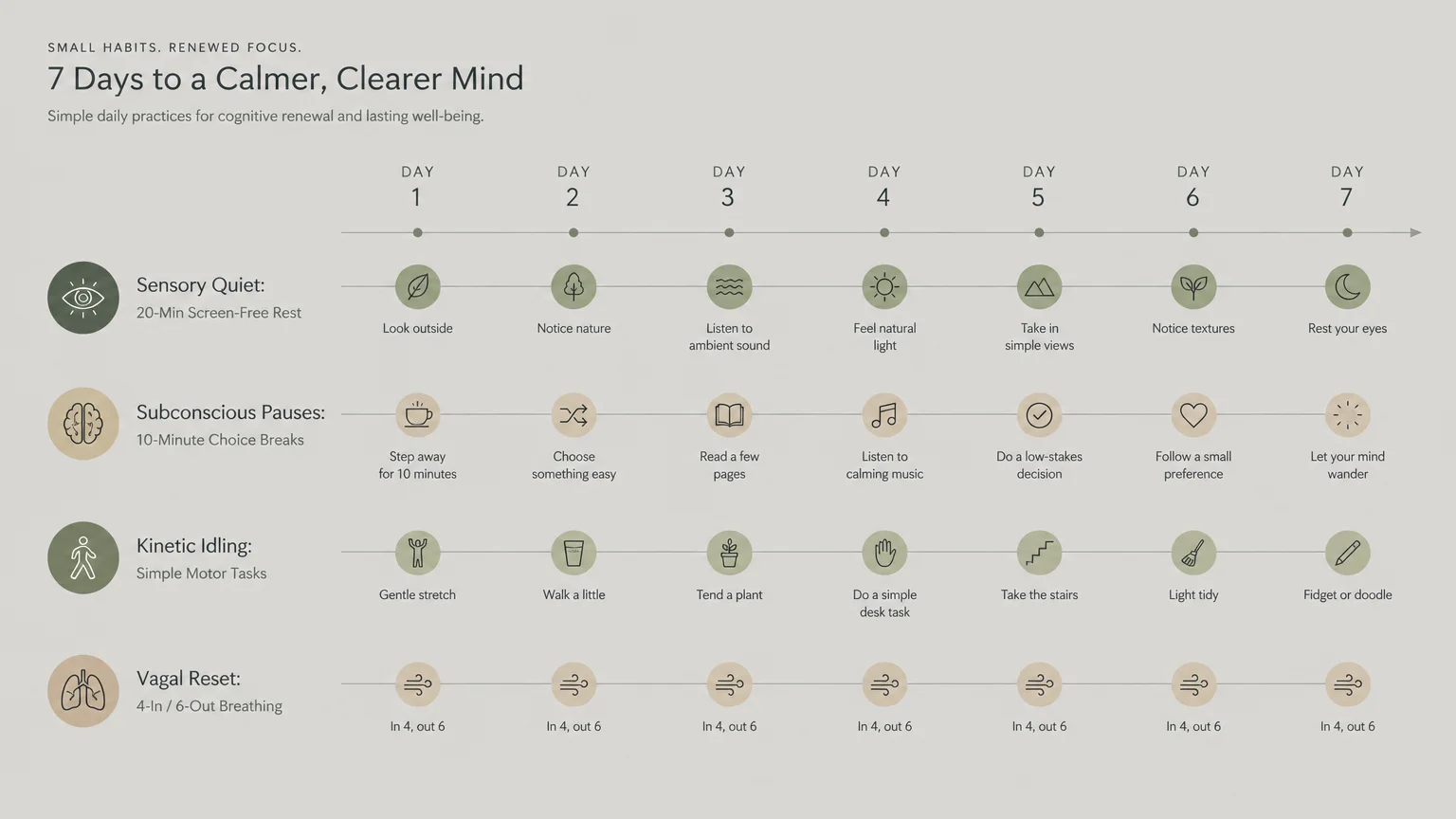
A Gentle 7-Day Restoration Plan
You can restore your mental reserves without abandoning your daily responsibilities. This gentle week-long plan invites gradual mental restoration through small, purposeful adjustments.
On days one and two, introduce a digital sunset each evening. Turn off news broadcasts, tablets, and mobile devices two full hours before bedtime.
Use this quiet evening space to listen to calming music or sit on your porch. Let your brain notice the lack of incoming headlines and demands.
On days three and four, incorporate sensory outdoor walks. Stroll through a nearby park or garden for twenty minutes without listening to podcasts or phone calls.
Focus your attention purely on physical sensations like cool breezes, birdsong, and fragrant blossoms. Shifting attention to your senses gives your executive networks a deep cognitive pause.
On day five, conduct a ten-minute brain decluttering session with pen and paper. Ask yourself what two decisions you can safely postpone until next month.
Cross those deferred tasks off your immediate list to lift your cognitive burden. Giving yourself permission to delay low-priority tasks creates instant mental breathing room.
On day six, enjoy a schedule-free afternoon. Spend three unstructured hours following your natural inclinations, whether that means repotting plants, reading poetry, or napping.
On day seven, review your mental clarity and emotional resilience. Notice how reducing cognitive input helped lift the heavy veil of brain fog.

Boundaries, Safety, and Warning Signs
Adults over fifty often balance grief, retirement shifts, and changing family roles. During periods of vulnerability, you must guard your emotional and financial boundaries carefully.
Some commercial wellness programs and intuitive practitioners promise quick cures for mental exhaustion. Beware of any advisor who demands large upfront payments, urges secrecy, or guarantees instant healing.
Legitimate spiritual counselors and mental health guides encourage transparency, critical thinking, and autonomy. If an online course or coach charges excessive fees, pause and seek reputable community support instead.
Never substitute complementary mindfulness techniques for necessary medical evaluation. Chronic mental fatigue can sometimes reflect medical issues, including thyroid imbalances, anemia, sleep apnea, or clinical depression.
Schedule an evaluation with your physician if your fatigue persists for more than four weeks. You can initiate this dialogue with confidence and clarity.
Use this simple script at your next medical appointment: “I feel physically energetic, but I experience persistent cognitive fatigue that impairs my daily focus.” “Could we check relevant lab work and explore underlying factors together?”

Trusted Resources for Care and Support
Evidence-based guidance provides vital reassurance when you feel overwhelmed. Explore these respected institutions for verified health and emotional support.
Grief and coping resources at the American Psychological Association (APA) and NIH.
Sleep facts at the Sleep Foundation.
Complementary practices via NCCIH.
Mental health support and resources at SAMHSA.
Frequently Asked Questions
How can I tell mental fatigue apart from physical fatigue?
Physical fatigue makes your muscles ache, your limbs feel heavy, and your body crave physical stillness. Mental fatigue leaves your body capable of movement while your thoughts feel sluggish and scattered.
How long does it take to recover from mental exhaustion?
Mild cognitive fatigue often improves after forty-eight hours of reduced sensory input. Chronic mental exhaustion from prolonged caregiving or life strain may require several weeks of deliberate pacing.
Is brain fog an inevitable part of growing older?
Occasional absentmindedness can occur with age, but chronic brain fog is not inevitable. It often reflects unmanaged stress, poor sleep quality, medication interactions, or temporary cognitive overload.
Can meditation worsen mental fatigue if I force it?
Concentrative meditation requires active focus and can strain an already exhausted brain. Choose gentle, receptive practices like guided imagery, quiet nature walks, or restorative resting postures instead.
What is the difference between mental tiredness and clinical depression?
Mental tiredness typically lifts when you step away from intense demands and rest your intellect. Depression involves pervasive sadness, feelings of worthlessness, and anhedonia that persist regardless of your rest levels.
Moving Forward with Clarity
Recognizing the difference between bodily vigor and cognitive exhaustion is an act of deep self-compassion. You do not need to push through mental fatigue with sheer willpower.
Take three practical steps this week to protect your mental energy. First, track when your mental focus peaks and dips during the day using a pocket notebook.
Second, establish a quiet afternoon window where you decline complex decisions and incoming calls. Third, consult your physician if your brain fog persists after consistent rest.
Treat your mind with the same gentle care you would offer a weary friend. True vitality returns when you honor your mind’s genuine need for stillness.
Disclaimer
This article is for educational and informational purposes only. It does not constitute medical, psychological, legal, or financial advice.
If you experience severe fatigue or memory changes, please consult a licensed healthcare professional. If you are in emotional distress, contact local emergency services or call a crisis hotline immediately.