
Recognizing emotional guardedness allows you to rebuild meaningful connection without sacrificing your personal safety. You can protect your peace while still welcoming warmth and companionship into your daily life.
Emotional walls often develop quietly after significant grief, heartbreak, or major life transitions. These protective barriers keep painful feelings out, but they also keep deep comfort from reaching you.
Learning the signs you are putting up walls helps you identify where fear restricts your life. With gentle awareness, you can soften your defenses at a pace that feels safe.

Understanding Emotional Walls and Self-Protection
Self-protection psychology shows that emotional barriers are learned survival responses. When past experiences cause distress, your mind builds internal fortifications to prevent future injury.
Many people interpret emotional guardedness as strength or self-reliance. However, psychological research suggests that prolonged guarding can foster loneliness and physical stress.
A wall differs fundamentally from a healthy personal boundary. A boundary works like a gate that opens and closes with intention.
A wall blocks everything indiscriminately. It shuts out potential harm, but it also traps you in sustained isolation.
Over time, fear of vulnerability turns these self-defense habits into automatic reflexes. You may withdraw before anyone gets close enough to see your genuine feelings.

12 Signs You’re Putting Up Walls
Recognizing these subtle patterns helps you understand your current emotional posture. Notice which of these common signs resonate with your daily relationships.
1. Deflecting Personal Questions
You quickly steer conversations back to the other person whenever things feel personal. Humor, witty remarks, or sudden topic changes keep your private life hidden.
This tactic keeps conversations comfortable while keeping your inner world out of reach. You remain an attentive listener while revealing almost nothing about yourself.
Actionable practice: Answer one personal question directly this week before redirecting the conversation. Notice that sharing a simple truth does not invite disaster.
2. Insisting on Absolute Independence
You pride yourself on never needing assistance from friends, neighbors, or adult children. You treat any offer of support as a potential threat to your autonomy.
Extreme self-reliance often conceals a deep fear of being let down. If you never depend on anyone, you never risk abandonment or disappointment.
Actionable practice: Let someone hold an elevator or carry a grocery bag for you. Allow yourself to experience small moments of everyday interdependence.
3. Expecting Disappointment Early
You assume new acquaintances will eventually let you down or leave. This cynical outlook acts as a shield against potential surprise heartbreak.
Cognitive patterns like confirmation bias lead you to search for evidence that confirms this pessimistic belief. You highlight small flaws while ignoring genuine kindness.
Safety cue: Pause when you notice catastrophic thinking about a friend. Ask yourself if facts support your fear or if memory guides your reaction.
4. Feeling Emotionally Numb During Conflict
When difficult emotions arise, you suddenly feel flat, indifferent, or mentally absent. Your system shuts down feelings to protect your inner stability from turbulence.
Detachment shields your nervous system from immediate pain during stressful confrontations. Unfortunately, repeated numbness prevents you from processing real emotions.
Actionable practice: Place a hand over your heart when emotional numbness starts. Take three slow breaths to gently anchor yourself in the present moment.
5. Pulling Away When Closeness Increases
You feel warm toward someone until the relationship becomes deeply personal. Suddenly, you feel an urgent impulse to create space or cancel plans.
A sudden desire to withdraw usually signals a fear of vulnerability rather than a lack of interest. Intimacy feels threatening when past closeness brought pain.
Actionable practice: Send a short text instead of completely disappearing when closeness triggers anxiety. Tell the person you need quiet time today.
6. Hiding Pain Behind Rigid Schedules
You fill every hour of your calendar with volunteer projects, chores, or hobbies. Constant motion ensures you never sit alone with unprocessed sadness or grief.
Staying endlessly busy gives an illusion of mastery and emotional order. However, unresolved feelings remain active beneath your tightly scheduled routine.
Actionable practice: Schedule ten minutes of stillness without your phone, books, or chores. Allow whatever feelings arise to exist without judgment.
7. Focusing Heavily on Minor Flaws
You find yourself fixating on small irritating habits in potential companions. You use these minor quirks as immediate justifications to end connections.
Hyper-criticism serves as a protective barrier against true intimacy. Finding reasons to dismiss others keeps you safe from the risks of emotional investment.
Safety cue: Notice whether a companion’s quirk actually crosses your values. Distinguish between real safety concerns and trivial preferences.
8. Keeping Conversations Purely Intellectual
You readily discuss politics, books, gardening, or history, but you never share personal feelings. You analyze personal problems through logic rather than emotional honesty.
Treating emotions as intellectual puzzles keeps messy sentiments at a comfortable distance. This habit protects you from exposing tender feelings to potential scrutiny.
Actionable practice: Replace the phrase “I think” with “I feel” during one conversation today. Share a basic emotion like joy or fatigue.
9. Refusing to Ask for Practical Help
You struggle in silence rather than asking a neighbor or family member for a hand. Asking for support feels like exposing a dangerous weakness.
This behavior often stems from past experiences where asking for help brought criticism or rejection. You learned that self-reliance was your only reliable shield.
Actionable practice: Ask a friend for a small recommendation, such as a trusted mechanic or a recipe. Practice asking in low-stakes situations.
10. Holding Chronic Physical Tension
Emotional walls do not live solely in your thoughts. Your body manifests guardedness through tight shoulders, a clenched jaw, or shallow chest breathing.
Your physical body prepares for threat when emotional guardedness remains your dominant state. Tight muscles physically brace against perceived incoming emotional blows.
Actionable practice: Perform a gentle body scan before entering a social setting. Consciously drop your shoulders and relax your abdominal muscles.
11. Feeling Depleted After Normal Interactions
Casual visits with friendly acquaintances leave you feeling utterly exhausted. You need hours of solitude to recover from basic social gatherings.
Holding up an emotional shield requires tremendous physical and mental energy. The fatigue you feel comes from the effort of continuous self-monitoring.
Actionable practice: Permit yourself to attend gatherings for just thirty minutes. Leaving early conserves energy while maintaining your social connections.
12. Using Past Resentments as a Shield
You mentally replay old betrayals to remind yourself why people cannot be trusted. You treat your past hurts as an armor against future grief.
Holding onto grievances creates a familiar sense of righteous security. Unfortunately, nursing past injuries keeps you tethered to the very pain you fear.
Safety cue: Remind yourself that today is separate from your past history. The people in front of you did not author your older wounds.

Gentle Practices to Soften Your Defenses
Dismantling protective walls does not require tearing down your defenses overnight. You can lower your guard gradually while keeping your core emotional safety intact.
Mindful self-compassion helps you appreciate why your walls formed in the first place. Treat your defenses with gratitude before asking them to soften.
Try writing about your feelings in a private journal. Regular expressive writing helps you clarify emotions without fear of judgment from others.
Use this simple prompt during your quiet journaling time: What am I protecting right now, and is danger present today?
Another helpful prompt invites emotional curiosity: What warmth might enter my life if I lowered my guard by one inch?
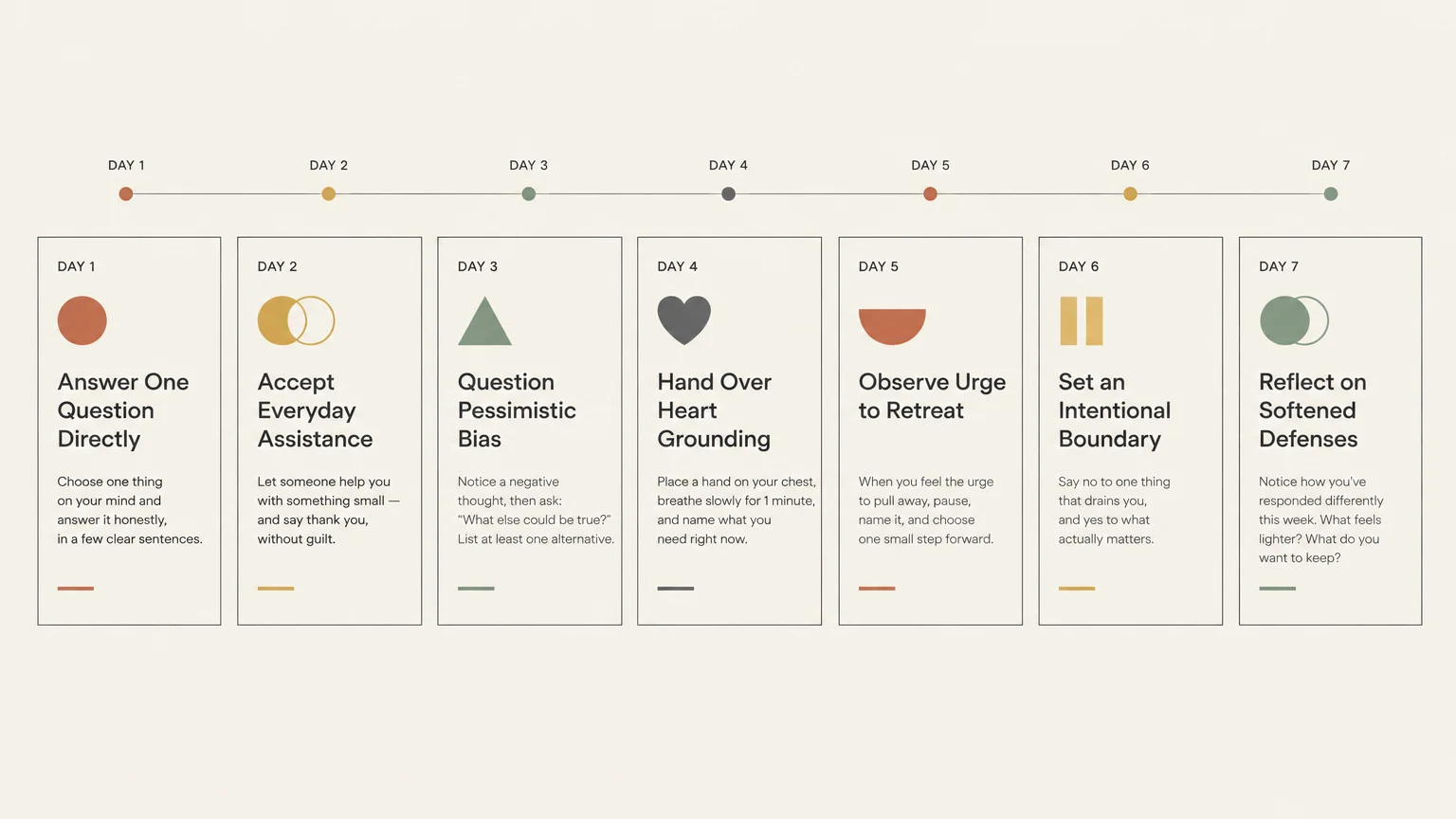
A 7-Day Gentle Practice Plan
You do not need complicated rituals to soften chronic guardedness. This simple seven-day practice plan offers small, grounded actions for everyday life.
On day one, notice where you hold tension in your physical body. Gently relax your shoulders whenever you feel guarded during conversation.
On day two, express gratitude directly to someone who assisted you. Acknowledging helpfulness builds quiet comfort with mutual dependence.
On day three, practice three minutes of mindful breathing when anxiety surfaces. Slow exhales signal safety to your guarded nervous system.
On day four, share one minor personal opinion with a trusted friend. Expressing simple preferences helps you navigate emotional exposure safely.
On day five, take a quiet walk outdoors without audio distractions. Observe your surroundings and allow your mind to rest in the present.
On day six, write down one lingering grievance and place it aside. Consciously giving your mind a rest from resentment lightens your spirit.
On day seven, reflect on your week with gentle kindness. Celebrate any moment where you chose connection over isolation, no matter how brief.
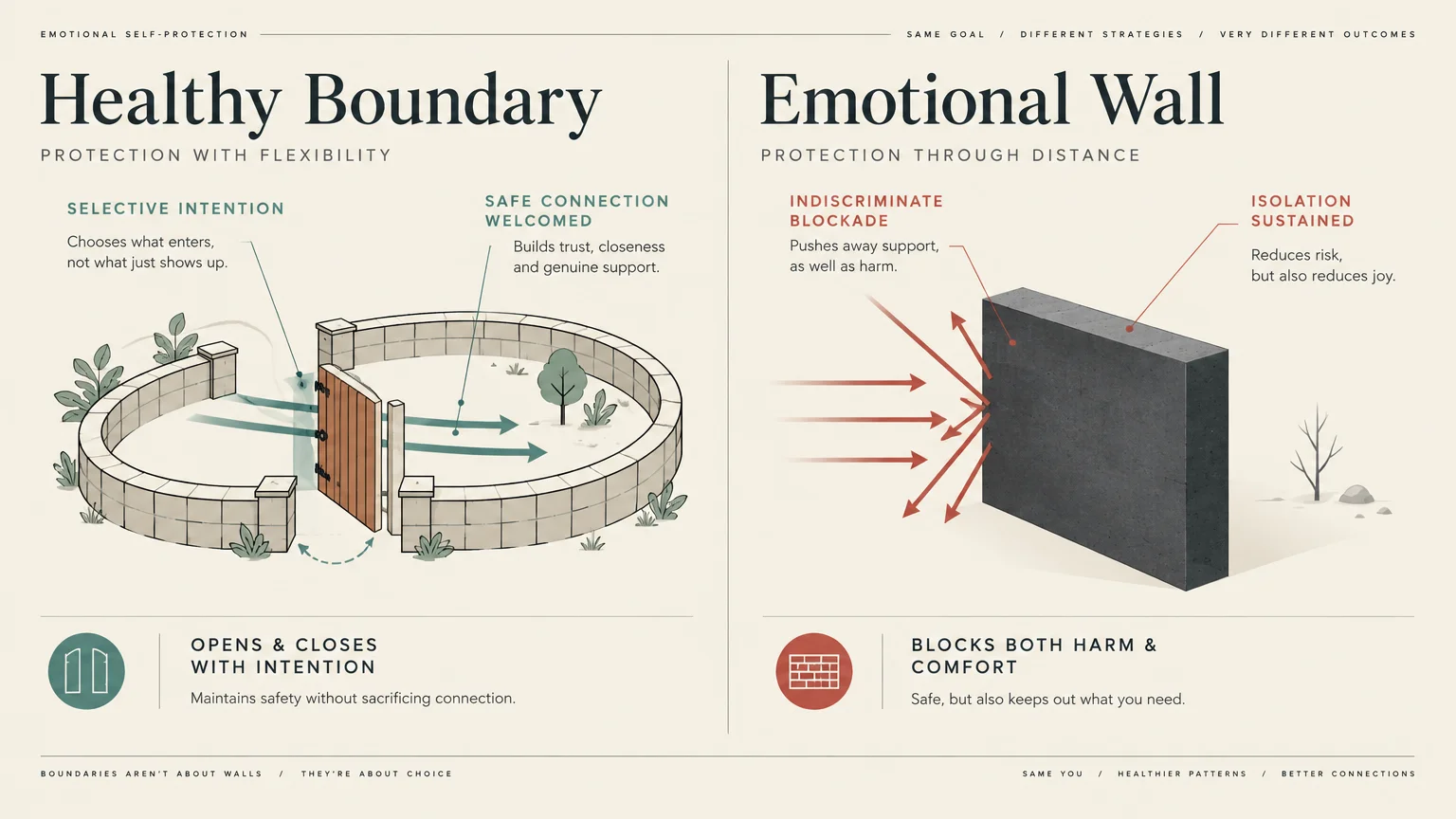
Healthy Boundaries Versus Emotional Walls
Many people confuse rigid walls with healthy emotional boundaries. Understanding the practical distinction between them protects both your safety and your relationships.
A healthy boundary is flexible and responsive to real-time context. It allows mutual respect and warmth to pass through while filtering out harmful disrespect.
An emotional wall is rigid, opaque, and permanent. It isolates you completely, preventing healthy reciprocity from flourishing in your close relationships.
Boundaries focus on managing your own behavior and personal limits. Walls attempt to control your external environment by rejecting all emotional intimacy.
When you cultivate healthy boundaries, you no longer require impenetrable walls. You trust your own ability to handle disappointment if it arises.

Boundaries, Red Flags, and Consumer Safety
When seeking support for loneliness or grief, prioritize emotional discernment. Vulnerable life stages can attract commercial wellness programs that promise instant cures.
Avoid services that demand large upfront fees or insist on personal secrecy. Legitimate helpers respect your boundaries and encourage outside relationships.
Be cautious with practitioners who offer absolute guarantees of emotional transformation. Genuine emotional healing unfolds gradually and requires personal agency.
Protect your financial resources and emotional wellbeing by verifying professional credentials. You deserve safe, ethical support as you explore your inner world.

When to Seek Professional Support
Sometimes emotional walls stem from unresolved trauma or chronic grief. A licensed mental health counselor provides a secure setting to explore deep defenses.
Therapy allows you to test emotional vulnerability without risk of rejection. A counselor helps you unpack past injuries at your own speed.
You might wonder how to start this conversation with a counselor or faith leader. Clear, simple language keeps the initial discussion grounded and honest.
You can say: I have noticed that I keep people at a distance to protect myself. I would like help learning how to open up safely.
This direct approach sets a clear focus for your collaborative sessions. It invites professional guidance without overwhelming your comfort zone.
Mental health support and resources at SAMHSA.
Grief and coping resources at the American Psychological Association (APA) and NIH.
Complementary practices via NCCIH.
Frequently Asked Questions
Can emotional walls protect you from real harm?
Yes, walls often keep you safe during acute emotional crises or toxic relationships. However, leaving them up permanently prevents healthy new connections from forming.
How can I tell a boundary from an emotional wall?
A boundary is conscious, flexible, and preserves your self-respect while permitting connection. An emotional wall is reactive, rigid, and completely blocks closeness.
Does putting up walls mean I do not like people?
No, putting up walls usually reflects fear of injury rather than dislike. Many guarded individuals deeply crave companionship while fearing potential vulnerability.
Can you soften emotional walls without getting hurt?
Occasional hurt is a natural part of human connection. However, healthy boundaries give you the resilience needed to manage disappointment without shutting down completely.
Moving Forward at Your Own Pace
Lowering your emotional walls is an act of gentle courage, not a race. You do not need to reveal your deepest self to everyone you meet.
This week, choose one small action to invite healthy connection. You might share an honest feeling with a dear friend or accept a kind favor.
Track your physical sensations when you let someone get closer. Notice that small acts of openness rarely result in the harm your mind anticipates.
Verify your safety by observing the character of those around you. Let trustworthy actions earn your trust one quiet step at a time.
This article provides educational insights and does not substitute for clinical mental health care. Consult a licensed counselor or physician if emotional distress interferes with your daily functioning.