
True companions bring emotional safety and clarity as you move through major life transitions. Learning to distinguish real vs fake friends protects your inner peace and your time.
Certain connections can leave you feeling emotionally depleted, unheard, or quietly judged. Spotting classic friendship red flags allows you to identify relationships that no longer serve your wellbeing.
You deserve reciprocal companionship rooted in steady care and mutual respect. This guide highlights clear markers to help you evaluate your social ties with calm confidence.

The Changing Landscape of Adult Friendships
Friendship circles shift as you move through your fifties and beyond. You likely value deep emotional safety over a large network of casual acquaintances.
Major life transitions often prompt changes in your social circle. Retirement, family adjustments, or bereavement can transform your everyday routines.
These life events reveal the true foundation of your social bonds. Some companions show steady care, while others pull away when circumstances change.
Many people assume that fading friendships represent personal failure. In truth, shifting social priorities are a natural part of adult development.
Research suggests that mature adults intentionally curate their relationships for peace. You have a limited supply of emotional energy each day.
Investing that energy into sincere connections protects your mental health. Learning the fake friends signs helps you make wise choices about your trust.
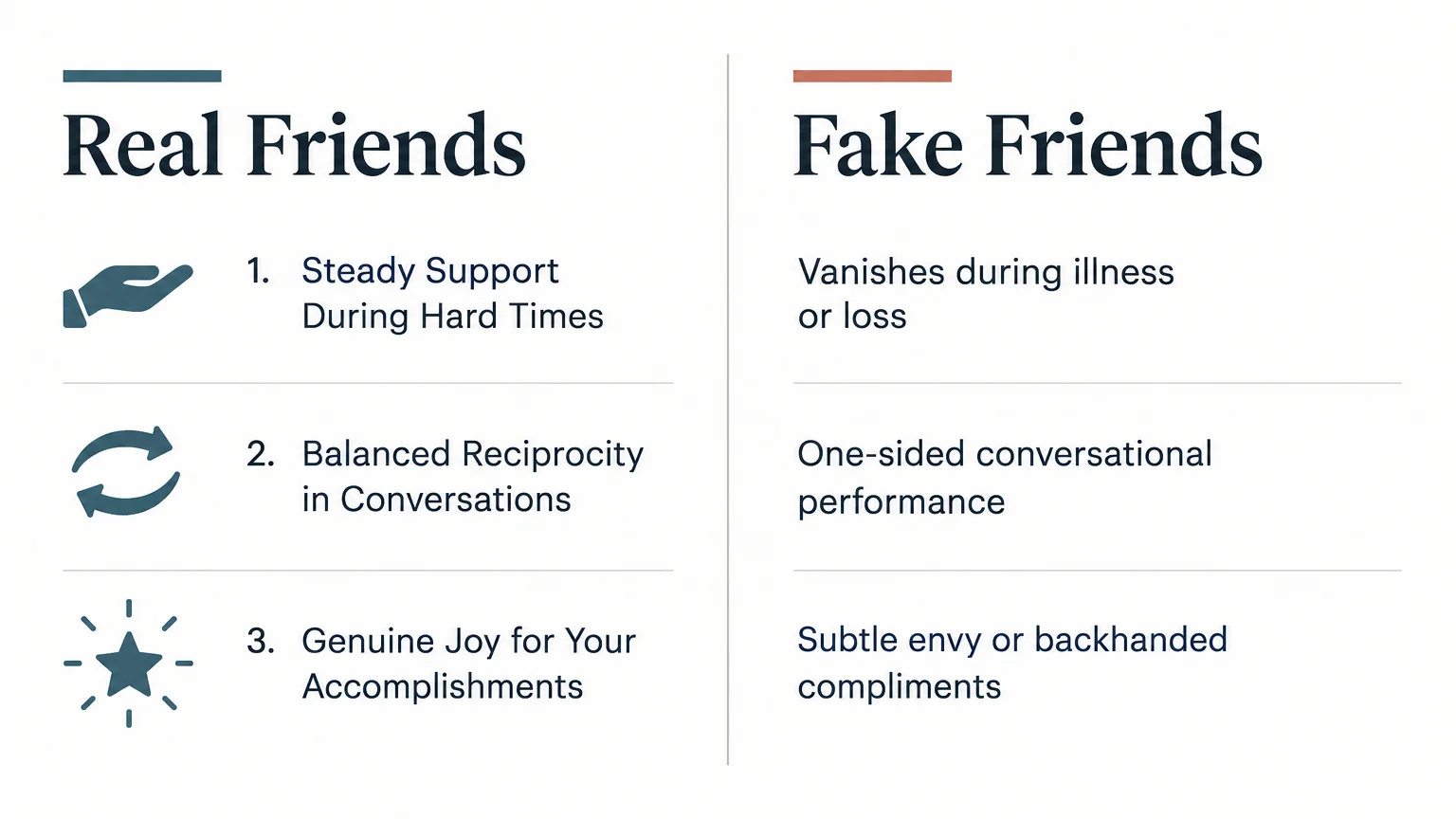
7 Key Signs to Tell Fake Friends From Real Friends
1. Steady Support During Hard Times
Real friends stay present when life feels heavy or uncertain. Fake companions often vanish when you face illness, loss, or personal grief.
Fair-weather acquaintances enjoy your presence only during comfortable moments. They offer quick excuses whenever you need practical assistance or a listening ear.
Recognizing true friends traits includes noticing who shows up without needing entertainment. Faithful companions sit with you in quiet moments and offer grounded comfort.
Notice who reaches out during your most vulnerable days. Sincere companions do not measure their support by what you can give in return.
Actionable Practice: Review your recent challenging moments in a personal journal. Write down who offered steady comfort without asking for personal favors.
2. Balanced Reciprocity in Conversations
Healthy relationships thrive on mutual listening and equal sharing. In contrast, toxic friendships often center entirely on one person’s ongoing drama and demands.
Self-centered acquaintances treat every conversation as a personal performance. They quickly steer every topic back to their own opinions or complaints.
You might leave these phone calls feeling exhausted and ignored. A one-sided exchange drains your vitality instead of nourishing your spirit.
In contrast, true companions ask thoughtful questions about your life. They pause, listen attentively, and remember the details you share with them.
Actionable Practice: Notice the flow of words during your next social call. Observe whether the conversation feels balanced or one-sided.
3. Genuine Joy for Your Accomplishments
A sincere friend celebrates your personal milestones with genuine enthusiasm. A disingenuous acquaintance responds with subtle envy, backhanded compliments, or sudden silence.
Insecure people often view your happiness as a threat to their status. They may downplay your achievements or immediately compare them to their own lives.
True allies find comfort in your success. They lift you up without competing for attention or harboring secret bitterness.
Their warm encouragement reassures you that you do not need to hide your light. You can share good news without fear of provoking silent resentment.
Actionable Practice: Share a small, positive update with a friend this week. Pay close attention to their initial facial expression and tone of voice.
4. Respect for Your Boundaries and Space
Respectful friends accept your spoken limits without hesitation. Manipulative individuals treat personal boundaries as obstacles to overcome or personal insults.
A fake friend might pout or complain when you decline an invitation. They pressure you to change your mind to satisfy their own preferences.
Real friends understand that you need time to rest and recharge. They never demand that you sacrifice your health to meet their expectations.
Clear boundaries preserve mutual respect over decades of companionship. When someone honors your limits, they demonstrate that they value your autonomy.
Safety Cue: Notice whether you feel anxious before saying no to someone. A relationship that requires total compliance is unsafe for your nervous system.
5. Discretion and Loyalty with Private Information
Trustworthy friends keep your private disclosures strictly confidential. Disloyal companions use your private struggles as casual gossip or social currency with others.
Pay close attention to how someone speaks about their other friends. If they share someone else’s secrets with you, they likely share yours with others.
Real companions guard your vulnerabilities with care and dignity. You can confide in them without worrying about unexpected breaches of trust.
Emotional safety cannot exist without consistent personal discretion. Mutual trust creates a sanctuary where both individuals feel protected.
Actionable Practice: Test confidentiality by sharing an inconsequential, minor secret first. Observe whether that information stays private before sharing deeper vulnerabilities.
6. Acceptance of Your Personal Evolution
People naturally evolve in their spiritual views, hobbies, and lifestyles. True companions encourage your personal growth and celebrate your new interests.
Inauthentic companions often try to anchor you to past versions of yourself. They may mock your new routines or complain that you act differently now.
Stagnant relationships rely on rigid expectations and old habits. When you outgrow those patterns, an unsupportive person may express irritation or disdain.
Real friends make room for your evolving perspective. They ask questions about your new paths with curiosity and gentle respect.
Actionable Practice: Mention a new book, hobby, or lifestyle change to a friend. Notice whether they respond with curiosity or critical skepticism.
7. Direct, Compassionate Communication
Misunderstandings occur in every relationship from time to time. Genuine companions resolve friction through calm, honest, and respectful dialogue.
Inauthentic friends frequently rely on passive-aggressive comments, sarcasm, or sudden coldness. They leave you guessing about their feelings instead of speaking directly.
The silent treatment is a harmful way to handle interpersonal friction. It creates unnecessary anxiety and damages emotional safety between adults.
Loving companions prioritize reconciliation over winning an argument. They speak kindly, listen carefully, and work together to repair misunderstandings.
Safety Cue: Step back if an acquaintance uses prolonged silence to punish you. Healthy adults discuss disagreements directly and with compassion.
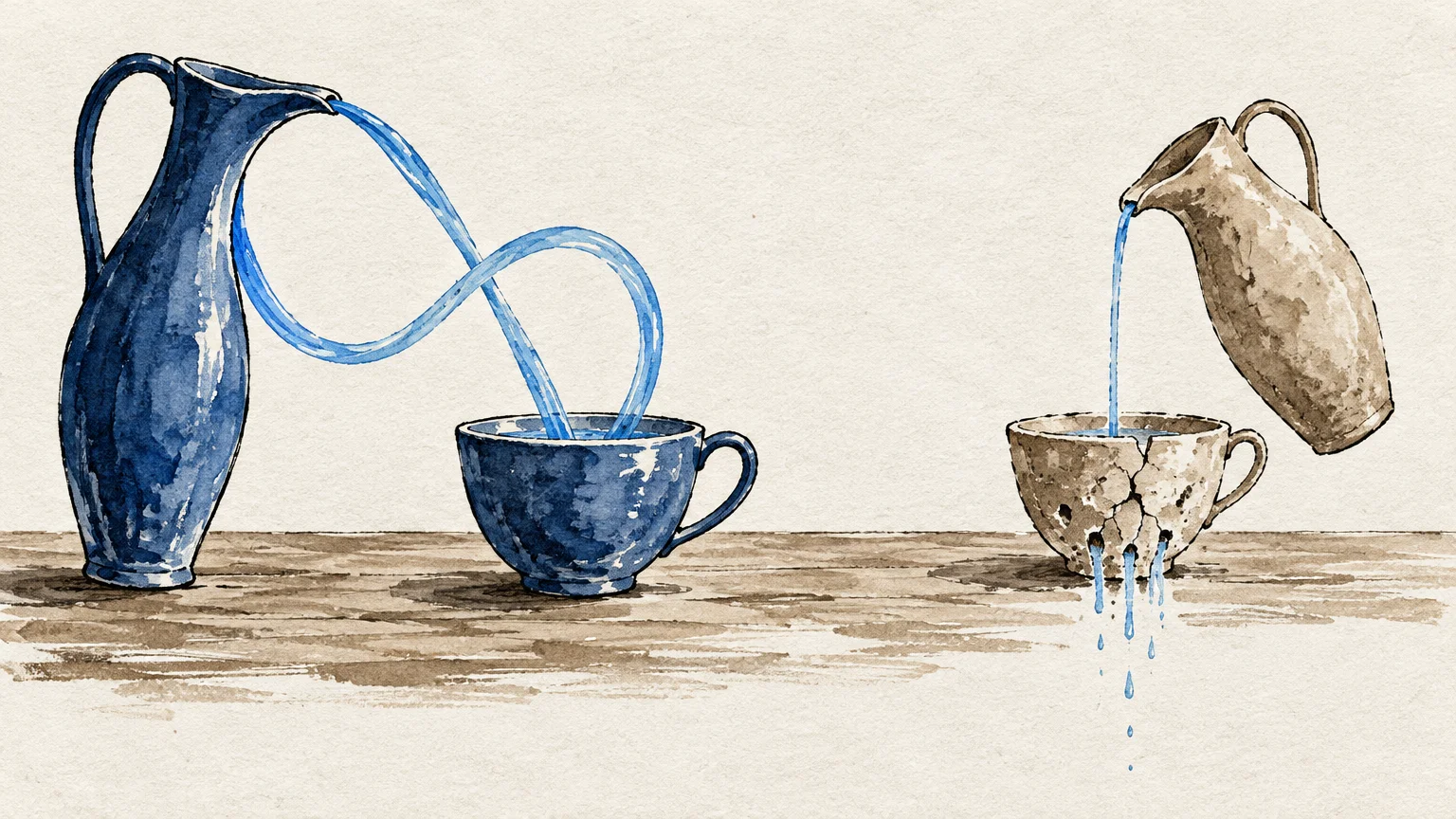
Understanding Cognitive Patterns in Friendships
Human beings naturally search for patterns in their social interactions. Two common cognitive habits can cloud your judgment when evaluating friends.
The first pattern is confirmation bias, which means focusing only on details that confirm your hopes. You might focus on one kind act from years ago while excusing ongoing neglect.
The second pattern involves memory salience, where vivid memories overshadow everyday reality. You may stay attached to someone because of shared youth rather than present compatibility.
Acknowledging these mental tendencies allows you to view your social circle with objectivity. You can cherish fond memories while still honoring your present emotional needs.

Navigating Emotional Safety and Setting Gentle Boundaries
Stepping back from draining connections does not require a dramatic scene. You can quietly reduce contact by slowing your response times and adjusting your availability.
Setting boundaries is a calm act of self-care, not an act of aggression. It protects your nervous system and helps you maintain a peaceful home environment.
Clear conversation starters can help you articulate your limits with confidence. Having prepared words reduces the anxiety that often accompanies limit-setting.
You might say: “I value our history, but I need quiet time this weekend to rest.” This simple sentence honors your friendship while establishing a clear limit.
If you need to speak with a counselor or faith leader, prepare an opener. You can say: “I am feeling drained by certain relationships and want guidance on setting boundaries.”
Compassionate guidance can help you untangle misplaced guilt and grief. Professional support provides a safe container to explore relationship challenges.
Grief and coping resources at the American Psychological Association (APA) and NIH.
Mental health support and resources at SAMHSA.
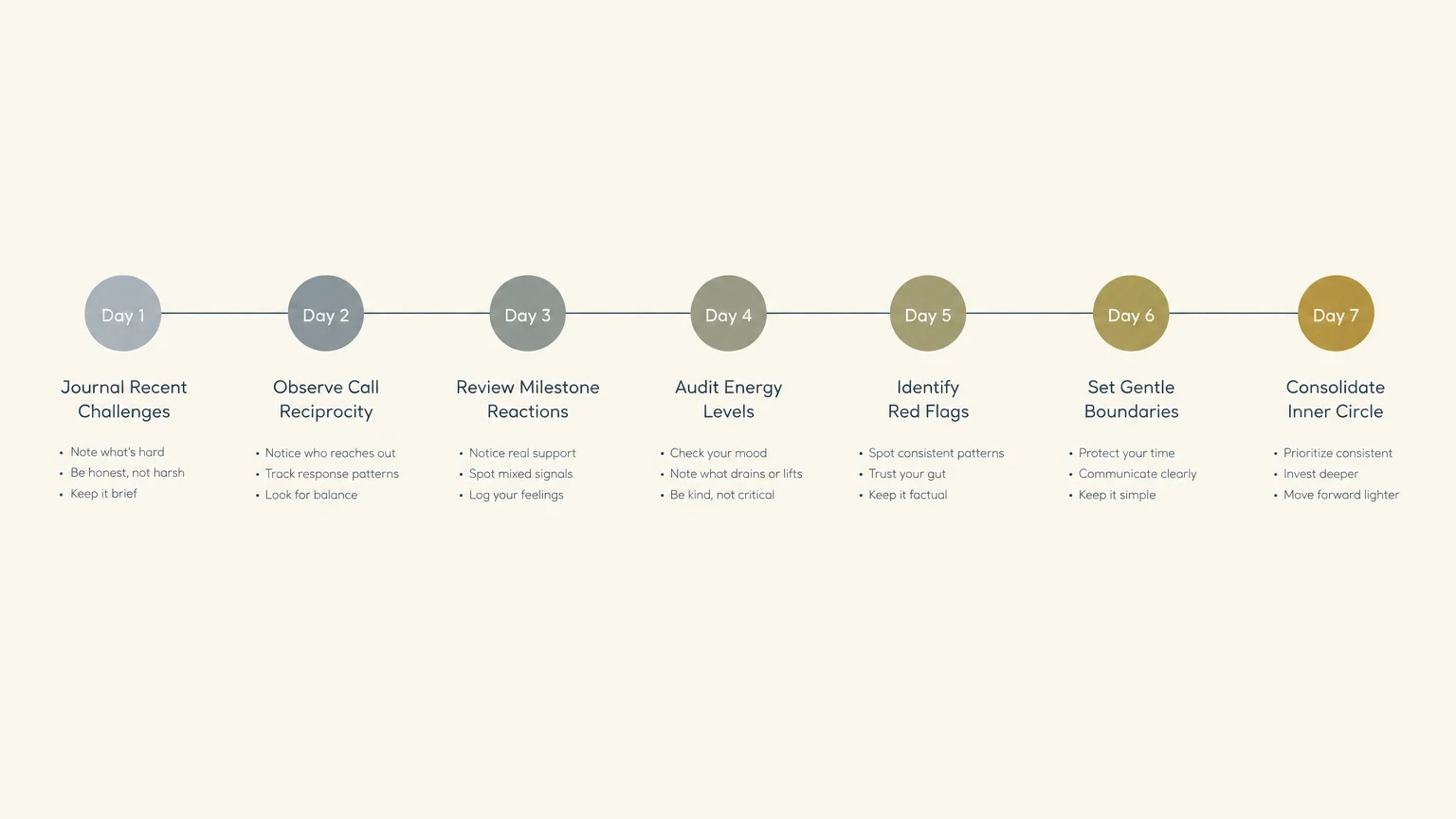
A Simple 7-Day Friendship Clarity Plan
This gentle, no-cost practice helps you assess your relationships without judgment. Spend ten quiet minutes each morning reviewing your recent interactions.
On day one, write down the names of your closest companions in a notebook. On day two, note how your body physically feels after spending time with each person.
On day three, examine reciprocity by noting who reaches out first in each relationship. On day four, evaluate whether conversations feel mutually supportive or entirely one-sided.
On day five, identify any lingering resentment or guilt tied to those connections. On day six, practice setting a small, polite boundary with someone in your circle.
On day seven, reflect on the traits that make you feel truly valued and safe. Commit to nurturing the relationships that align with those core values.
Frequently Asked Questions About Real and Fake Friends
Can a fake friend change into a real friend?
Meaningful change is possible if the individual genuinely desires personal growth. However, this process requires sustained self-awareness and consistent action over time.
You cannot force another adult to value honesty or reciprocity. Focus on your own growth while observing whether their behavior changes reliably.
Why do toxic friendships hurt so deeply in later adulthood?
Long-term connections often carry decades of shared memories and life experiences. Stepping back from an old friend can feel like losing a piece of your personal history.
Allow yourself to mourn what the relationship once offered. Grieving the past does not mean you must endure mistreatment in the present.
How do I handle mutual friends after setting boundaries?
Keep your communications calm, neutral, and brief when speaking with mutual acquaintances. Never ask mutual friends to choose sides or carry messages between you.
Treat former companions with polite cordiality whenever you cross paths at community events. Quiet dignity prevents unnecessary social drama and protects your peace of mind.
Is it normal to have a smaller social circle as you age?
Many adults naturally prune their social circles as they gain life experience. Emotional depth and trust become far more valuable than a high number of casual contacts.
Two or three dependable companions provide far greater emotional support than dozens of superficial acquaintances. Celebrate quality over quantity.
How does intuition help you spot inauthentic behavior?
Intuition often operates as subtle physical cues, such as tension in your chest or stomach. Your subconscious mind notices inconsistent vocal tones before your conscious mind catches up.
Honor those bodily signals without jumping to immediate conclusions. Give yourself time to observe whether future interactions confirm your initial physical discomfort.
Moving Forward with Peace and Intention
Refining your friendships is an essential step toward personal wellbeing. Surrounding yourself with sincere people allows your spirit to rest in safety.
Take three practical steps this week to honor your emotional health. First, reach out to one dependable friend and express sincere appreciation for their presence.
Second, decline one social invitation that feels draining or obligatory. Enjoy the quiet white space you create in your weekly calendar.
Third, track your somatic signals when spending time with others. Trust your body when it signals ease, openness, or tension.
You deserve companions who walk alongside you with steady loyalty and respect. Choose relationships that honor your journey and nurture your daily peace.
Compliance and Informational Disclaimer
This article is provided for educational and informational purposes only. It does not provide medical, psychological, legal, or other professional advice.
If you struggle with severe grief or anxiety, consult a licensed professional or trusted faith leader. Please seek urgent care immediately if you are experiencing a mental health crisis.