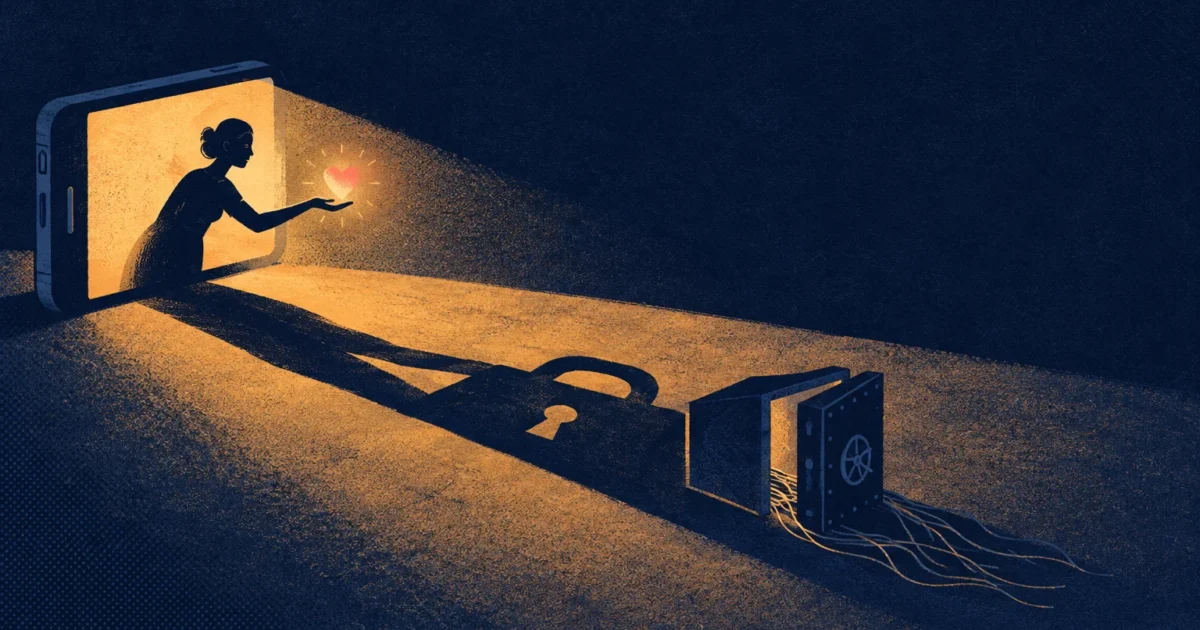
Meeting someone new online can bring genuine excitement and renewed hope to your life. Before you transfer any money or share financial details, you must pause to verify their true identity.
Sophisticated online romance scams specifically target adults seeking companionship, warmth, and meaningful conversation. Skilled predators know how to exploit natural empathy, turning honest kindness and trust into devastating personal loss.
This guide outlines essential scam warning signs and practical fraud prevention steps. You will discover how to evaluate digital relationships safely, maintain healthy boundaries, and protect your hard-earned financial security.

The Emotional Landscape of Digital Connection
Human beings seek companionship, shared joy, and spiritual understanding at every stage of life. Life changes like retirement, divorce, or bereavement can make that longing even stronger.
Entering the world of digital dating requires emotional courage and openness. You deserve to meet partners who appreciate your life experience and kindness.
Unfortunately, unscrupulous operators recognize that open hearts can be vulnerable. They monitor dating applications and social media groups to find thoughtful, caring people.
These manipulators study personal profiles to understand your specific values and spiritual beliefs. They craft custom personalities designed to feel like an answer to your prayers.
This dynamic often triggers a psychological reaction known as confirmation bias. Confirmation bias occurs when you accept statements that confirm your wishes while dismissing warning signs.
When someone reflects your exact dreams back to you, rational caution fades. You focus on their affectionate words and overlook basic inconsistencies in their story.
Recognizing this human tendency does not mean judging yourself harshly. It simply means developing the conscious awareness necessary to keep your heart and savings safe.
Understanding the Mechanics of Love Bombing
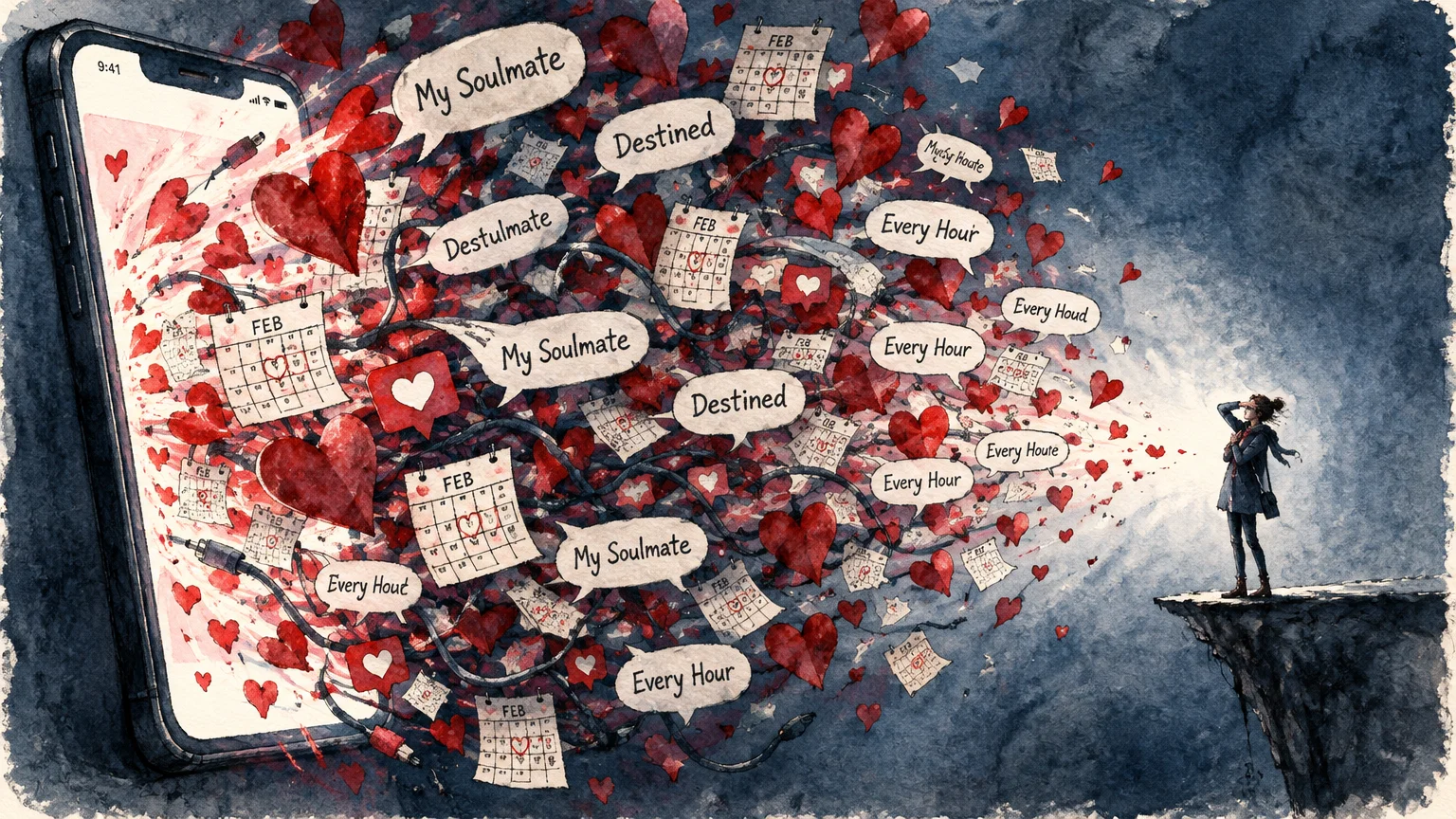
Online romance scams almost always begin with an intense phase called love bombing. In this stage, the suitor showers you with immediate flattery, affection, and constant attention.
They send morning messages, check in throughout the day, and call every evening. This constant communication establishes a rapid sense of familiarity and emotional intimacy.
Within days or weeks, the scammer claims you are their destined soulmate. They may speak of divine timing, spiritual destiny, or an unbreakable cosmic bond.
This artificial urgency is designed to overwhelm your natural emotional pacing. Manipulators know that rapid emotional attachment clouds your objective judgment.
Research shows that sudden romantic validation triggers strong dopamine releases in the brain. This biological rush can make you feel bonded to a person you have never met.
Healthy, grounded love does not require rushed emotional declarations. Authentic affection grows gradually through shared real-world experiences, mutual respect, and consistent behavior over time.
The True Scale: Critical Data on Dating Scams
Romance fraud is not an isolated crime carried out by lone actors. International criminal syndicates operate these schemes on an industrial scale.
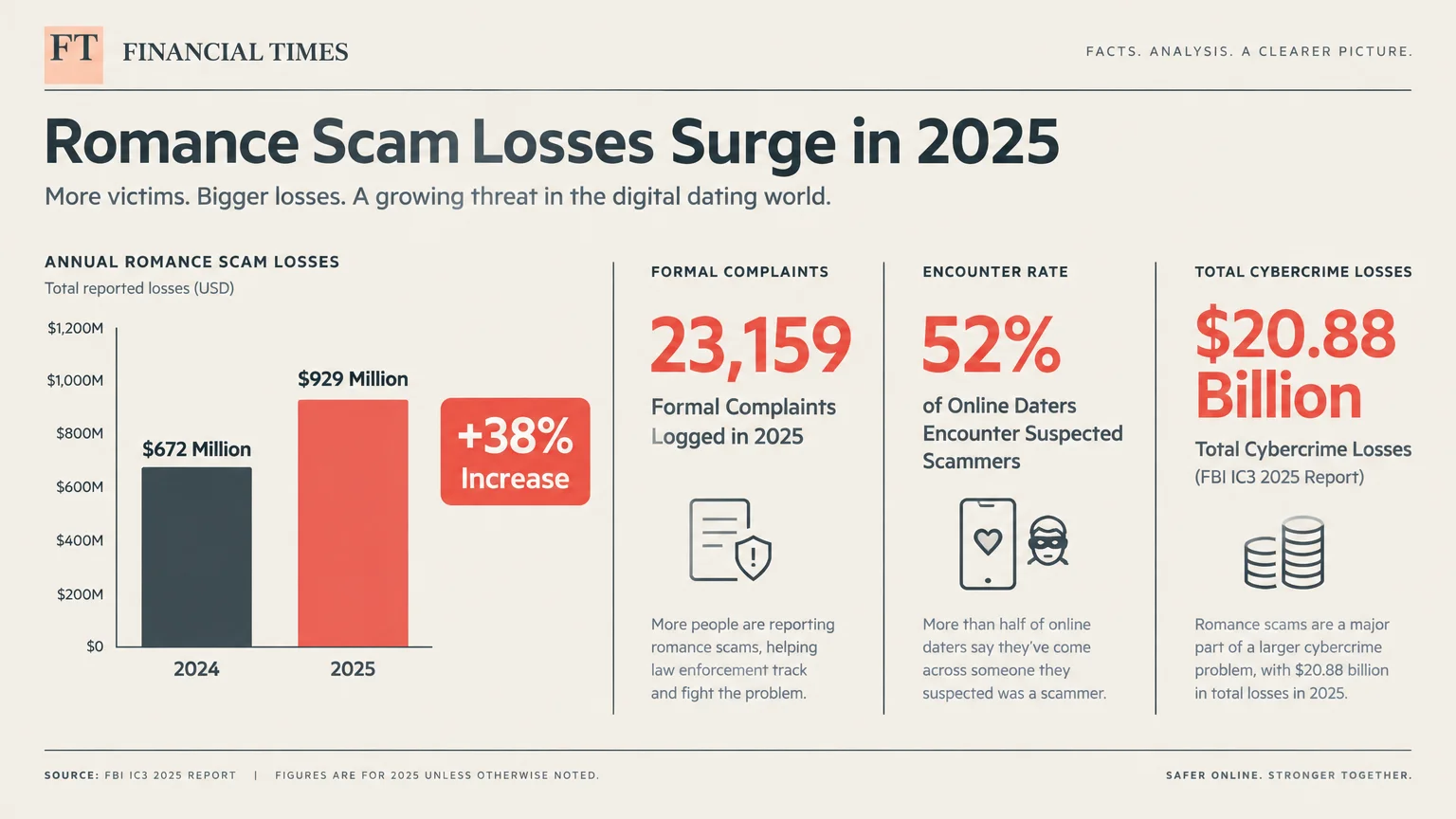
The FBI Internet Crime Complaint Center released revealing figures in its 2025 Annual Report. Victims reported losing $929 million to romance and confidence scams in 2025.
This staggering total reflects a 38 percent increase over the $672 million lost in 2024. The bureau logged 23,159 individual romance fraud complaints during the year.
Total cybercrime losses across all categories reached a record $20.88 billion in 2025. Over one million formal complaints were filed with federal law enforcement.
Data from the Pew Research Center shows that 52 percent of online daters have encountered suspected scammers. Deceptive profiles are common across popular matchmaking apps and social networks.
The Federal Trade Commission noted that nearly 60 percent of romance fraud reports in 2025 originated on social media platforms. Overall social media scams generated $2.1 billion in losses.
During the first nine months of 2025 alone, the FTC received 55,604 romance scam filings. Reported losses exceeded $1.16 billion, with a median loss of $2,218 in the third quarter.
Imposter scams remained the most common consumer fraud category for the ninth consecutive year. Total imposter fraud losses reached $3.5 billion across one million reports.
Overall consumer fraud reached a record $15.9 billion in 2025 across roughly three million filings. These figures highlight an urgent need for practical vigilance when engaging online.

Why Adults Over 50 Face Disproportionate Harm
Criminal networks intentionally focus their efforts on mature adults. People over fifty often possess retirement savings, home equity, and good credit scores.
The financial impact on older demographics is especially severe. In 2025, victims aged 60 and older reported $7.75 billion in fraud losses to the FBI.
Adults aged 50 to 59 reported an additional $3.68 billion in fraud losses. Combined, individuals aged 50 and older suffered more than half of all reported losses.
Official records represent only a fraction of true financial harm. The Canadian Anti-Fraud Centre estimates that only 5 to 10 percent of victims file official reports.
The Consumer Federation of America suggests that actual annual losses are approximately seven times higher than government figures. Victim shame and emotional embarrassment keep many people silent.
If you have lost money or felt deceived, you must release self-blame. Skilled predators spend years perfecting their psychological manipulation against caring people.
The Deadly Intersection of Romance and Investment Fraud
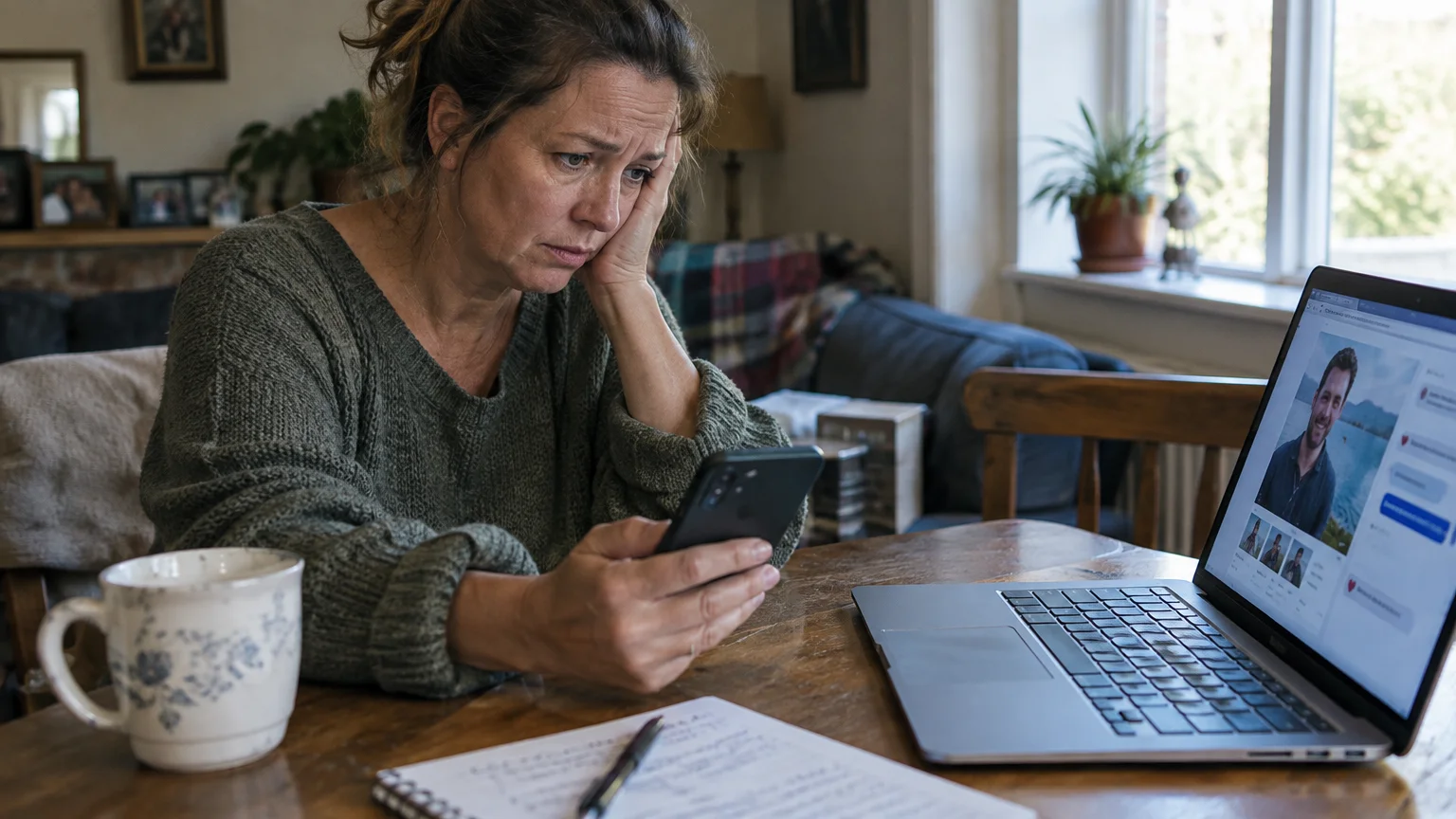
Modern online romance scams rarely stop at simple requests for emergency money. They often transform into elaborate investment traps known as pig butchering.
In these schemes, the scammer builds deep emotional trust over several weeks or months. Once you feel completely secure, they casually mention their success in financial trading.
They offer to teach you their methods out of romantic devotion. They direct you to a fraudulent website that mimics a legitimate investment exchange.
Investment fraud ranked as the costliest cybercrime category in 2025, totaling $8.6 billion in losses across 72,984 complaints. That represents a 32 percent increase from 2024.
Total fraud complaints involving cryptocurrency exceeded $11 billion across 181,565 complaints in 2025. Fake trading dashboards show rapid growth to lure you into sending larger sums.
When you attempt to withdraw your funds, the criminals fabricate bogus regulatory fees and taxes. They demand more money until you realize your savings are entirely gone.
To combat this crisis, the FBI launched Operation Level Up. This initiative has notified more than 8,000 targeted victims and saved an estimated $500 million in potential losses.
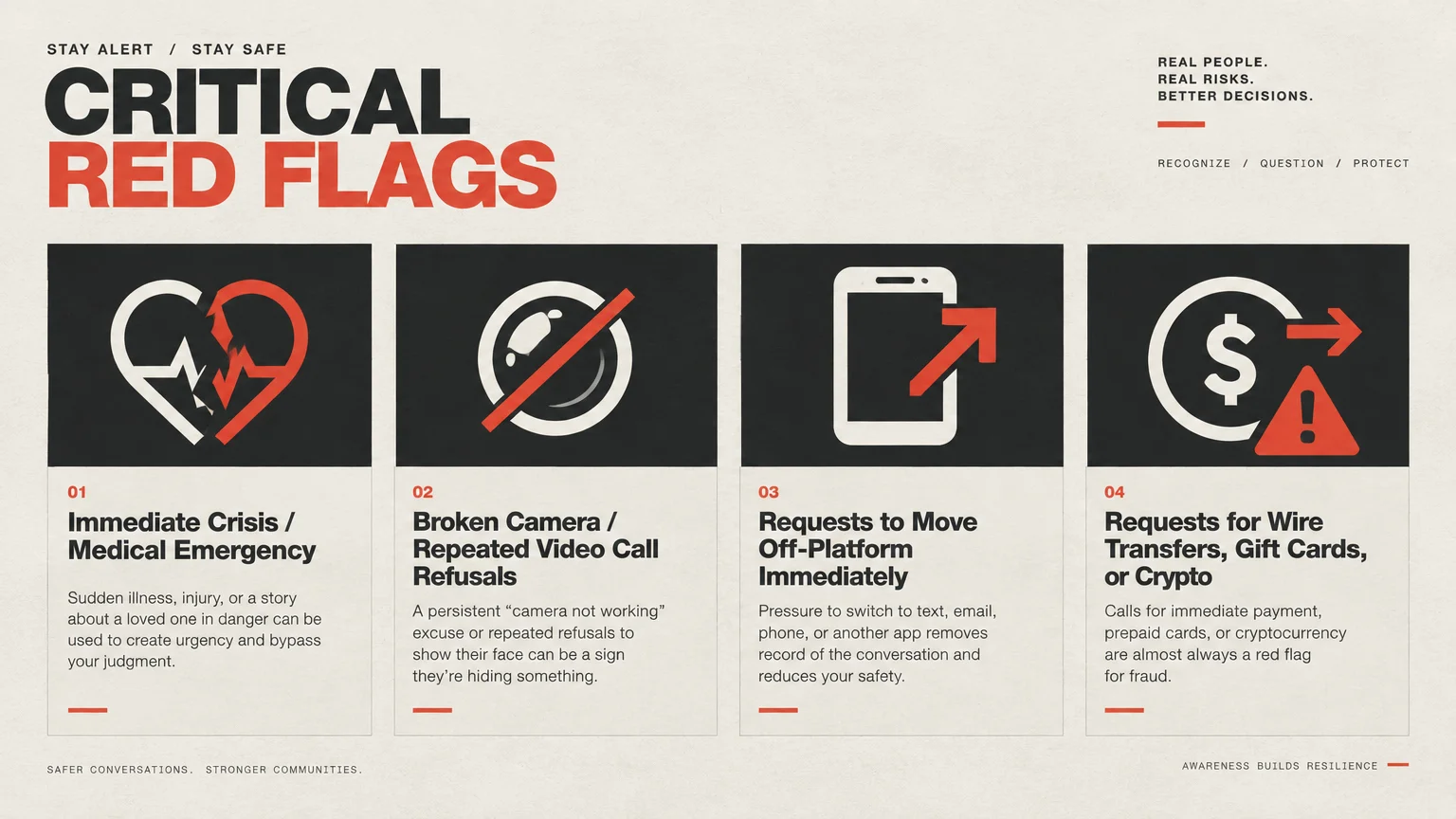
Scam Warning Signs You Must Recognize
Protecting yourself requires learning the distinct behavioral patterns scammers use. Paying attention to these warning signs will keep your heart and finances protected.
Grand Promises and Rushed Timelines
A scammer often plans an extravagant future with you almost immediately. They discuss purchasing homes together, taking luxury vacations, and entering marriage within weeks of your first message.
These sweeping promises are calculated illusions designed to secure your commitment. Genuine partners build trust through patient, realistic conversation rather than grandiose fantasies.
Take note whenever an online suitor bypasses normal courtship milestones. Ask yourself whether their declarations match the true depth of your actual connection.
Endless Excuses to Avoid Video Calls
A legitimate suitor will gladly join video calls or meet in public. In contrast, fraudsters generate endless excuses to keep their cameras switched off.
They claim poor internet connections, broken phone cameras, or strict employer security rules. They often pretend to work on offshore oil rigs, in foreign military posts, or for medical charities.
Never accept perpetual technical problems as an excuse. If someone refuses to have a live, two-way video conversation, end all communication immediately.
Sudden Crises and Emotional Guilt
Every romance scam eventually features an unexpected financial catastrophe. The fraudster experiences a sudden medical emergency, customs dispute, legal arrest, or travel setback.
They claim that you are the only person who can save them from disaster. They use guilt, tears, and emotional manipulation to bypass your logical hesitation.
Understand that you are never responsible for solving an online acquaintance’s financial emergency. Real adults maintain their own support systems and do not demand cash from internet companions.
Requests for Non-Traceable Funds
Scammers always demand payment methods that make recovery virtually impossible. They frequently request cryptocurrency transfers, international wire transfers, payment apps, or retail gift cards.
Once you send funds through these methods, the money vanishes instantly. Banks and law enforcement agencies cannot reverse completed blockchain transactions or retail card redemptions.
Treat any request for gift cards or wire transfers as absolute proof of fraud. No honest romantic partner or legitimate business entity accepts payment through store gift cards.

The Threat of Artificial Intelligence in Modern Scams
Criminal syndicates increasingly use artificial intelligence to deceive thoughtful daters. In 2025, the FBI recorded 22,364 AI-related complaints totaling $893 million in losses.
Within the confidence fraud category, 626 complaints flagged the explicit use of artificial intelligence. These high-tech romance scams produced over $19 million in verified losses.
Fraudsters use AI image software to generate lifelike photos of people who do not exist. These synthetic faces display perfect skin, flawless symmetry, and natural lighting.
Scammers also employ deepfake technology to produce simulated video clips. They can superimpose a stolen face over an actor’s body during brief video chats.
Voice cloning technology presents an even more dangerous challenge. Criminals can clone a realistic human voice using only a few seconds of recorded speech.
In 2025, voice-cloning emergency scams caused more than $5 million in losses. A scammer can call you sounding identical to your romantic interest, pleading for urgent ransom or bail money.
Always verify voice calls by hanging up and calling back on a known, verified number. Ask specific, personal questions that an artificial intelligence tool could never answer.
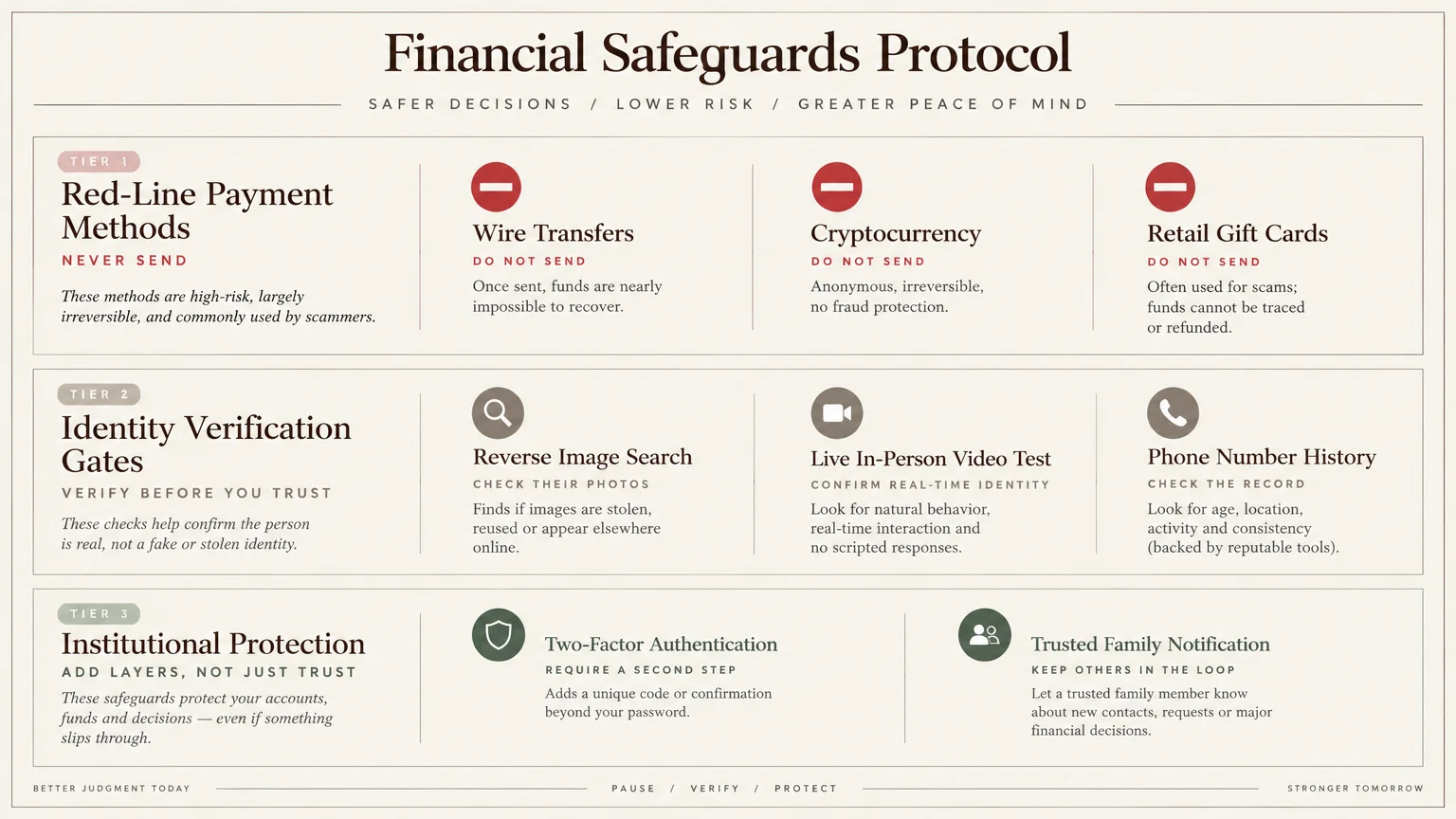
Sending Money Online Safety: Ironclad Financial Safeguards
Establishing clear financial rules before engaging online creates an essential emotional shield. These boundaries keep you grounded when feelings of romance begin to swirl.
Adopt the central principle of the FBI’s Take a Beat campaign. Whenever an online connection brings up money, immediately pause and step away from your device.
Taking a deliberate pause interrupts the emotional panic that scammers deliberately cultivate. It gives your nervous system time to settle so your analytical mind can regain control.
Never share your financial accounts, income details, or investment balances with someone you met online. Your financial standing is private personal information that requires strict protection.
Use modern digital verification tools to test your match’s claims. Run their profile photos through search engines to see if the images belong to someone else.
Copy and paste unusual phrases from their messages into search engines inside quotation marks. Scammers often reuse identical scripts that other alert daters have posted online.
Maintain total transparency with trusted friends or relatives regarding your online dating activity. Isolation provides the fertile soil where financial manipulation thrives and grows.
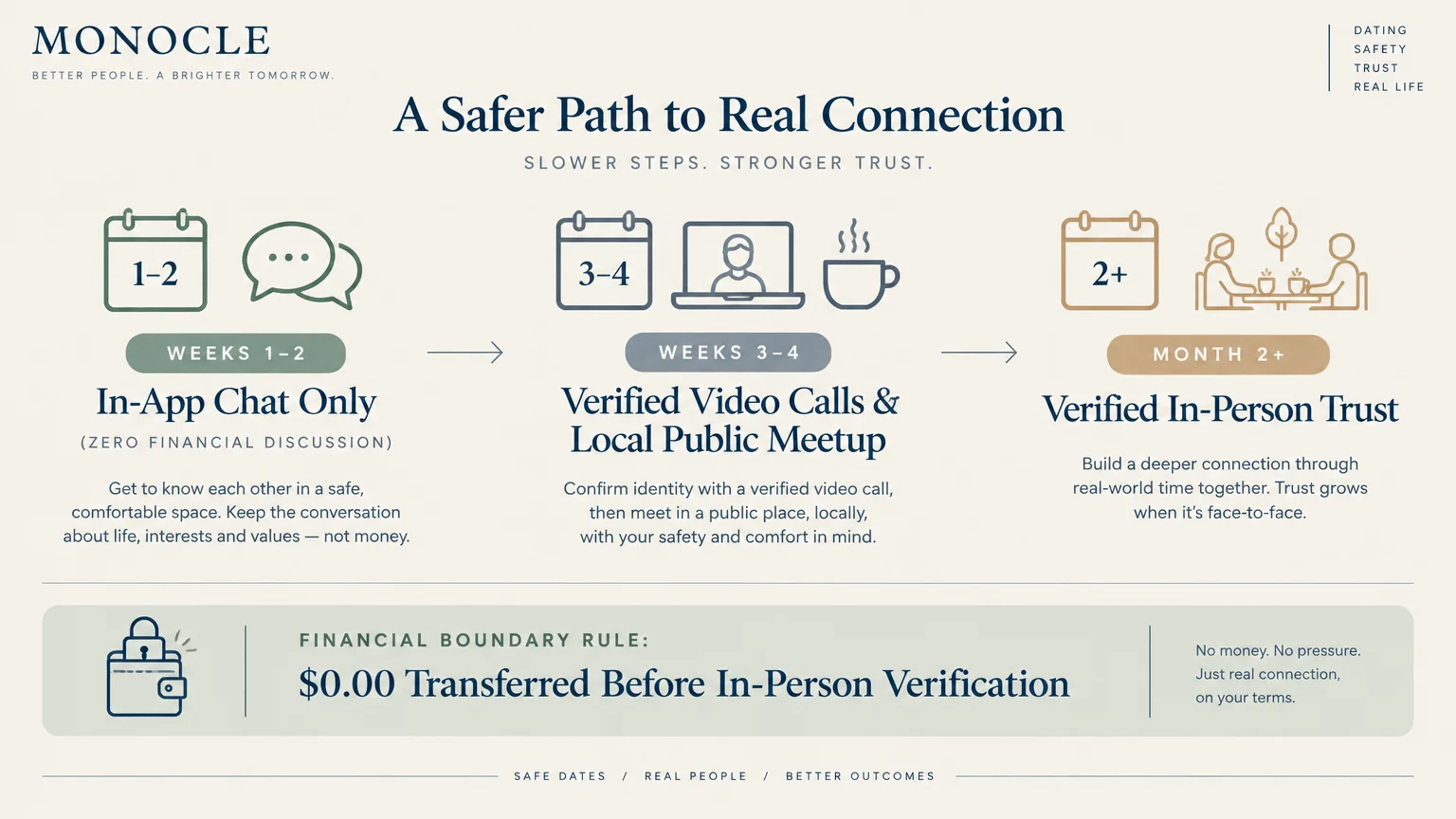
Time and Budget Guidelines for Safe Online Dating
Online dating requires managing both your emotional energy and your financial budget. Setting clear limits prevents you from overinvesting in unverified digital connections.
Allocate a modest, fixed monthly budget if you choose to pay for dating platform subscriptions. Avoid high-cost VIP services or private matchmaking packages that promise guaranteed romantic results.
Limit the time you spend messaging someone before scheduling an in-person or video meeting. Two to three weeks of messaging provides ample opportunity to assess mutual interest and basic compatibility.
If someone resists meeting after several weeks of conversation, step back from the interaction. Prolonged digital messaging without real-world contact creates false emotional attachment and wastes valuable time.
Schedule your digital dating activities for specific hours of the day. Avoid late-night messaging when fatigue makes you more susceptible to emotional manipulation and impulsive decisions.
Remember that your time and financial security are precious personal assets. Guard them carefully while pursuing healthy, transparent companionship.
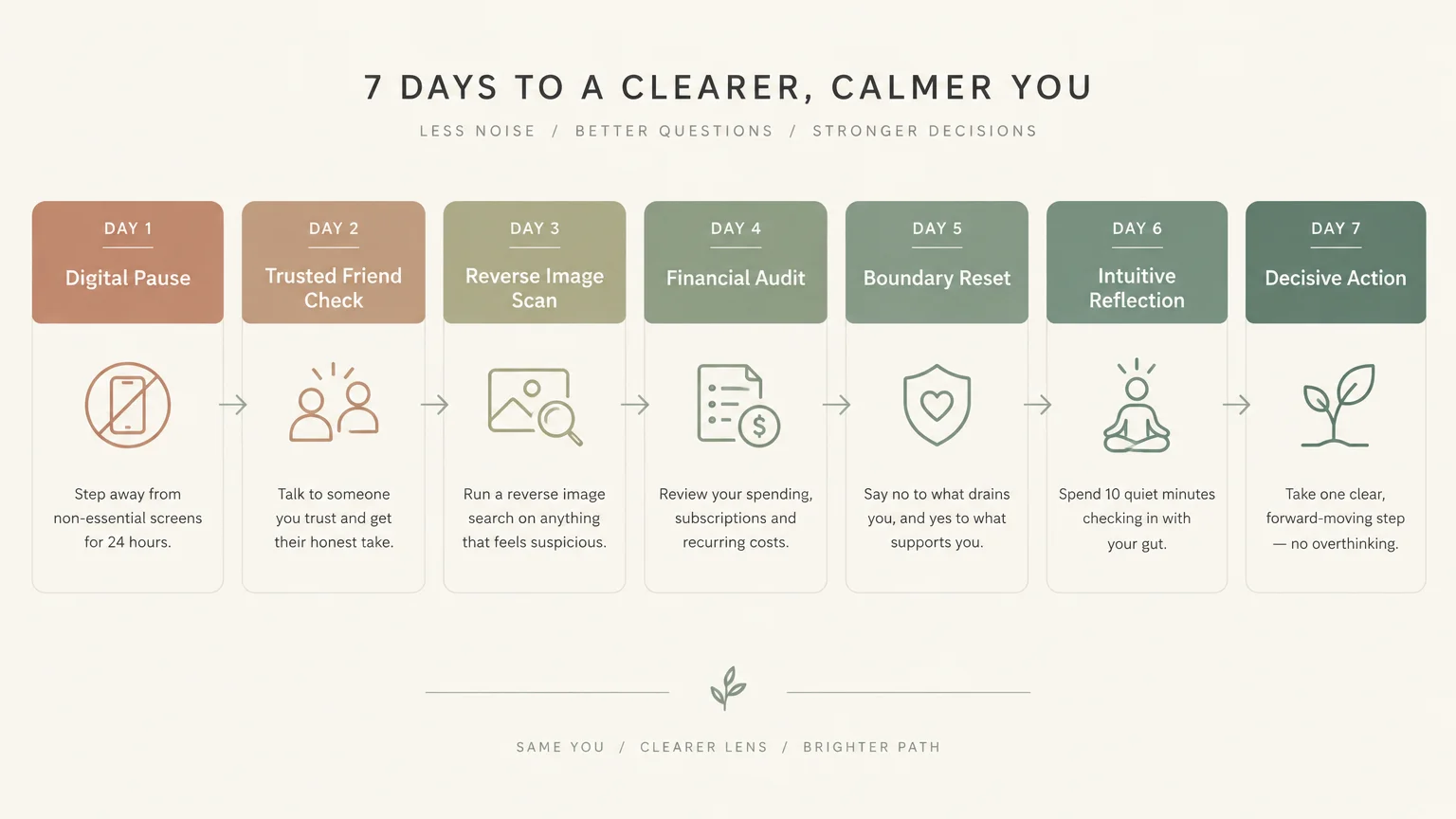
A 7-Day Grounding Plan for Emotional Clarity
If you feel confused about an online relationship, stepping back restores clear perspective. Follow this gentle seven-day practice plan in prose to regain your emotional center.
On day one, commit to twenty minutes of quiet meditation or deep breathing. Sit in silence, release digital distractions, and notice any tension lingering in your body.
On day two, write down your non-negotiable boundaries concerning money and privacy. Define clearly what financial topics are completely off limits during online conversations.
On day three, review your online interactions with strict objective detachment. Separate the facts you have verified in person from the emotional promises made in text messages.
On day four, contact a close friend or family member for a meaningful conversation. Reconnecting with established relationships weakens the isolation that digital manipulators try to create.
On day five, conduct a thorough and realistic review of your household budget. Reinforcing your commitment to personal economic independence strengthens your resolve against financial manipulation.
On day six, take a peaceful nature walk without checking your phone or messaging apps. Immersing your senses in the physical world clears the mental fog caused by excessive digital communication.
On day seven, evaluate how your online connection affects your overall wellbeing. Choose relationships that bring peace, patience, and mutual respect rather than urgency, secrecy, and emotional turbulence.

Journaling Prompts for Intuitive Discernment
Journaling offers a private haven to untangle your authentic feelings from wishful thinking. Putting your thoughts onto paper helps you access your deep inner wisdom.
Start by writing about your physical sensations during your conversations. Ask yourself whether interactions with this person produce calm relaxation or subtle physical tension and anxiety.
Explore your current emotional needs with honest, non-judgmental awareness. Reflect on whether you are seeking quick validation to soothe recent loneliness, grief, or personal transition.
Write down how this person reacts when you establish healthy personal boundaries. Notice whether they honor your limits with kindness or respond with subtle guilt, impatience, and pressure.
Document the verifiable physical evidence you have regarding this person’s true existence. Notice any excuses they have made to avoid meeting in the physical world.
Reflect on your core values and long-term life vision. Consider whether sending money to an internet acquaintance aligns with your commitment to personal security and wisdom.

Breaking the Secrecy: How to Speak With a Confidant
Scammers intentionally isolate their targets from family members, faith communities, and trusted advisors. They insist that outsiders cannot understand the sacred nature of your bond.
Breaking this secrecy is the most effective way to shatter their manipulative hold. Outside perspectives bring objective clarity to relationships clouded by romantic illusion.
You can consult a trusted friend, therapist, or spiritual advisor using simple, direct language. Share your situation honestly without downplaying any uncomfortable financial requests.
You might say: I have been chatting with someone online, but their recent requests feel strange. Would you read these messages and share your honest thoughts with me?
Another helpful opener is: A person I met online is asking for emergency money, and I feel uncertain. Can we discuss this before I make any decisions?
You could also tell a faith leader: I value your spiritual discernment on a relationship question. Someone I met online is asking for funds, and I want objective guidance.
An honest confidant will review the circumstances without romantic bias. Their calm perspective can reveal red flags that your caring heart might otherwise excuse.

Emotional Healing and Self-Compassion After Fraud
Discovering that a romantic partner was a fraudster causes intense psychological pain. Victims experience deep grief, profound betrayal, and a devastating loss of self-confidence.
Professional scammers are master manipulators who study human vulnerabilities for a living. Falling victim to their calculated deceit does not mean you are foolish or naive.
Your experience simply proves that you possess a loving, generous heart. Treat yourself with deep compassion as you navigate the painful aftermath of deception.
Give yourself permission to grieve the loss of the relationship you believed was real. Even though the suitor was fake, your feelings and hopes were entirely authentic.
Supportive counseling can guide you through the process of rebuilding emotional trust. Explore evidence-based mental health resources at the American Psychological Association and the NIH.
If you experience overwhelming anxiety or depression, contact SAMHSA for free support services. Dedicated counselors provide compassionate assistance during moments of crisis and emotional distress.
Emotional recovery also requires tending to your physical body with gentle care. Prioritize consistent sleep habits with helpful guidance from the Sleep Foundation.
Mindful practices like gentle yoga and breathwork can calm an overwhelmed nervous system. Discover research-supported complementary health strategies through the NCCIH.
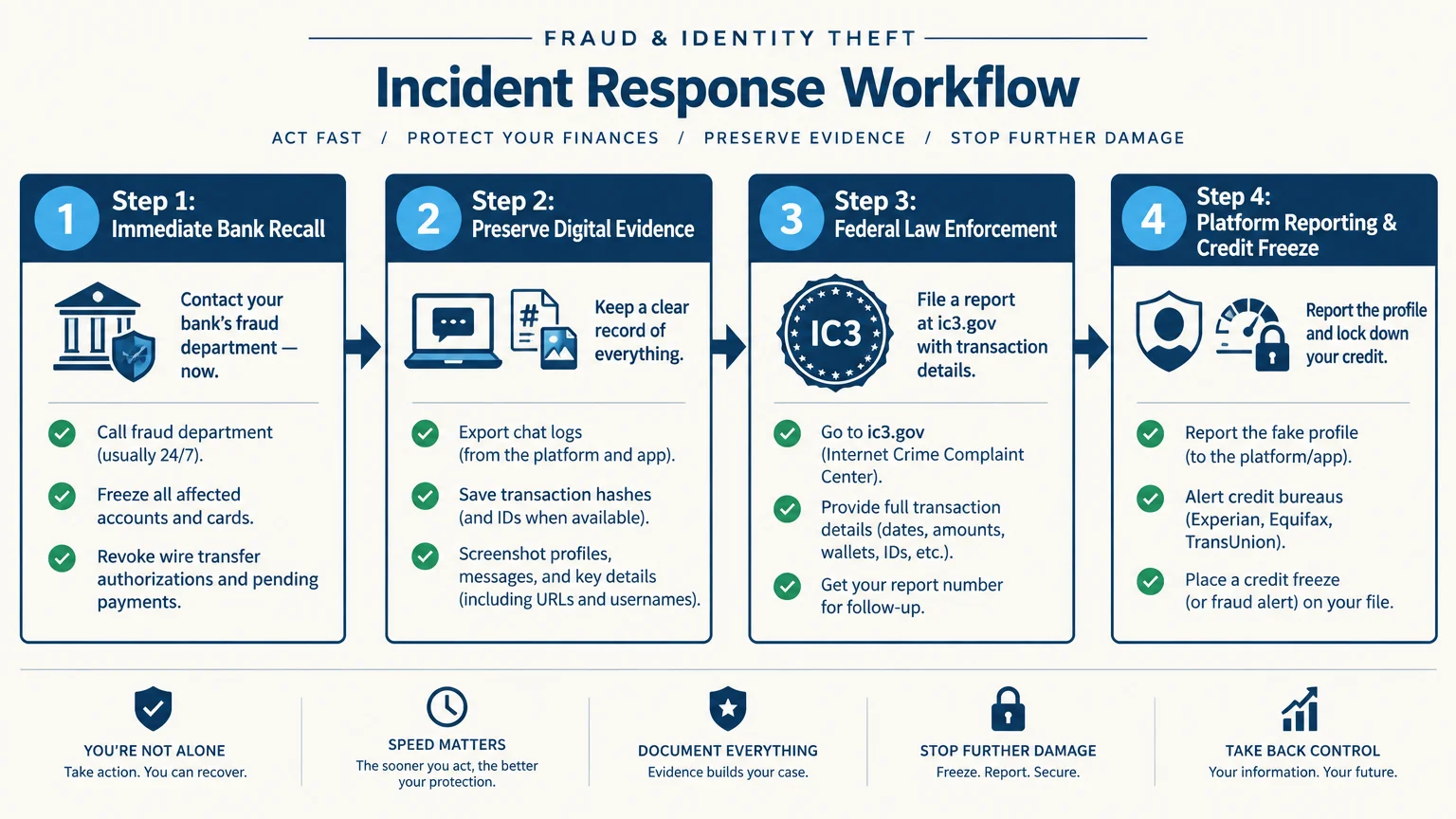
Actionable Steps for Reporting Fraud and Freezing Losses
If you realize you are speaking to a scammer, act quickly and decisively. Immediate action protects your remaining funds and aids international law enforcement efforts.
First, cut off all communication with the scammer across every digital platform. Do not explain your decision, and do not threaten them with legal action.
Confronting a criminal gives them an opportunity to deploy further manipulation. Block their phone number, email address, and social media accounts immediately.
Next, contact your financial institutions without delay if you transferred funds. Notify their fraud department that you were targeted by a confidence scam.
Ask your bank to freeze compromised accounts and issue new card numbers. Swift notification increases the slim chance of intercepting wires or payment app transfers.
File an official fraud report with the Federal Trade Commission at ReportFraud.ftc.gov. Your report helps federal regulators track illicit tactics and warn other consumers.
Submit a formal complaint to the FBI Internet Crime Complaint Center at ic3.gov. The bureau uses this critical intelligence to fuel enforcement programs like Operation Level Up.
Be vigilant against recovery scammers who contact you promising to retrieve lost funds. These predators prey on past victims and demand advance fees for nonexistent services.
Frequently Asked Questions About Online Romance Scams
Can an online connection be legitimate if they never ask for money?
Some romance scammers cultivate relationships for months before requesting any financial assistance. They patiently establish trust and deep affection before introducing a fake crisis.
Maintain healthy emotional boundaries until you meet someone in the physical world. A genuine romantic partner will always prioritize meeting you in person.
What should I do if a match asks me to receive packages or transfers?
Never accept packages or transfer money on behalf of an online acquaintance. Criminals use unsuspecting partners as money mules to move stolen goods and illicit cash.
Acting as a money mule can lead to serious legal consequences, including criminal prosecution. Refuse the request immediately and report the user account to the platform.
How can I tell if a profile picture was generated by artificial intelligence?
AI-generated portraits often display subtle background distortions, mismatched earrings, or strange hair textures. The subject’s pupils may appear slightly irregular or improperly centered.
However, AI technology improves rapidly, making visual detection harder every day. Protect yourself by insisting on interactive, live video calls before developing an emotional bond.
Why do scammers insist on leaving dating websites right away?
Matchmaking platforms use automated security filters to detect predatory language and block malicious accounts. Moving to private messaging apps removes the scammer from moderation systems.
Refuse requests to move to external messaging channels during your initial conversations. Honest individuals understand the need for caution and will respect platform security measures.
How can I support a friend who is caught in an online scam?
Approach your friend with gentle compassion rather than judgment, ridicule, or anger. Acknowledge that the emotional feelings they are experiencing feel entirely genuine to them.
Show them official government resources, news reports, and common scam scripts calmly. Offer to help them contact law enforcement and support them through the emotional fallout.
Reclaiming Your Peace and Moving Forward
Experiencing deceit can shake your worldview and make you doubt your own judgment. With patience, grounded self-reflection, and compassionate support, you can rebuild inner peace.
Remember that your capacity to love and trust is a beautiful personal strength. Learning to protect that gift with firm boundaries ensures that future relationships remain safe.
This week, audit your digital security settings across your email and social accounts. Establish strong, unique passwords and enable two-factor authentication on every financial profile.
Commit to sharing your future dating journey openly with supportive friends or relatives. Healthy love flourishes in the open sunlight of honesty, mutual respect, and patient care.
Disclaimer: This article is published solely for informational and educational purposes. It does not constitute formal legal, financial, psychological, or medical counsel.
If you are experiencing severe emotional distress or depression, consider speaking with a licensed therapist or physician. Seek immediate professional assistance if you are facing a mental health crisis.