You can enter any gathering and immediately understand the collective mood. Mastering this quiet skill helps you protect your personal peace and connect warmly with others.
Strong social perceptiveness allows you to ease subtle tension and offer genuine comfort during difficult moments. You can navigate family gatherings, support circles, and community events with grounded confidence.
In this guide, you will explore the seven key traits of people who read a room well. These practical insights will enrich your relationships and support your emotional wellbeing as you move through life.
Understanding the Art of Reading a Room
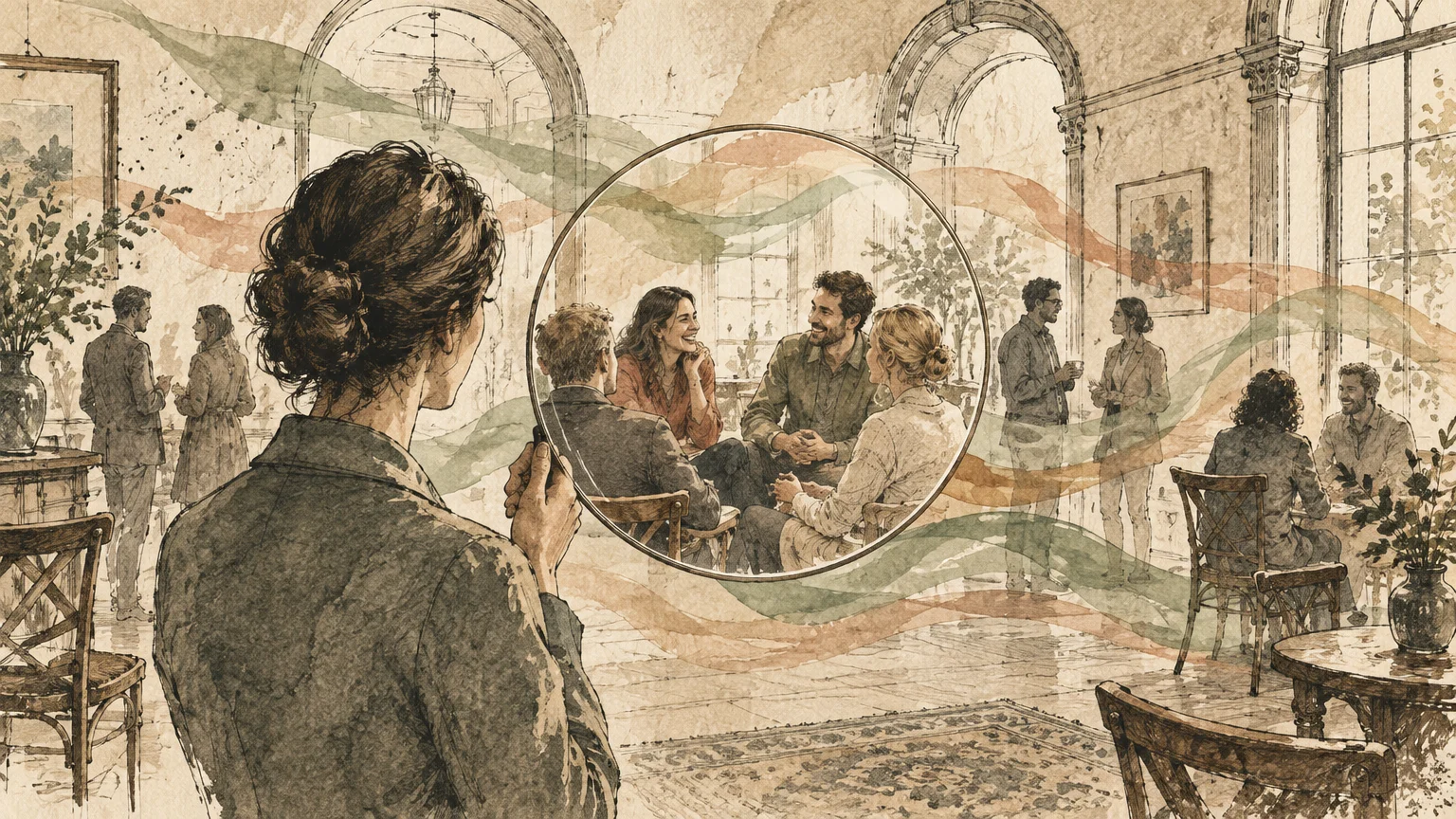
Reading a room means observing the emotional climate of a social setting. You notice unspoken feelings, interpersonal dynamics, and subtle shifts in conversation.
Psychologists often describe this ability as social perceptiveness or high emotional intelligence. It combines empathy with acute sensory observation.
Spiritual traditions often frame this skill as intuitive awareness. You sense energy fields and emotional currents between individuals.
Both perspectives describe the same human capability. You gather real data through posture, voice tone, and facial expressions.
Your brain then processes these inputs instantly. This rapid processing can feel like a spiritual sixth sense.
However, you must remain mindful of your own mental habits. We often rely on confirmation bias, which is the tendency to favor information confirming our preexisting beliefs.
When you project your fears onto a room, your reading becomes distorted. True perception requires an open mind and a calm nervous system.
With gentle practice, you can separate your personal anxiety from actual social signals. This balance creates compassionate clarity in every interaction.
The Balance Between Intuition and Evidence
Many people believe that reading people well relies solely on mystical intuition. Research suggests that sensory data plays an enormous role in this process.
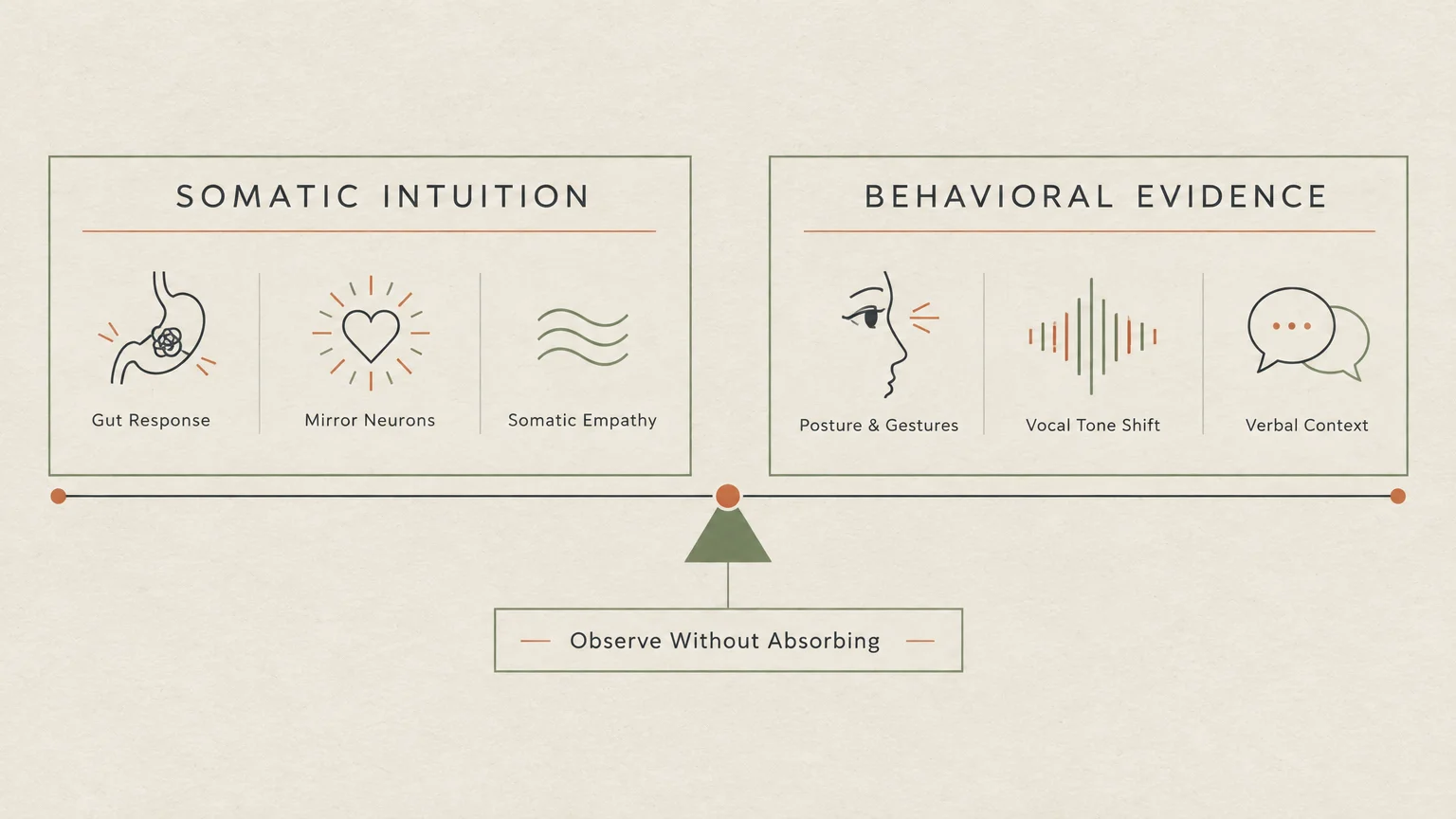
Your mirror neurons fire when you watch another person experience an emotion. These brain cells help you feel what someone else feels in real time.
Scientists refer to this process as somatic empathy. Your physical body registers the tension or warmth present in your environment.
You might feel a tightness in your stomach when an argument brews nearby. Alternatively, you might feel a pleasant warmth during shared laughter.
Healthy social awareness traits honor these physical sensations without jumping to rushed conclusions. You acknowledge the feeling, then look for tangible behavioral evidence.
This balanced approach protects you from false assumptions. It also prevents you from taking on burdens that do not belong to you.
You learn to observe without absorbing. This distinction is vital for maintaining emotional balance, especially in mature adulthood.

Cognitive Patterns and Perceptual Pitfalls
Human minds naturally look for patterns in social settings. This tendency helps us survive, but it can also lead us astray.
Psychologists call this pattern-seeking drive apophenia. When applied to people, it can cause you to imagine hostility or judgment that does not exist.
Another common hurdle is memory salience. This happens when a vivid past experience clouds how you interpret a present event.
If a past friendship ended painfully, you might perceive coldness in an innocent silence. Your mind connects the silence to your old wound.
Perceptive people practice self-inquiry to counter these cognitive biases. They ask whether their perception comes from the current room or past memories.
This gentle self-awareness keeps your intuition sharp. It allows you to see people as they are today rather than through the lens of yesterday.
7 Traits of People Who Read a Room Well
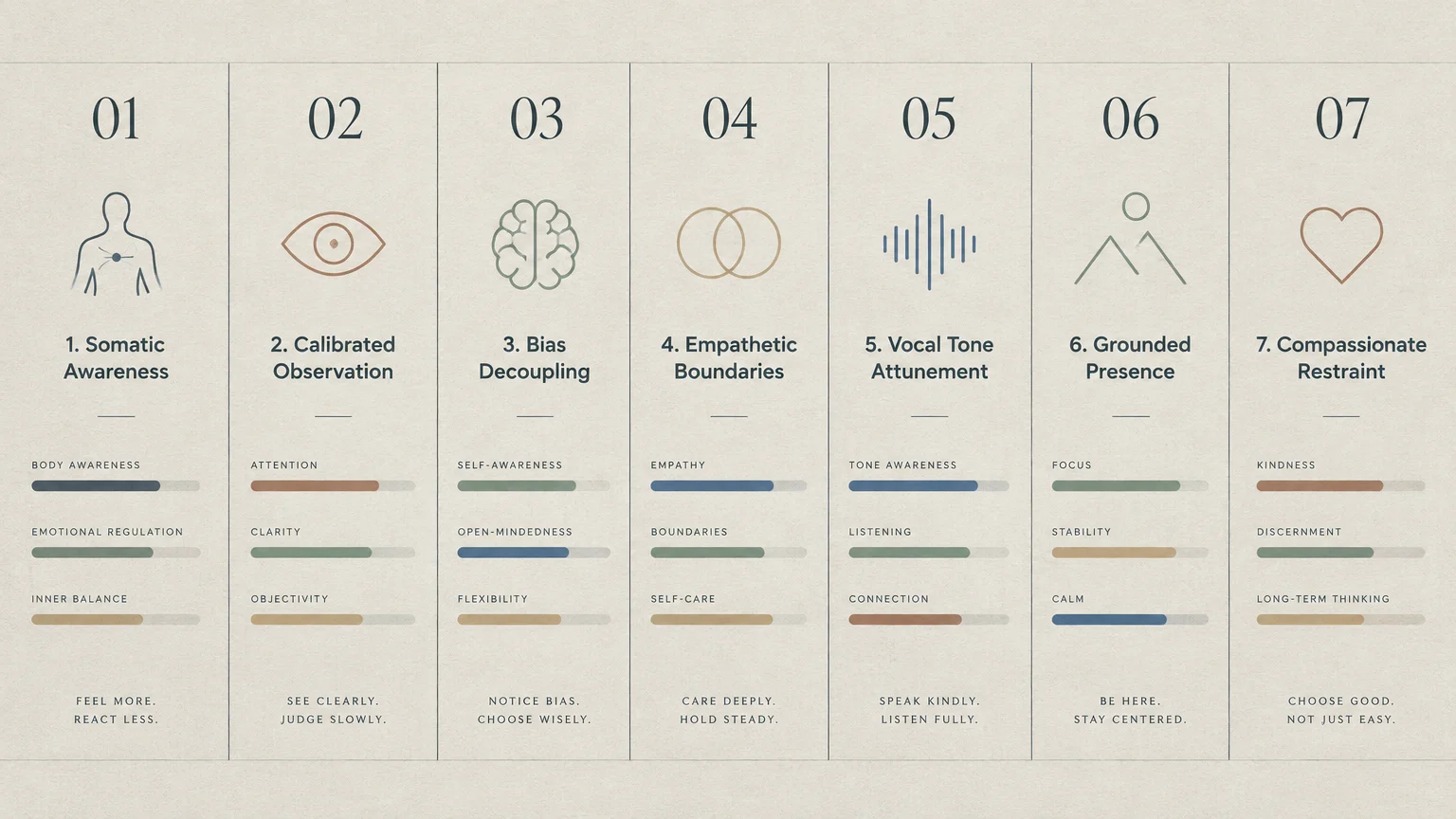
Mastering social awareness involves a combination of quiet habits and emotional disciplines. Here are the seven core traits that define highly perceptive individuals.
1. Intentional Stillness and Situational Awareness
Perceptive people do not rush into a room trying to command attention. Instead, they pause at the threshold and observe the existing flow.
This momentary stillness allows your eyes and ears to adjust to the environment. You note who is speaking, who is listening, and who appears isolated.
You scan the physical space for signs of comfort or unease. Relaxed shoulders and open postures indicate psychological safety among group members.
Tense jaws, crossed arms, and hurried speech suggest underlying stress. Observing these cues first prevents clumsy interruptions.
Consider how this applies at a family holiday gathering. Pausing before speaking helps you notice if an unspoken grief or disagreement fills the air.
Actionable Practice: The Doorway Pause. When you arrive at a gathering, pause for three slow breaths before speaking.
Scan the room gently and notice the general volume and movement. This simple habit grounds your body and clears your mind.
It allows you to enter the social space with respect and poise. You bring calm into the room rather than adding frantic energy.
2. Attuned Somatic and Emotional Empathy
People with high emotional intelligence pay close attention to internal physical cues. Your body often detects interpersonal tension before your conscious thoughts register it.
You might feel sudden fatigue or muscle tightness when walking into an unresolved conflict. These physical responses provide valuable situational data.
Skilled observers do not panic when they sense these shifts. They recognize that their nervous system is simply gathering ambient information.
They distinguish between their own emotional state and the energy of the crowd. This clarity prevents unnecessary personal distress.
In moments of communal grief, this trait helps you sense who needs silent companionship. You know when to sit quietly beside someone without speaking.
Actionable Practice: Physical Check-In. Place one hand over your heart during quiet moments at an event.
Ask yourself whether the tension you feel belongs to you or to the room. Releasing borrowed tension preserves your emotional vitality.
Take a long, slow breath as you mentally return unneeded tension to the floor. This grounding gesture keeps your empathy clear and constructive.
3. Patient and Reflective Listening
Reading people well requires deep listening that goes far beyond waiting for your turn to speak. You focus entirely on the speaker’s words, tone, and pacing.
You listen for what people leave unsaid. Pauses, hesitations, and sudden topic changes often reveal more than spoken statements.
Perceptive individuals validate feelings before offering solutions or sharing their own stories. They create a welcoming space where others feel heard.
This patient attention builds trust rapidly. People open up because they sense your genuine curiosity and absence of judgment.
In volunteer committees or neighborhood boards, this skill calms tense meetings. You help people feel respected, which naturally softens defensive posturing.
Actionable Practice: Reflective Mirroring. Wait two full seconds after another person finishes speaking before you offer your perspective.
Repeat their core feeling back to them before responding with your thoughts. You might say, “It sounds like that was a demanding week.”
This simple acknowledgment confirms your understanding. It deepens mutual rapport and prevents unnecessary misunderstandings.
4. Subtle Perception of Nonverbal Cues
Human beings communicate constantly through gestures, glances, and spatial orientation. Perceptive people track these nonverbal signals effortlessly.
You notice when someone turns their feet toward an exit door. This subtle cue often indicates a desire to conclude the conversation.
You observe micro-expressions, which are brief involuntary facial movements revealing true emotions. A fleeting frown can signal hidden disagreement or discomfort.
People who read a room well adjust their behavior based on these subtle signs. They do not force engagement when someone needs space.
Notice how family members position themselves during difficult discussions. Leaning away or avoiding eye contact often signals emotional withdrawal.
Actionable Practice: Nonverbal Journaling. After an event, write down three nonverbal cues you observed during conversations.
Note how those gestures matched or contradicted the spoken words. This exercise trains your observational acuity without judging anyone.
Over time, your perception becomes sharp and effortless. You understand social nuances that others miss completely.
5. Thoughtful Emotional Regulation
A room reader cannot evaluate a situation clearly while experiencing high personal agitation. Self-regulation forms the bedrock of accurate social awareness.
When conversations grow heated, perceptive people slow their breathing. They lower their vocal pitch and choose deliberate words.
By staying calm, you act as an emotional anchor for the entire group. Your regulated presence can de-escalate anxiety in others.
This composure prevents you from becoming defensive when facing criticism or awkward comments. You remain an objective observer of the interaction.
When long-standing family arguments flare up, emotional regulation protects you. You choose not to re-enact old, painful dynamics.
Safety Cue: Grounding Breath. If a group discussion triggers your temper, exhale slowly through pursed lips.
Count to four on your inhale and six on your exhale. This pattern stimulates your vagus nerve to restore inner calm.
Within two minutes, your thinking brain regains control over your reactions. You respond with wisdom rather than impulse.
6. Firm and Compassionate Energy Boundaries
Empathetic individuals often absorb the sadness or hostility of others like a dry sponge. Perceptive masters learn to insulate their inner world.
You can care deeply about someone without taking on their emotional pain. Compassion does not require you to sacrifice your own peace.
Room readers maintain an invisible mental boundary around themselves. They visualize a protective shield that permits understanding while blocking absorption.
This protective boundary allows you to stay present in difficult environments. You support grieving or stressed friends without burning out.
Boundaries also mean knowing when to step outside for fresh air. Taking brief pauses preserves your emotional strength throughout long events.
Actionable Practice: Energetic Shielding. Before entering a crowded room, imagine a soft glass sphere surrounding you.
Light and kindness pass through freely, but social tension bounces off the exterior. This mental imagery reinforces healthy psychological separation.
It keeps your empathy clean and resilient throughout the day. You remain supportive without feeling drained.
7. Flexible Grace and Genuine Authenticity
Reading people well does not mean putting on a performance or manipulating others. It means adapting your communication style to serve the moment.
If a room is quiet and reflective, you enter with soft speech. If the room is celebratory, you match the joyful energy warmly.
You adjust your delivery while remaining completely honest about your values. This flexibility reflects emotional maturity rather than deceit.
People sense your genuine goodwill. They recognize that your social sensitivity aims to comfort others rather than control them.
This adaptability is especially valuable when bridging generational gaps with adult children or grandchildren. You listen to their world without imposing outdated assumptions.
Actionable Practice: Energy Matching. Assess the vocal volume and cadence of the group when you join.
Match that rhythm for the first minute before introducing a new topic. This subtle alignment builds immediate connection with those present.
It signals that you respect the collective space. From that shared foundation, meaningful dialogue unfolds naturally.
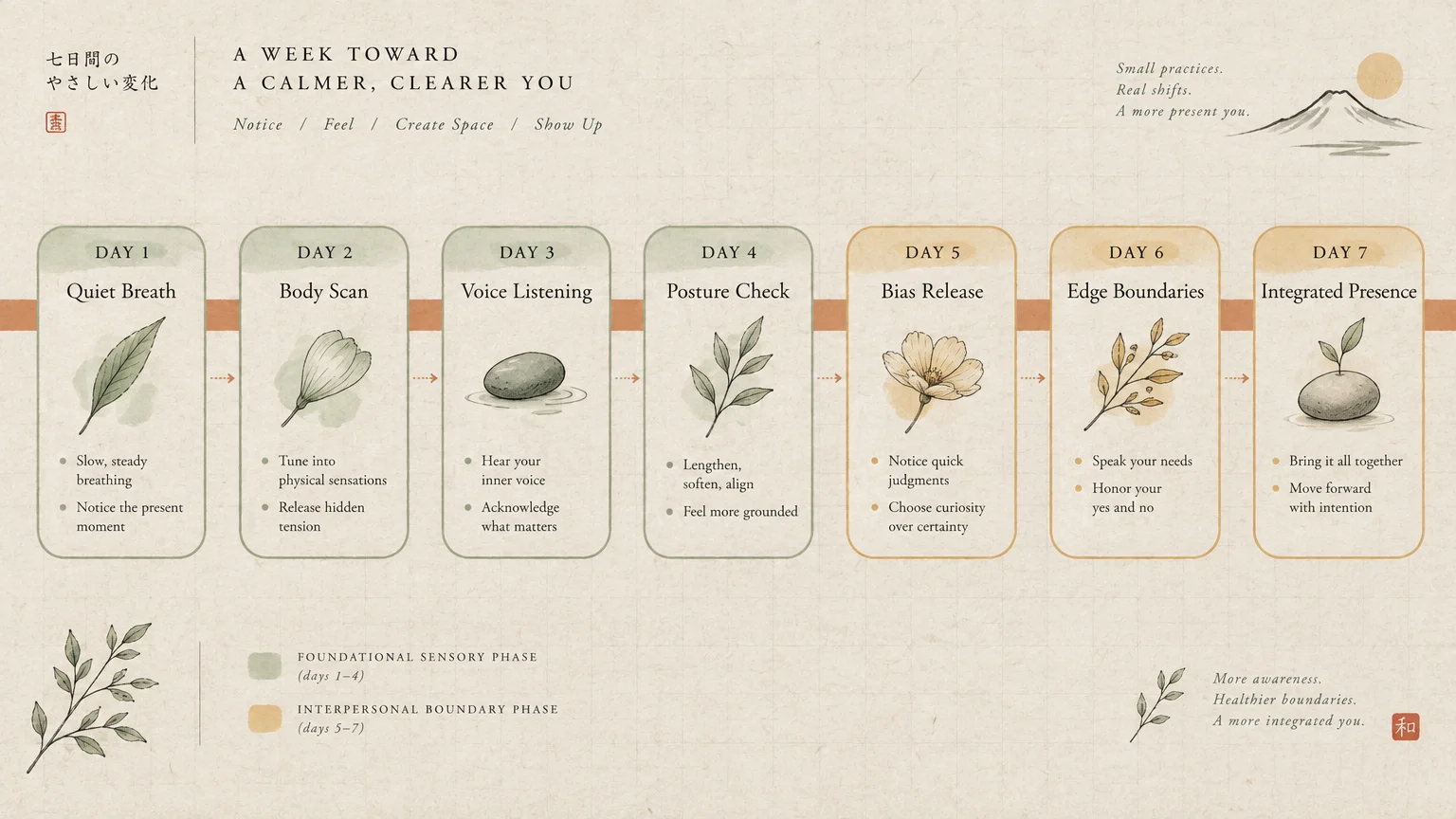
A Gentle Seven-Day Plan to Sharpen Your Awareness
Developing social perceptiveness requires steady, gentle practice. You can build these capabilities gradually without overwhelming your daily schedule.
This structured week invites you to practice one manageable skill each day. Treat these exercises as quiet experiments in mindful living.
Day One: Quiet Observation. Spend fifteen minutes in a coffee shop, park, or public plaza.
Notice how strangers interact without judging their behavior or inventing elaborate stories. Record two specific nonverbal details in your journal tonight.
Day Two: Somatic Awareness. Check in with your physical body before you enter your next meeting or family meal.
Note any areas of muscle tightness or stomach tension. Repeat the scan afterward to see whether the room altered your physical state.
Day Three: Mindful Pausing. Practice taking one intentional breath before replying to any question today.
Notice how this brief pause creates calm. People will often relax and share deeper thoughts when you do not rush them.
Day Four: Tone Attunement. Listen closely to the musicality and pitch of voices during conversations today.
Notice the emotional state revealed by vocal inflections. Compare your perception against the literal meaning of their words.
Day Five: Intentional Boundaries. Practice energetic shielding before entering any busy environment today.
Remind yourself that you are responsible for your own emotions only. Notice how much lighter you feel throughout the afternoon.
Day Six: Compassionate Presence. Identify one person who appears tired, withdrawn, or stressed.
Offer a kind word or a listening ear without offering unwanted advice. Holding quiet space is often the greatest gift you can provide.
Day Seven: Reflective Review. Review your journal entries and personal observations from the past week.
Identify which specific habit supported your emotional peace the most. Choose to carry that single practice forward into the coming month.

Boundaries, Grief, and Emotional Safety
Reading a room is a powerful interpersonal asset, but it comes with emotional responsibilities. Highly perceptive individuals are vulnerable to sensory and social exhaustion.
If you are navigating grief or life transitions, your emotional skin may feel thin. Crowded social settings can easily trigger overwhelming sorrow or anxiety.
You do not have to endure draining environments to prove your social strength. Protecting your peace is a healthy form of self-respect.
Learn to recognize red flags in social or spiritual groups. Beware of leaders who demand total conformity, discourage questions, or pressure you for money.
Manipulative organizations often exploit perceptive, empathetic people through manufactured crises and forced intimacy. Authentic communities respect your personal boundaries and autonomy.
Never replace professional healthcare with spiritual intuition or amateur energy readings. If you experience persistent sadness, panic, or social withdrawal, seek licensed clinical care.
You can discover evidence-based coping strategies through the American Psychological Association (APA) and health guidance from the NIH.
If you need confidential mental health guidance, access resources through SAMHSA. Professional support strengthens your emotional resilience over time.
Sleep deprivation can also compromise your social judgment. Review healthy rest protocols provided by the Sleep Foundation to maintain mental clarity.
Explore gentle stress relief techniques and complementary health approaches through NCCIH. These grounded tools support your daily wellbeing.

How to Discuss Social Fatigue with a Counselor or Leader
When social perceptiveness turns into chronic exhaustion, speaking with an objective guide helps. You might consult a therapist, counselor, or trusted faith leader.
Starting this conversation can feel intimidating if you lack the right words. Having a clear script provides reassurance and focus.
You can say: “I notice that I absorb the moods and tensions of people around me. It leaves me feeling depleted and anxious after social gatherings.”
Continue with: “I want to learn practical boundaries so I can stay caring without losing my own peace. How can I balance empathy with self-preservation?”
This honest framing clarifies your goal immediately. It invites the counselor to explore boundary management, stress regulation, and emotional grounding tools with you.
A skilled professional will help you distinguish healthy empathy from codependency. They will validate your sensitivity while strengthening your personal defenses.
Frequently Asked Questions About Reading People Well
Here are answers to common questions about developing social awareness and managing high empathy in everyday life.
Can you learn to read a room, or is it an innate gift?
Anyone can develop social perceptiveness through deliberate practice and mindful attention. While some people start with natural empathy, situational observation is a learnable skill.
By slowing down, listening deeply, and studying body language, you can steadily increase your accuracy. Consistent curiosity matters far more than natural talent.
How do I tell genuine intuition apart from personal anxiety?
Anxiety feels urgent, noisy, and fearful, often pushing you toward immediate defense or escape. Intuition is quiet, neutral, and calm, presenting clear observations without frantic panic.
If a thought brings sudden panic, check your physical breathing first. Calm your nervous system before deciding whether your social perception is accurate.
What should I do when I sense deep hostility in a room?
Your physical safety and emotional security always take precedence over social etiquette. If you perceive intense hostility, step back and assess your exit options.
Do not attempt to mediate high-conflict situations unless you are trained to do so. You have every right to excuse yourself and leave the environment calmly.
Why do I feel so exhausted after reading people well?
Reading social dynamics demands intense cognitive processing and active emotional filtering. Your brain analyzes dozens of nonverbal signals every minute while monitoring your own behavior.
Without firm energetic boundaries, you absorb the fatigue and stress of others. Build quiet recovery time into your schedule following any significant social interaction.
Does reading a room mean I must change who I am?
Not at all. Reading a room simply informs you how to communicate your authentic truth effectively.
You adapt your timing and tone, not your fundamental values or beliefs. True social grace honors the environment while preserving your self-respect.
You meet people where they are without compromising your personal integrity. This balance defines genuine emotional maturity.
Practical Next Steps for Grounded Daily Living
Mastering the ability to read a room allows you to navigate social life with compassion and confidence. You become a steadying presence for your friends, family, and community.
As you practice these seven traits, treat yourself with kindness and patience. Developing emotional perceptiveness is a lifelong journey of self-discovery and quiet observation.
This week, choose one single interaction to observe with fresh curiosity. Notice the posture, vocal cadence, and subtle facial shifts of those around you.
Track your physical energy levels before and after entering crowded rooms. Note which environments fill you with warmth and which ones demand strict boundaries.
Verify your assumptions gently by asking clarifying questions instead of jumping to conclusions. Honest conversation will confirm whether your intuition was accurate or distorted by bias.
Dedicate ten minutes each evening to quiet, restorative stillness. Releasing the social impressions of the day keeps your spirit light and your mind centered.
Honor your sensitivity as a meaningful gift. When balanced with wise boundaries, your awareness will guide you toward peaceful relationships and authentic belonging.
Important Wellbeing Disclaimer
This article provides general educational information about social awareness and emotional wellbeing. It does not constitute medical, psychological, legal, or financial advice.
If you struggle with severe anxiety, chronic grief, or depressive symptoms, consult a licensed mental health professional. Seek emergency assistance immediately if you are in emotional crisis.