Learning to understand hard to read people brings calm confidence to your daily relationships. You can easily connect with quiet companions without feeling dismissed, uncertain, or emotionally drained.
Many mature adults mistake quiet restraint for cold indifference or unspoken judgment. In truth, an enigmatic demeanor usually reflects private reflection, steady self-regulation, or earned life caution.
This guide outlines eight core traits linked to reserved personality types. You will discover practical communication tools to build mutual trust, interpret subtle behaviors, and protect your inner peace.

The Psychology Behind Reserved Personalities
Human temperaments vary widely across adulthood. Some individuals share every passing thought, while others naturally filter their emotional expressions.
In personality traits psychology, researchers often study emotional containment through the lens of introversion and temperament. Introversion describes a preference for calm environments and internal reflection over outward stimulation.
A reserved person processes feelings internally before speaking. They often examine their thoughts carefully before uttering a single sentence.
Many people interpret quietness as secrecy or emotional distance. Research suggests that subdued expression often indicates high self-control rather than hidden motives.
You can find reliable emotional health research through the American Psychological Association (APA).
Understanding this internal processing style protects you from taking another person’s silence personally. It allows you to view their quiet habits with patience and grace.

Why Some People Hide Their Emotions
People who hide emotions often developed this pattern during early life. Past experiences teach certain individuals that emotional restraint provides safety.
For example, adults who experienced turbulent households may adopt quiet habits to avoid conflict. Remaining neutral becomes a dependable defense strategy.
Professional environments also reward measured reactions. Individuals who spent decades in healthcare, law, or military service often master emotional containment.
Over time, professional habits blend into personal relationships. The person does not intend to shut you out.
Grief and loss also reshape communication styles. A person navigating deep sorrow may guard their feelings to prevent emotional overwhelm.
When someone shields their feelings, they preserve energy. Recognizing this reality helps you replace frustration with gentle compassion.
8 Traits of People Who Are Hard to Read
Recognizing mysterious personality traits helps you interpret quiet companions without jumping to fearful conclusions. Here are eight primary traits found in individuals with guarded habits.
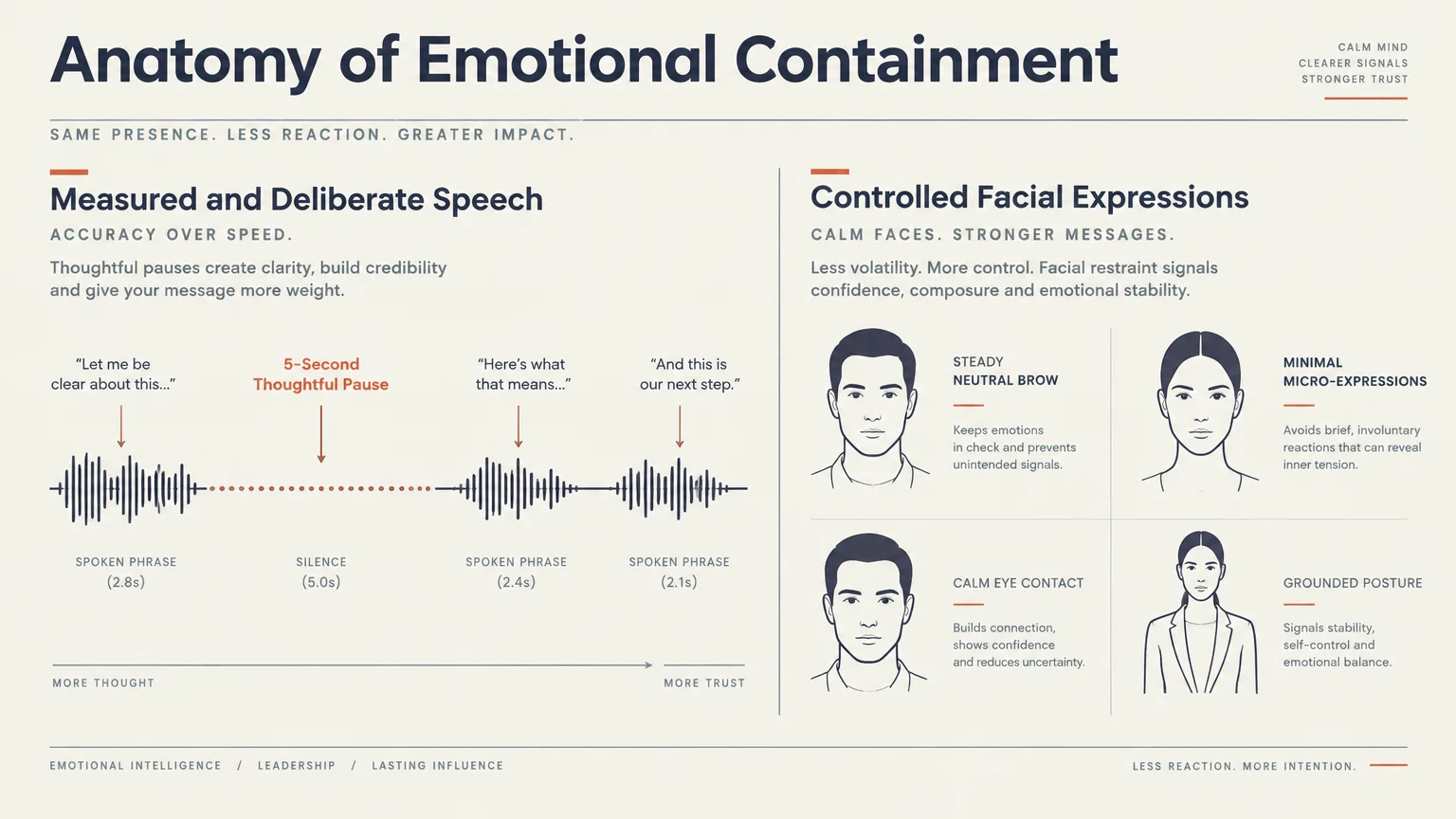
1. Measured and Deliberate Speech
Guarded individuals rarely blurt out impulsive reactions. They pause before speaking, allowing several seconds of silence to pass.
This pause helps them choose precise words. They prioritize accuracy over social speed during conversations.
You might mistake their thoughtful pause for hesitation or disapproval. In reality, they simply respect the weight of their spoken words.
Actionable Practice: When an enigmatic person pauses, silently count to five before speaking. Give them the necessary space to complete their thought without interruption.
2. Controlled Facial Expressions
Many hard to read people show minimal facial micro-expressions. Micro-expressions are brief, involuntary facial movements that reveal underlying emotions.
These individuals keep a steady, neutral face during joyful or stressful moments. They rarely display furrowed brows, wide smiles, or nervous twitches.
This neutral demeanor can leave you guessing about their inner state. You cannot rely on physical cues to determine their mood.
Safety Cue: Do not demand an immediate smile or emotional display. Respect their neutral expression while observing their helpful actions instead.
3. Attentive Listening Without Over-Sharing
Enigmatic individuals often excel at active listening. They maintain steady eye contact, nod gently, and ask insightful questions.
However, they rarely redirect the conversation toward themselves. They collect information while revealing very few personal details.
You may finish a long conversation feeling heard yet realize you learned nothing new about them. They naturally direct attention away from their private lives.
Actionable Practice: Use this journal prompt tonight: Did this conversation feel balanced, or did I carry the entire vulnerability burden?
4. A Steady Emotional Baseline
Reserved people rarely show dramatic emotional highs or lows. They react to good news and bad news with similar composure.
This steady baseline provides stability during sudden crises. While others panic, they remain focused on practical solutions.
Yet, this lack of visible enthusiasm can feel unsettling to expressive people. You might wonder whether they care about your shared milestones.
Safety Cue: Look for loyalty in their steady presence rather than loud praise. Reliable actions often speak louder than expressive words.
5. Strong Boundaries Around Personal Privacy
Guarded people protect their personal space with clear, firm boundaries. They do not share details about their finances, health, or family history lightly.
They change the subject smoothly when casual acquaintances pry into sensitive topics. They view personal privacy as a vital safeguard for emotional wellbeing.
These individuals choose their confidants with immense care. Earning their genuine trust requires consistent respect over months or years.
Actionable Practice: When they deflect a personal question, gracefully accept the subject change. Say: “I respect your privacy, and we can discuss whatever feels comfortable.”
6. Subtle and Contained Body Language
Expressive people often use expansive hand gestures and animated postures. In contrast, reserved individuals keep their physical movements contained.
They sit with hands folded or kept quietly in their lap. They rarely lean in aggressively or back away nervously.
Their closed or neutral posture does not necessarily mean hostility. Often, it merely reflects their focus on physical composure.
Safety Cue: Avoid assuming that crossed arms always mean anger. Notice whether their shoulders appear relaxed or tense before making assumptions.
7. Slow and Reflective Decision-Making
A reserved person refuses to make major commitments on the spot. They need quiet hours or days to evaluate important choices.
High-pressure sales pitches or urgent emotional appeals rarely move them. They prefer to analyze facts, review risks, and consult logic.
This deliberate pace protects them from rash decisions. It can frustrate expressive partners who prefer immediate answers.
Actionable Practice: When proposing a plan, offer them time upfront. Say: “Please take a couple of days to consider this idea before you respond.”
8. Selective Social Energy and Solitude
Guarded people guard their time and energy fiercely. They avoid large gatherings, loud parties, and superficial small talk whenever possible.
They recharge their spirits through quiet hobbies, reading, or solitary walks. Solitude is not loneliness to them; it is essential restoration.
Because they spend social energy sparingly, their presence in your life carries real intention. When they spend time with you, they value your company.
Safety Cue: Do not take their need for quiet recovery as personal abandonment. Allow them solitary time without guilt or passive-aggressive comments.
How Our Minds Interpret Mystery and Ambiguity
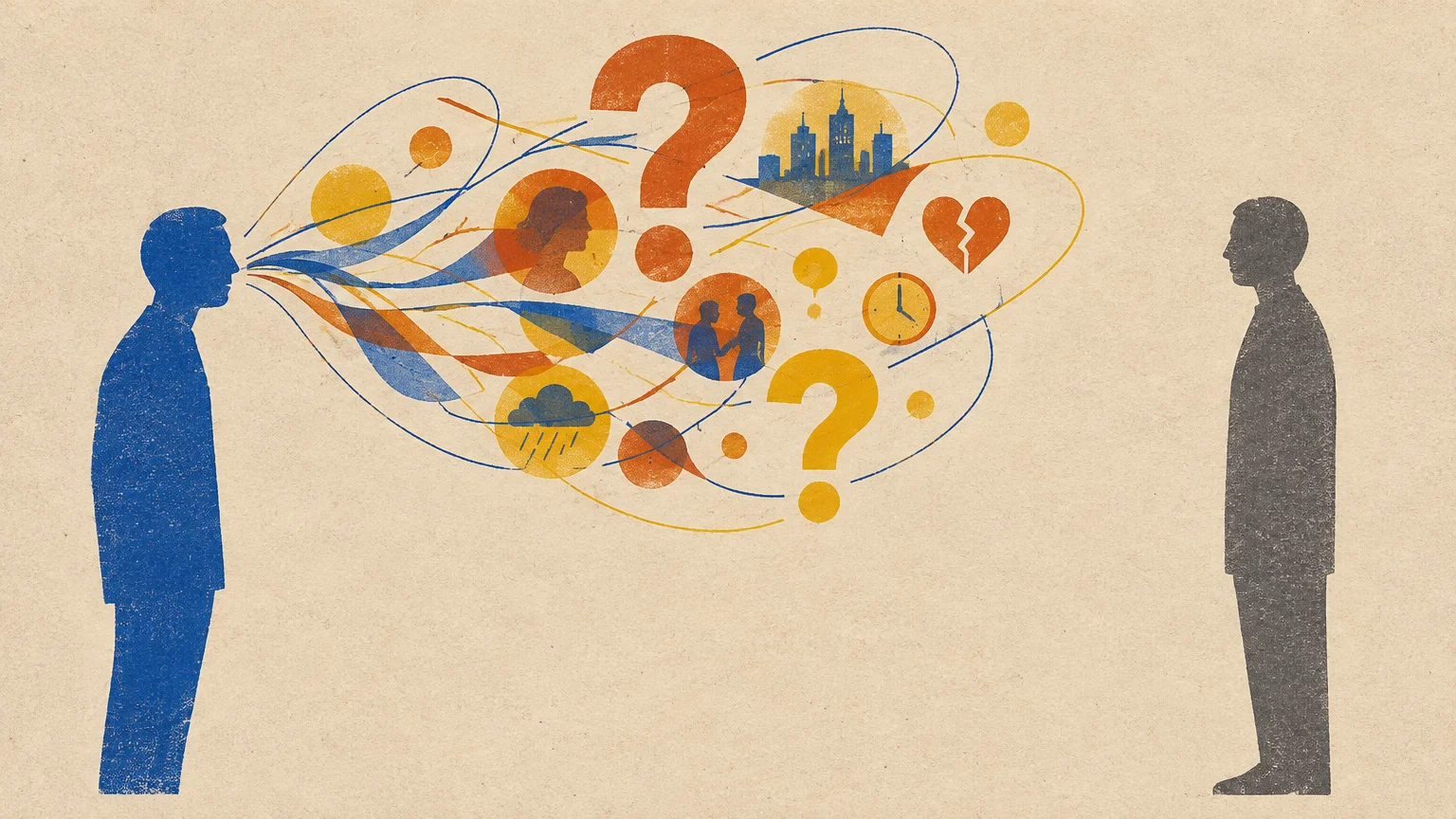
When you encounter a quiet person, your brain immediately tries to solve the mystery. Human cognition relies on pattern-seeking to keep us safe.
When information is missing, your mind often fills the gaps with personal fears. Psychologists refer to this tendency as projection.
Projection occurs when you place your own insecurities onto someone else. If you fear rejection, you may assume a quiet person secretly dislikes you.
Another common cognitive habit is confirmation bias. Confirmation bias describes our tendency to search for details that confirm our existing beliefs.
If you believe an acquaintance is cold, you will notice every neutral glance. Meanwhile, you will overlook their small, quiet acts of kindness.
Becoming aware of these mental habits restores emotional clarity. You can pause, recognize your assumptions, and view the other person objectively.
To explore cognitive health and mental balance, visit the National Institutes of Health (NIH).
Mindful awareness separates what you actually observe from what your imagination invents. This mental discipline brings deep relief to your daily interactions.
Distinguishing Healthy Privacy from Emotional Stonewalling
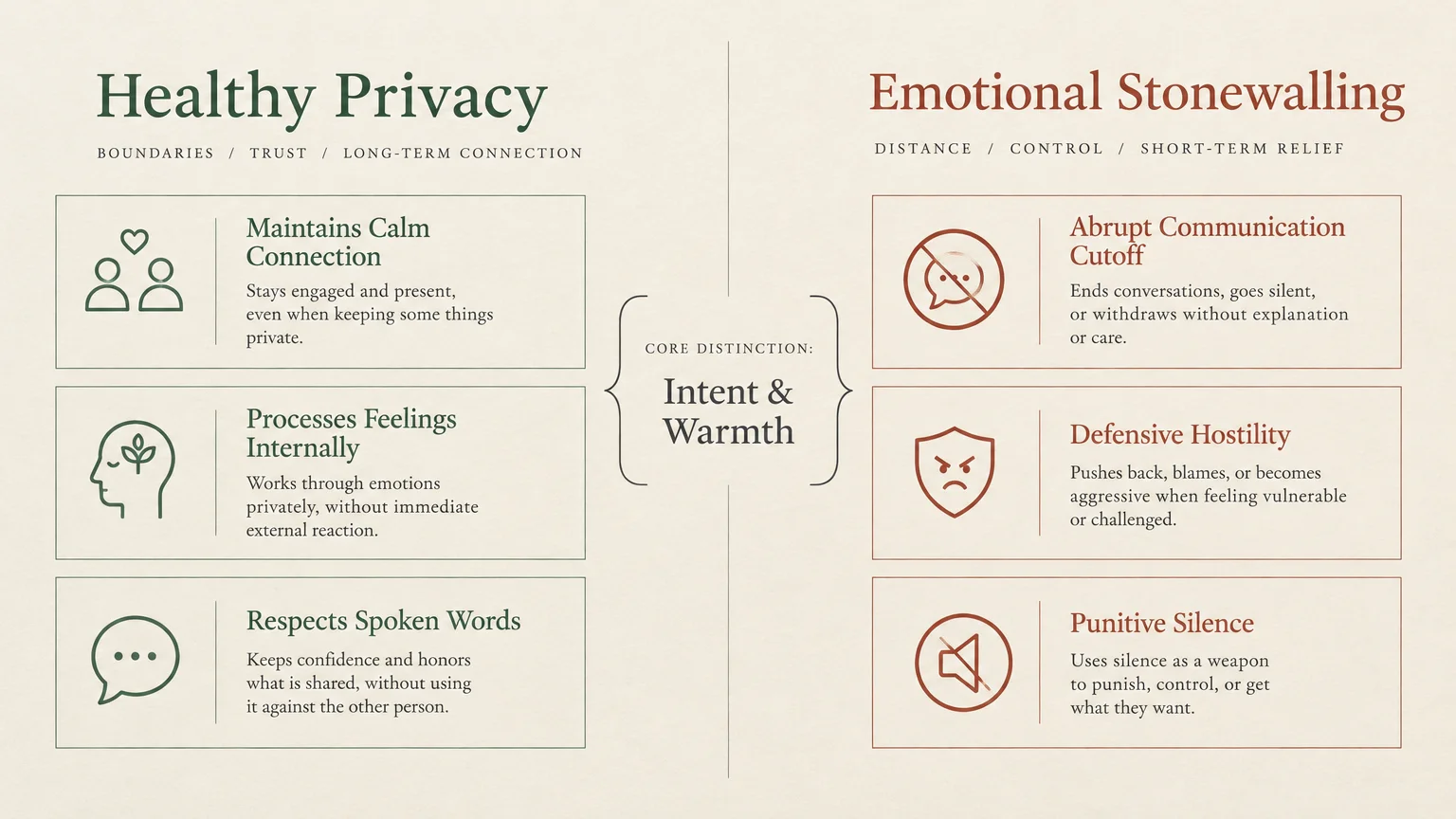
You must understand the clear difference between a reserved personality and toxic behavior. Quiet habits are healthy, but deliberate emotional manipulation is harmful.
Healthy reserved people still communicate their core commitments clearly. They tell you they care, even if they speak with quiet restraint.
In contrast, stonewalling involves weaponized silence designed to punish or control you. A stonewalling person refuses to speak to make you feel anxious or compliant.
Notice the spirit behind the silence. A reserved individual steps away to calm down and returns when ready to converse respectfully.
A manipulative person uses silence to dismiss your valid feelings. They ignore your presence, roll their eyes, or act with contempt.
Never tolerate emotional abuse or neglect under the guise of an enigmatic personality. Healthy relationships require mutual respect, honesty, and safety.
If you face persistent emotional distress or relational manipulation, seek compassionate support. You can locate helpful counseling services through SAMHSA.
Knowing this distinction allows you to honor your boundaries. You can respect someone’s quiet nature without abandoning your own emotional safety.
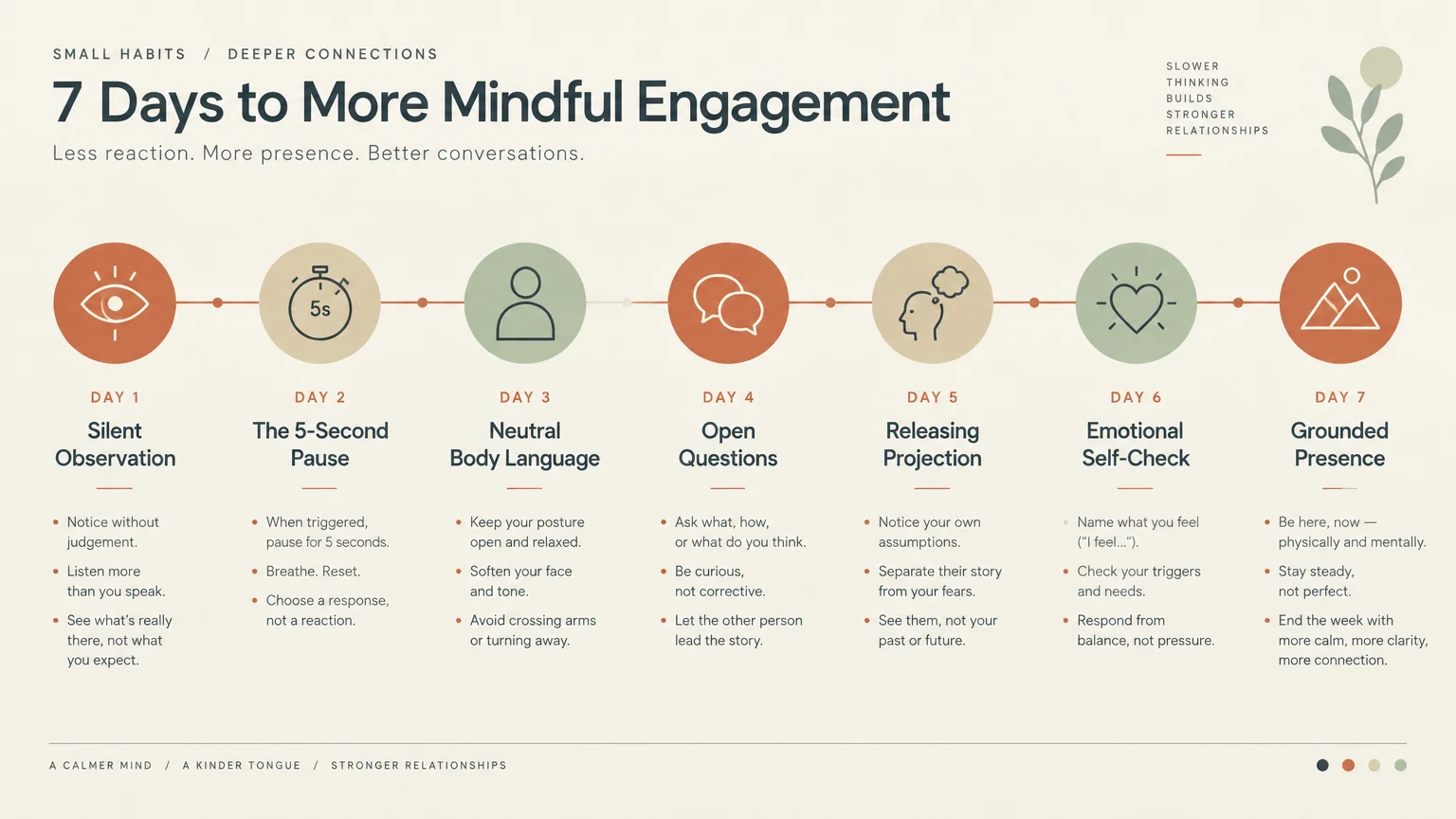
A Seven-Day Mindful Communication Plan
You can improve your interactions with hard to read people through daily practice. This simple seven-day routine requires zero financial cost and fosters inner calm.
On Day 1, practice grounding your nervous system before entering conversations. Take three slow, deep breaths whenever you feel uneasy around a quiet companion.
On Day 2, observe the person without assigning meaning to their silence. Notice their posture, words, and tone without telling yourself fearful stories.
On Day 3, practice comfortable pauses during your daily chats. Resist the urge to fill conversational voids with nervous chatter or repetitive questions.
On Day 4, ask one thoughtful, open-ended question that does not demand vulnerability. You might ask about a favorite book, a past travel memory, or an interesting hobby.
On Day 5, release the desire to fix or alter the other person’s mood. Remind yourself that their emotional weather belongs entirely to them.
On Day 6, check your own emotional boundaries with honesty. Ensure you are not over-functioning or working too hard to earn their approval.
On Day 7, reflect on your week with calm gratitude. Write down two insights you learned about your own communication habits and emotional resilience.

Helpful Scripts for Meaningful Conversations
Approaching a guarded individual requires calm words and zero accusation. Clear scripts can help you initiate honest, supportive dialogues.
When speaking with a quiet partner or relative, try this gentle approach. You might say: “I value our relationship, and I notice you seem quiet lately. I am here whenever you wish to share, with no pressure.”
This script removes performance anxiety. It invites connection without demanding an immediate emotional disclosure.
If silence during conflict feels overwhelming, set a healthy boundary. You can say: “I want to resolve this kindly. Let us take a thirty-minute pause, and then resume our talk.”
If relational confusion causes ongoing worry, consider discussing your feelings with a professional. A licensed marriage counselor or trusted faith leader provides grounded clarity.
When seeking professional counseling, expect private sessions to range from one hundred to two hundred dollars per hour. Many local community clinics offer sliding-scale fees based on your income.
You can also use this simple script with a counselor: “I struggle to interpret quiet people in my life, and it triggers anxiety. Can you help me build stronger emotional boundaries?”

Grounded Complementary Practices for Inner Peace
Navigating relationships with mysterious people requires strong self-soothing skills. When you maintain inner calm, external silence cannot shake your balance.
Mindful nature walks offer exceptional benefits for your nervous system. Spending twenty minutes among trees helps lower stress hormones and clears anxious thoughts.
Gentle breathing exercises also stabilize your body when someone acts emotionally distant. Deep belly breathing activates your parasympathetic nervous system, creating immediate peace.
Many mature adults find comfort in contemplative prayer or silent meditation. These quiet practices teach you to embrace stillness rather than fear it.
You can review evidence-based wellness methods through the National Center for Complementary and Integrative Health (NCCIH).
When you cultivate personal tranquility, you stop relying on other people for constant emotional reassurance. Your inner peace remains steady regardless of how others behave.
Frequently Asked Questions About Hard to Read People
Are hard to read people always hiding something negative?
No, an enigmatic demeanor rarely indicates deception or malice. Most quiet individuals simply prefer internal reflection over outward emotional displays.
They value accuracy and thoughtful speech. What appears mysterious is often just a natural expression of an introverted personality.
Can a reserved personality change over time?
Core temperaments usually remain stable throughout adulthood. However, people can learn warmer communication skills when they feel emotionally safe.
Trust builds gradually through consistent, non-judgmental interactions. As safety deepens, a guarded person may open up more freely with trusted companions.
How do I know if someone is shy or emotionally unavailable?
A shy person desires warm connection but feels awkward or nervous. They often show genuine warmth through kind smiles and helpful deeds.
An emotionally unavailable person avoids genuine intimacy altogether. They dismiss your feelings, avoid commitments, and keep you at a permanent emotional distance.
Why do enigmatic individuals make me feel anxious?
Ambiguity naturally triggers your nervous system to search for potential threats. If you crave verbal reassurance, a quiet companion leaves your questions unanswered.
Your mind may mistake their neutral posture for silent disapproval or rejection. Recognizing this mental habit helps you calm your own inner alarm.
What should I do if a loved one shuts down during conflict?
Do not corner them or demand immediate emotional responses. Pressuring a shut-down individual only increases their defensive walls.
Offer a structured break instead. Agree on a specific time to reconvene so both partners feel safe and respected.
Grounded Next Steps for Moving Forward
Navigating connections with quiet companions does not require guesswork or anxiety. By recognizing the traits of reserved people, you can respond with wisdom and poise.
This week, focus on your own emotional equilibrium. Notice when you project fears onto quiet companions, and consciously choose to let those assumptions go.
Track your conversational habits over the next few days. Practice comfortable pauses, ask open-ended questions, and allow others the space to speak at their own pace.
Verify that your relationships remain balanced, respectful, and reciprocal over time. True intimacy does not require loud declarations, but it always requires genuine mutual care.
Important Disclaimers and Support
This article is provided for educational and informational purposes only. It does not constitute formal psychological, medical, financial, or legal counsel.
If you experience severe anxiety, persistent relationship distress, or overwhelming grief, speak with a licensed mental health professional or trusted community leader. Seek urgent care immediately if you find yourself in emotional crisis.