
Carrying every burden alone drains your energy and limits your daily peace. Learning to identify a fear of asking for help restores your vitality and deepens your relationships.
Many adults over fifty take pride in self-reliance after decades of caretaking and hard work. Yet intense self-sufficiency can quietly hide an underlying dread of burdening others or losing control.
Recognizing these habits allows you to rebuild emotional safety at your own pace. You will discover practical tools and gentle scripts to invite meaningful support back into your life.
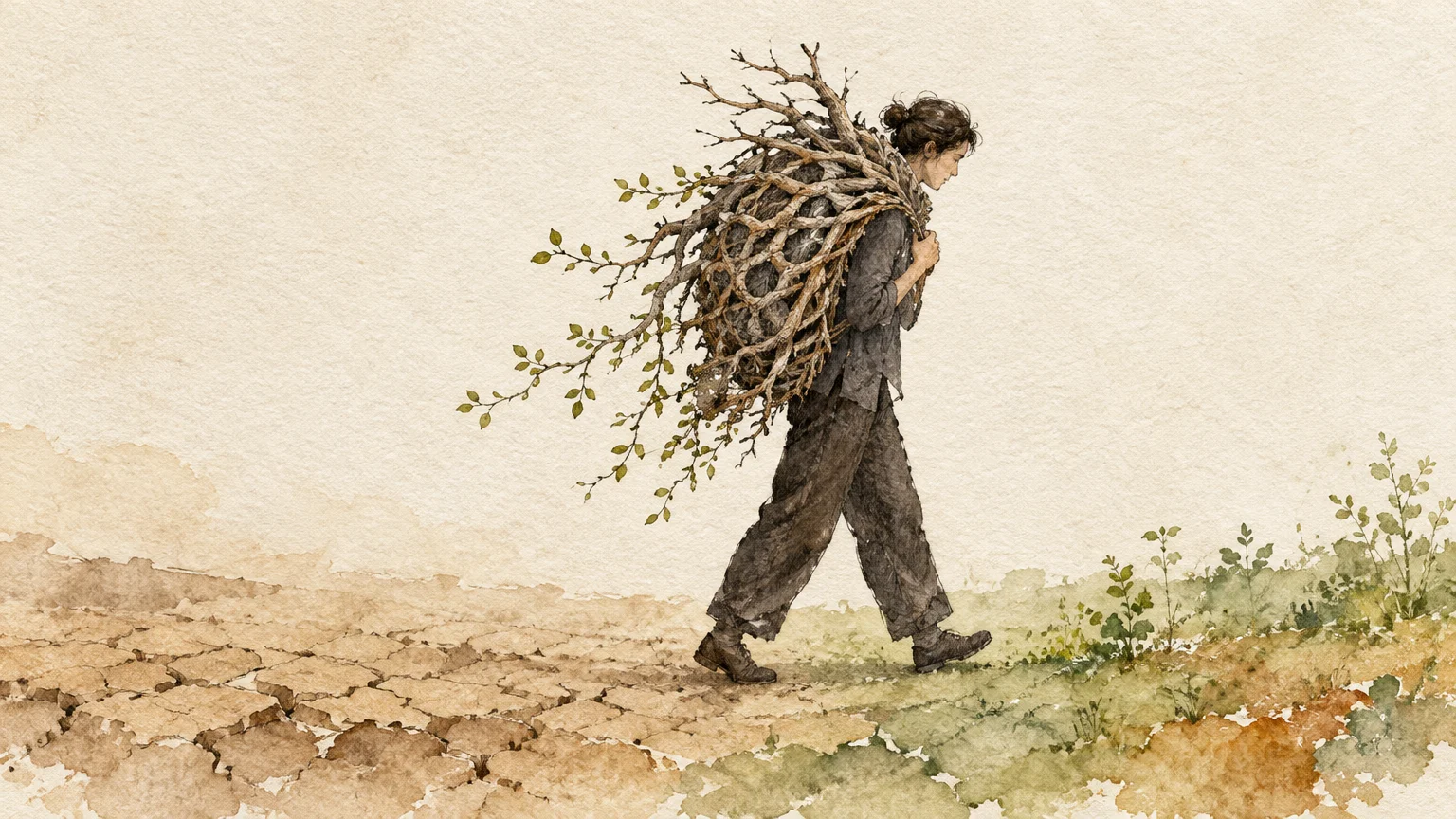
Understanding Hyper-Independence and the Roots of Self-Reliance
Hyper-independence describes an intense urge to handle every challenge without outside assistance. It often looks like admirable strength on the surface.
Beneath that surface, self-reliance can function as an emotional defense mechanism. When earlier environments felt unpredictable, handling everything yourself kept you safe.
Psychologists call this pattern a protective adaptation. Your mind learned to treat dependence on other people as an emotional hazard.
Adults over fifty often carry deep generational conditioning around independence. Cultural norms taught many older adults to endure hardship quietly and avoid complaining.
Decades of career leadership and family caretaking reinforced this solitary habit. You became accustomed to solving problems rather than sharing them.
Over time, this mindset creates trouble asking for help when unexpected trials emerge. You may worry that needing assistance diminishes your competence or dignity.
Clinical research views human interdependence as an essential biological need. Reaching out to others actually strengthens your emotional resilience and physical health.
Support resources from the American Psychological Association (APA) confirm that social connection lowers stress hormones. Genuine strength includes knowing when to invite others into your corner.
Unlearning excessive self-reliance does not mean surrendering your personal autonomy. It means allowing trusted individuals to share the daily weight of living.

The Cultural and Generational Roots of Self-Sufficiency
Generational history plays a major role in shaping your relationship with help. Many adults over fifty were raised by parents who survived severe economic depression or war.
Those generations valued stoicism and self-containment above emotional expression. You likely absorbed the lesson that asking for assistance was a sign of weakness.
Gender expectations also deepened these patterns over decades. Men often learned to equate masculinity with silence, while women learned to carry domestic burdens without complaint.
As you age, these lifelong patterns can turn into rigid emotional habits. You might feel immense guilt whenever you cannot complete chores independently.
Recognizing this historical backdrop brings self-compassion to your journey. Your reluctance to accept support is not a personal flaw, but a learned tradition.
You can honor your strength while choosing a softer approach today. Modern living offers opportunities for community that your ancestors may have lacked.

Independence and Emotional Walls: The Hidden Costs
Healthy independence allows you to manage daily tasks while staying open to companionship. In contrast, rigid self-reliance builds thick emotional walls around your heart.
These walls protect you from potential rejection or disappointment. Unfortunately, they also prevent loved ones from knowing your authentic inner world.
Living behind these defenses generates a distinct form of quiet exhaustion. You might spend your days serving others while remaining completely unseen yourself.
Chronic isolation also creates a measurable toll on your nervous system. Research from the NIH links long-term emotional isolation to higher rates of cardiovascular strain.
Your brain interprets persistent isolation as a state of ongoing emergency. Over several years, this biological alarm system depletes your physical vitality and emotional stamina.
Many adults develop high allostatic load, which is the wear and tear from chronic stress. This physiological burden can cause muscle aches, digestive distress, and poor sleep.
Recognizing hyper-independence signs helps you dismantle these defenses with patience and care. You do not need to tear down your emotional boundaries overnight.
You can begin by taking small emotional risks with safe companions. Each low-stakes request softens the walls that keep you isolated.
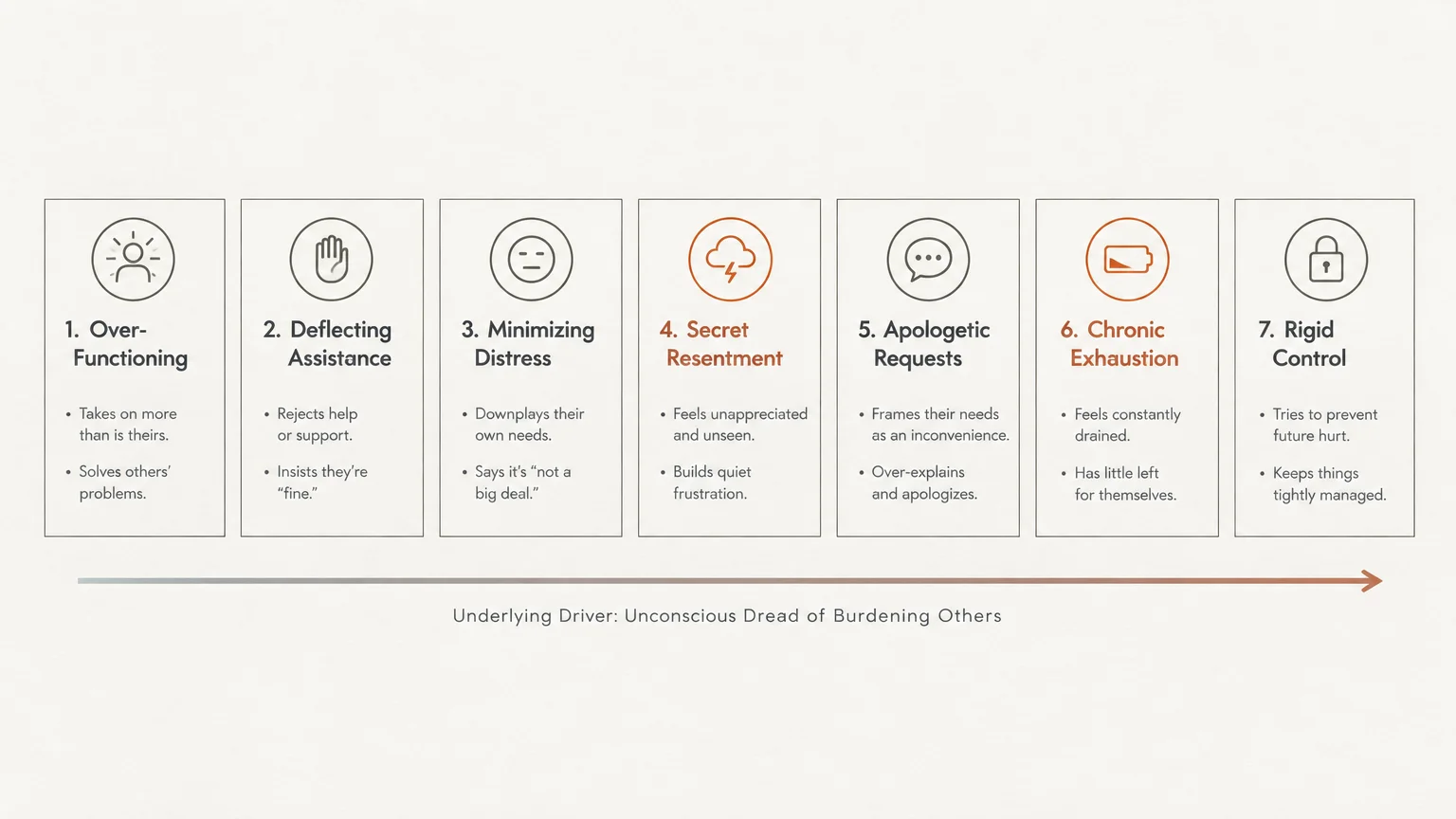
7 Behaviors That Signal a Fear of Asking for Help
A fear of asking for help rarely looks like outward panic. Instead, it manifests through routine behaviors that disguise themselves as competence and discipline.
1. Overcommitting and Refusing Assistance
You accept every volunteer project, family duty, or neighborhood chore that comes your way. Your daily calendar remains packed with obligations to other people.
When someone offers to share the workload, your immediate reflex is to decline. You assure them that you have everything under complete control.
Beneath this automatic refusal lies an unspoken fear of losing control. You may believe that delegating tasks invites chaos or reveals personal inadequacy.
Internally, you might think: “If I do it myself, I know it will be done right.” This internal script justifies overwork and blocks genuine teamwork.
This habit produces deep physical and mental exhaustion over time. You carry entire households or committees on your shoulders until your body protests.
Actionable Practice: The Five-Minute Pause. When someone offers to help you this week, pause before giving your customary refusal.
Take one slow breath and gently delay your response. Say: “Thank you for offering. Let me consider how we can share this task.”
2. Minimizing Genuine Needs and Physical Discomfort
You downplay joint pain, extreme fatigue, or heavy emotional grief during casual conversations. When friends ask how you feel, you respond with an automatic smile.
You convince yourself that your problems are trivial compared to the suffering of others. This mental habit keeps your genuine struggles hidden from view.
This reluctance to accept support often stems from an intense dread of being a burden. You learned long ago that your needs might inconvenience the people around you.
You might tell yourself: “Other people have it much worse than I do.” This minimization invalidates your real human experience and delays necessary care.
Suppressing your needs does not make those needs vanish. It only forces your physical body to carry an unbearable emotional burden alone.
Actionable Practice: The Daily Truth Journal. Set aside five minutes each evening to write down your true physical and emotional feelings.
Complete this single prompt: “Today, my body felt tired because…” Acknowledging your reality on paper prepares you to share it with others.
3. Micromanaging Delegated Tasks
When you finally permit someone to help you, you monitor every step of their work. You find yourself hovering nearby to offer constant corrections.
After the person leaves, you may quietly redo the chore to match your exact standard. This compulsive checking reveals a profound struggle with vulnerability.
Micromanaging protects you from the discomfort of different outcomes. You equate standard deviations with total failure or personal neglect.
Your inner voice might say: “It is easier to do it myself than watch someone do it wrong.” This belief keeps you trapped in perpetual labor.
This behavior unintentionally pushes supportive friends and family members away. They begin to feel inadequate, which reinforces your belief that you must work alone.
Actionable Practice: The Good-Enough Boundary. Ask a loved one to complete a simple task, like washing dishes or folding towels.
Leave the room completely while they finish the job. Accept their completed effort without adjusting a single item afterward.
4. Feeling Chronic Resentment Toward Loved Ones
You often feel a quiet bitterness toward friends or family members who seem relaxed. You notice that you are cleaning or planning while everyone else rests.
This silent resentment grows because you rarely state what you actually need. You secretly expect loved ones to anticipate your needs without being told.
When they fail to read your mind, you interpret their inaction as thoughtlessness. In truth, people cannot support needs that remain unspoken.
You might think: “Nobody ever lifts a finger around here.” That thought feeds anger while obscuring your own silence.
Resentment is the emotional tax of uncommunicated boundaries. It poisons close relationships while keeping you trapped in the role of a martyr.
Actionable Practice: Direct Request Scripting. Notice when silent resentment surfaces in your chest. Replace the internal complaint with one calm spoken request.
You might say: “I feel fatigued tonight. Please clear the dining table so I can sit down and rest.”
5. Compulsive Problem-Solving for Other People
You pour your energy into fixing financial, marital, or logistical problems for adult children and friends. You become the reliable rescuer for everyone around you.
Focusing on other people provides an effective distraction from your personal grief or loneliness. It gives you a strong sense of purpose and control.
However, this pattern reinforces independence and emotional walls by keeping interactions entirely one-sided. You remain the generous giver who never has to receive.
You may tell yourself: “They need my help, so I must stay strong.” This mindset allows you to ignore your own declining reserves.
Over time, compulsive caretaking drains your retirement years of peace. It also prevents the people you love from developing their own problem-solving skills.
The Supportive Question
When a friend shares a dilemma, resist your immediate reflex to solve it.
Ask them this gentle question instead: “Would you like me to listen, or do you want to brainstorm solutions together?”
6. Masking Vulnerability Behind Constant Competence
You pride yourself on being the unshakable rock during family storms. You handle medical crises, legal paperwork, and household emergencies without shedding a visible tear.
Showing grief, sadness, or confusion feels like an unacceptable failure of character. You wait until you are alone in your car before allowing yourself to cry.
You might think: “If I break down, everything will fall apart.” This heavy belief creates intense internal isolation.
This relentless performance of competence prevents loved ones from comforting you. You end up grieving major life transitions in complete emotional exile.
Psychological evidence confirms that suppressing grief harms your overall wellbeing. Vulnerability is a biological requirement for genuine healing after painful transitions.
Safety Cue and Practice: Somatic Release. When heavy sorrow arises, sit quietly in a comfortable chair and uncross your arms.
Place both hands over your heart and breathe softly for three minutes. Allow the sadness to exist without judging yourself as weak.
7. Withdrawing Socially During Times of Grief or Crisis
When facing personal grief, a frightening diagnosis, or financial strain, you pull away from your social circle. You stop answering phone calls and decline invitations.
You tell yourself that you will reconnect once you have solved the problem completely. You believe you must present a tidy outcome to the world.
You might tell yourself: “I do not want anyone to see me like this.” That protective shame isolates you at your most vulnerable moment.
This withdrawal represents the deepest form of trouble asking for help. It locks you into solitary confinement precisely when you require comfort the most.
Isolation intensifies depression and amplifies fear. Healing occurs within caring relationships, not inside an isolated room.
Actionable Practice: The Low-Stakes Connection. Send a brief text message to one trusted friend today.
Write this simple sentence: “I am having a quiet week, but I wanted to say hello.” This action keeps your social lifeline active without draining your energy.

The Spiritual Practice of Receiving Support
Many spiritual traditions view giving and receiving as two halves of a single sacred breath. Inhaling is receiving, while exhaling is giving.
When you refuse to receive, you disrupt this natural equilibrium. You create an imbalance where you constantly pour out energy without taking anything in.
Consider the feelings you experience when you help someone you love. Supporting a friend brings warmth, purpose, and deep satisfaction to your heart.
When you consistently refuse help, you deny other people that exact joy. You withhold the blessing of giving from those who love you.
Receiving support is therefore an act of profound spiritual generosity. It honors the giver and affirms our shared human dignity.
Contemplative traditions often use phrases from Ho’oponopono, a Hawaiian practice of reconciliation. Saying “Thank you, I receive this” can soften hardened resistance to outside help.
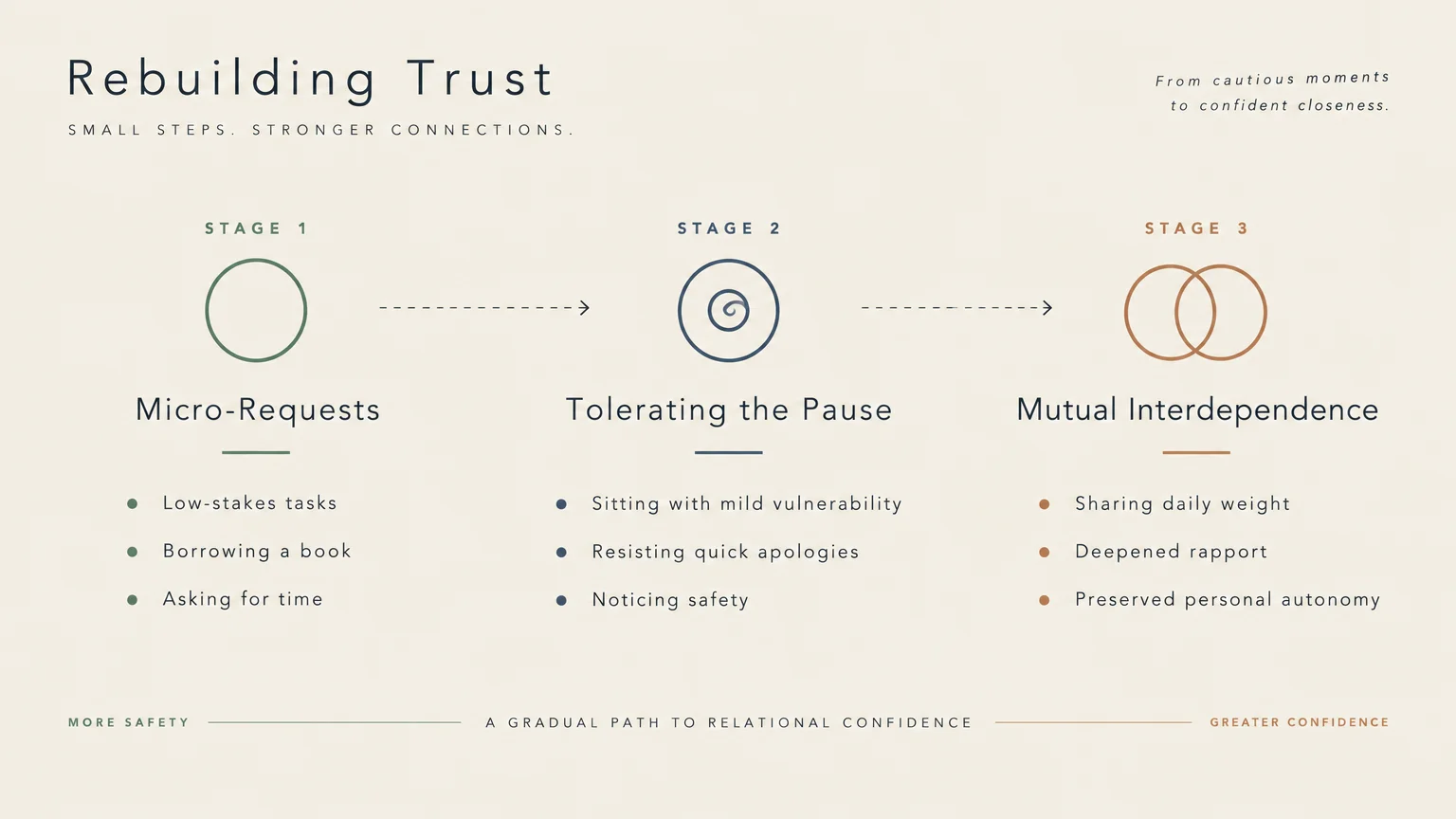
Grounded Pathways: How to Rebuild Trust in Support
Learning to receive support requires gentle, consistent practice. You do not need to make grand confessions to begin shifting your habits.
Begin by noticing the physical sensations that arise when someone offers assistance. Do your shoulders tighten? Does your breath become shallow?
These physical reactions indicate that your nervous system perceives vulnerability as a threat. Calming your body allows your mind to consider new choices.
Complementary health practices can assist in regulating this tension. The NCCIH offers evidence-based guidance on mindfulness and slow breathing techniques for stress management.
Many people hold a strong personal belief that asking for help burdens their loved ones. Research tells a very different story.
Psychological studies show that allowing friends to help actually increases their happiness and strengthens mutual affection. Reaching out offers loved ones an opportunity to demonstrate their care.
A Seven-Day Gentle Practice Plan
This simple weekly plan helps you soften your defenses without overwhelming your nervous system. Follow each step at a calm pace.
Day One: Observe Your Reflexes. Notice how many times you say no to simple offers of help today. Record these moments without judging your behavior.
Day Two: Validate Your Past. Spend five minutes in quiet reflection honoring why you developed hyper-independence. Thank your self-reliance for protecting you during earlier challenges.
Day Three: Accept a Small Courtesy. Allow someone to hold a door for you or bag your groceries. Offer a warm smile and say thank you without rushing away.
Day Four: Make a Simple Request. Ask a friend for a minor favor, such as pouring water. Notice that your connection remains steady and safe afterward.
Day Five: Body Scan for Rest. Lie down for ten minutes and notice where you hold tension. Consciously invite your back and shoulders to sink into the mattress.
Day Six: Share an Honest Thought. When someone asks about your day, share one genuine challenge instead of saying everything is great. Keep the disclosure simple and factual.
Day Seven: Review Your Progress. Sit with a warm cup of tea and review your week. Celebrate the small moments where you allowed support into your life.

Conversation Openers for Everyday Situations
Speaking up about your needs can feel daunting after years of silence. Having clear words prepared reduces anxiety and builds conversational confidence.
Here are practical scripts designed for common situations with family, friends, and healthcare professionals.
With an Adult Child: “I love managing my life, but I would appreciate your help with this specific home project this Saturday.”
This phrasing affirms your continuing independence while inviting your adult child into meaningful cooperation.
With a Longtime Friend: “I am walking through a sorrowful season right now. I do not need advice, but I would cherish a quiet walk together.”
This request sets a clear emotional boundary while preventing unwanted problem-solving from well-meaning companions.
With a Healthcare Professional: “I have been downplaying my pain recently. I need to discuss how this exhaustion is truly affecting my daily life.”
Clear communication helps medical providers understand the full picture of your physical and emotional health.
With a Counselor or Spiritual Director: “I struggle with chronic hyper-independence. I want to learn how to ask for help without feeling intense guilt.”
If you need professional mental health support, visit SAMHSA to find licensed counselors in your local area.
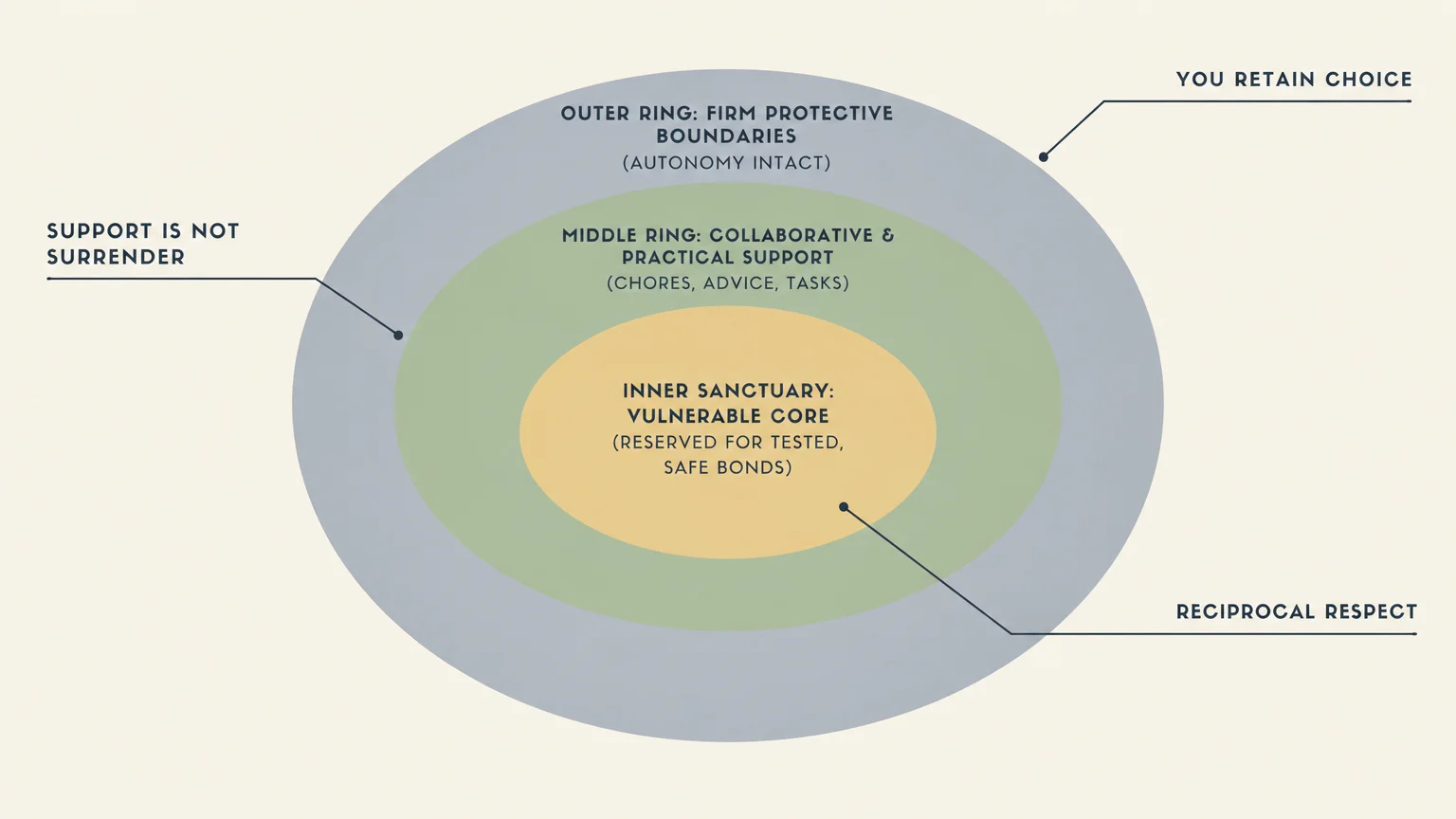
Boundaries, Ethical Support, and Safety Safeguards
As you learn to accept support, choosing safe and ethical companions is vital. Older adults navigating grief or loneliness often become targets for manipulative individuals.
Protect your emotional and financial wellbeing by maintaining firm boundaries. Be cautious of commercial life coaches or spiritual practitioners who promise instant cures for loneliness.
Watch for serious red flags in any wellness service. Avoid practitioners who demand large upfront fees, insist on secrecy, or pressure you to cut ties with family.
Ethical practitioners always encourage transparency, respect your personal agency, and collaborate with your medical providers. They never demand total dependence on their guidance.
Look for grounded, credentialed community resources instead. Many hospitals, faith communities, and non-profit centers offer free or low-cost bereavement support groups.
Licensed mental health counselors typically charge insurance copays between twenty and fifty dollars per session. Sliding scale clinics often offer sessions starting at fifteen dollars.
Never replace prescribed medical treatments or psychiatric care with alternative wellness rituals. Genuine healing integrates professional medical care with warm social support.
Frequently Asked Questions
Why is asking for help so difficult after age fifty? Decades of caregiving, career leadership, and cultural conditioning make asking feel like a loss of identity. Relearning interdependence takes patience and gentle self-compassion.
Does hyper-independence mean I experienced childhood trauma? Not necessarily. While unpredictable early environments can foster extreme self-reliance, cultural expectations, sudden divorce, or past financial strain can also trigger this protective pattern.
How do I ask for help without feeling like a burden? Frame your request as an invitation for connection. Loved ones often feel honored when invited to assist, because mutual support enriches close relationships.
What should I do if someone lets me down after I ask? A single disappointment does not mean asking was a mistake. Gently communicate your feelings and seek out dependable friends who respect commitments.
How can I manage the guilt that arises when receiving help? Remind yourself that guilt is merely an old habit reacting to a new behavior. Take a slow breath and let the feeling pass without changing your plans.
Can chronic physical exhaustion signal a fear of asking for help? Yes. Carrying physical and emotional duties alone keeps your nervous system on high alert, causing systemic fatigue and sleep disruption.
For reliable medical information regarding sleep and chronic stress, consult the Sleep Foundation.
Practical Next Steps for Your Week
Healing from excessive self-reliance is a gradual, compassionate journey. You do not need to overhaul your entire lifestyle in a single week.
Begin by identifying one small task you can comfortably delegate over the next seven days. Let a neighbor carry your packages or ask a friend for a ride.
Track your emotional reactions in a private notebook after you receive support. Notice the relief that follows your initial wave of nervous discomfort.
Verify the reliability of the people you invite into your personal circle. Build your support network slowly with individuals who demonstrate consistent kindness and respect.
Remind yourself daily that needing human connection is a sign of health. Allowing others to support you enriches your life and strengthens your community.
Disclaimer: This article is for informational and educational purposes only. It does not provide medical, psychological, legal, or financial advice. If you are struggling with severe grief, anxiety, or depression, please consult a licensed healthcare professional or trusted faith leader immediately.