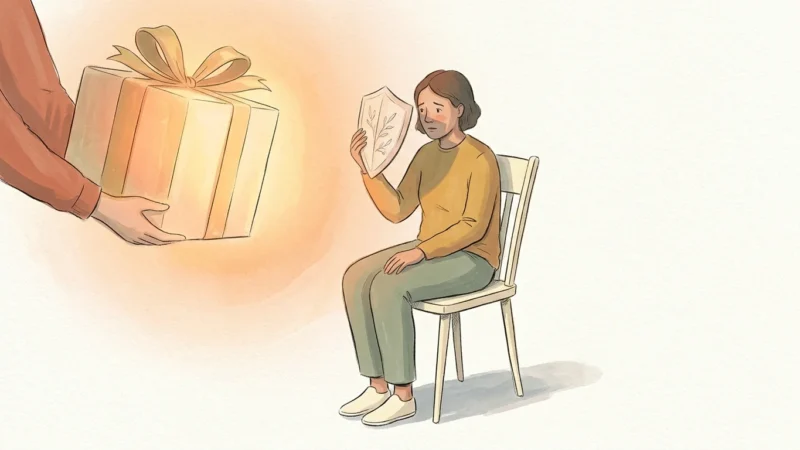
Handling loss gracefully does not mean hiding your pain or rushing your recovery. You can build steady grief resilience while honoring both your natural sorrow and your enduring love for others.
When major bereavement arrives, true emotional strength protects your daily stability and mental peace. Observing people who navigate life changes with poise provides reliable, practical guidance for your own healing path.
Modern psychological research confirms that healthy healing never follows rigid stages. You can foster specific habits that safeguard your physical health and restore quiet, calm direction to your morning routines.

Understanding Grace in Times of Grief
Grace during bereavement looks quiet rather than dramatic. It means meeting your heartache with patience instead of harsh self-criticism.
Many people mistakenly confuse poise with emotional detachment. Poise allows sorrow to surface without letting despair rule your daily choices.
You do not need to perform stoic strength for your neighbors. Grace allows tears, stillness, and quiet joy to exist together.
Handling grief gracefully reflects your natural capacity to adapt. It invites you to honor your past while staying rooted in today.
Societal expectations often pressure bereaved adults to move on quickly. True poise rejects artificial timelines and respects your personal emotional pace.
Historical communities observed long periods of collective mourning. Modern culture often rushes people back to work before their emotions settle.
You do not have to conquer loss like an obstacle. You learn to carry your memories while rebuilding your routine.
Evidence and the Myth of Rigid Grieving Stages
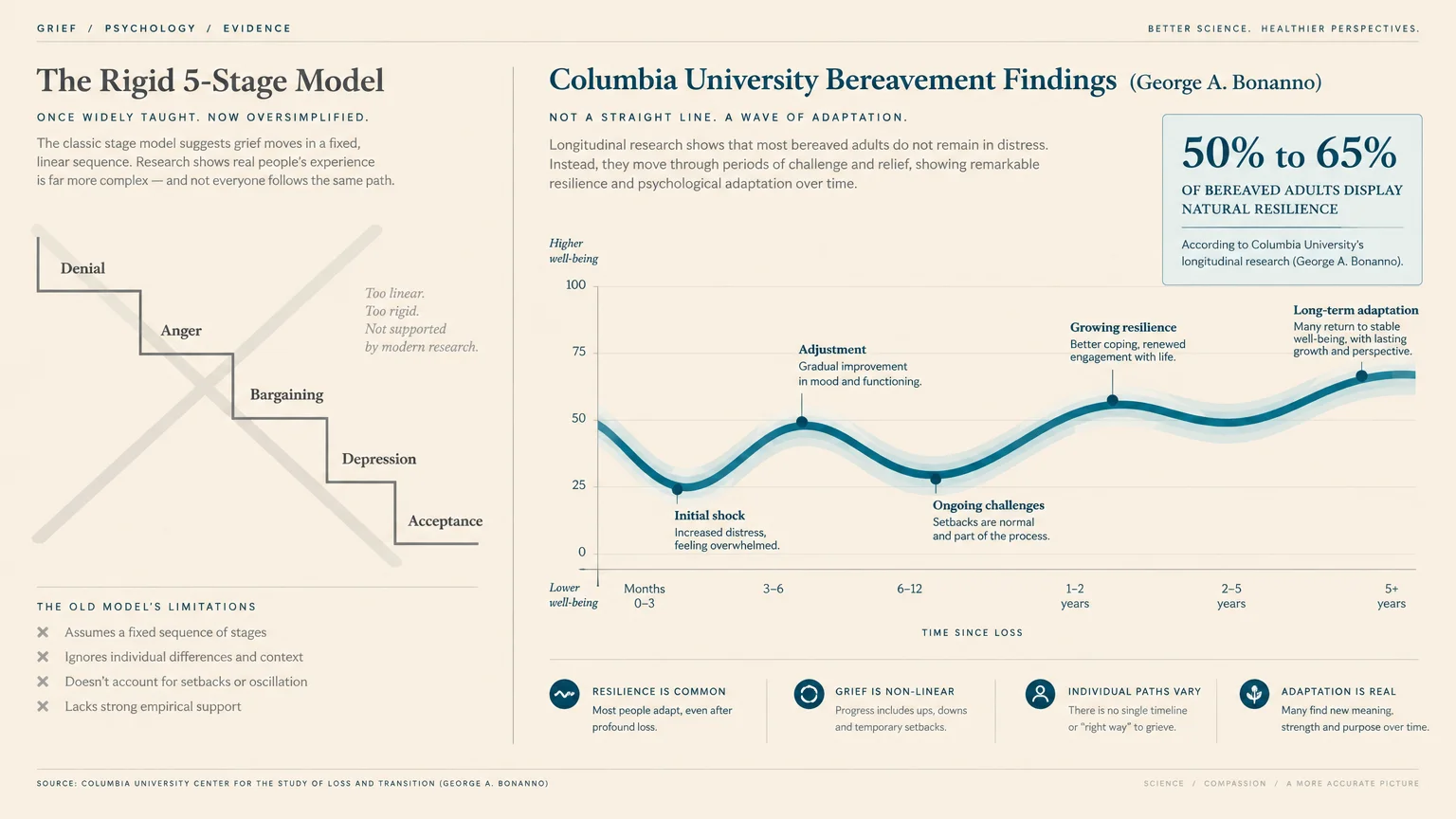
Popular culture often describes bereavement as a tidy sequence of five stages. Modern clinical science shows that grief rarely follows predictable linear steps.
Psychiatrist Elisabeth Kübler-Ross originally observed those famous stages in terminally ill patients facing their own death. Later writers incorrectly applied her model to grieving survivors.
Clinical psychologist George A. Bonanno conducts bereavement studies at Columbia University. His landmark research shows that 50% to 65% of adults display natural resilience after losing a partner or relative.
These resilient individuals do not repress their emotional distress. Instead, they maintain baseline psychological health while processing their genuine sorrow.
This research confirms that healthy coping does not require severe emotional collapse. Your mind possesses an inherent capacity to heal and adjust.
When you understand these findings, you drop unnecessary self-judgment. You can grieve in your own manner without measuring yourself against outdated formulas.
Grief resembles the movement of ocean waves rather than a staircase. Some days bring quiet seas, while other days bring sudden swells.

8 Traits of People Who Handle Loss Gracefully
1. Emotional Honesty Without Judgment
People who navigate loss with poise welcome their feelings as they arise. They do not hide sorrow, anger, or confusion behind a false smile.
They also avoid judging themselves when they feel sudden moments of happiness. They realize that contrasting feelings coexist during bereavement.
Emotional suppression harms your body and drains your nervous system. Facing your raw feelings prevents long-term exhaustion.
When guilt arises about enjoying a sunny day, resilient individuals pause. They remember that laughter does not diminish their enduring love.
Acknowledging your sorrow privately also makes conversations with family easier. You can express your needs without misdirected frustration.
To practice emotional honesty, spend three quiet minutes writing in a journal each morning. Record your immediate feelings without trying to fix or critique them.
You might write: “Today I notice heavy fatigue and quiet sadness.” Naming your internal state brings immediate relief to your mind.
Notice when you criticize yourself for crying or feeling numb. Replace that criticism with a simple statement of self-acceptance.
2. Cognitive Flexibility in Daily Routines
Resilient people adjust their expectations when physical energy runs low. They practice cognitive flexibility, which means shifting mental plans when circumstances change.
Bereavement drains your focus and slows your daily pace. Flexible thinkers modify their schedule without feeling like a failure.
If preparing a large dinner feels overwhelming, they eat simple soup. They honor their personal limits while maintaining essential routines.
Rigid thinkers often demand perfection even while mourning. Flexible individuals view adjustments as practical self-care rather than personal weakness.
This flexibility also applies to household management and personal finances. Tackling one small task each morning prevents overwhelming backlogs later.
Observe your daily expectations whenever fatigue strikes this week. Replace rigid demands with gentle choices that preserve your physical strength.
You can tell yourself: “I will finish one small chore today and rest during the afternoon.”
This small adjustment protects your mental stamina for the coming week.
3. Willingness to Accept Genuine Support
Handling grief gracefully does not require solitary endurance. Resilient individuals welcome comfort and practical help from trusted companions.
Isolation deepens emotional pain and breeds unnecessary loneliness. Accepting a warm meal or an errand run protects your daily stamina.
Many adults hesitate to accept help because they fear burdening their peers. In truth, allowing friends to assist fosters closer social bonds.
People who handle loss well distinguish between helpful supporters and draining acquaintances. They spend time with companions who listen without offering unsolicited advice.
Rather than waiting for friends to guess your needs, state them plainly. Clear requests prevent misunderstandings and reduce social anxiety.
Practice receiving care by accepting the next kind offer from a friend. You can also ask for specific assistance when chores accumulate.
Try this simple request: “Could you accompany me to the grocery store for thirty minutes this Friday?”
Clear communication allows your friends to support you effectively.
4. Maintaining Continuing Bonds
Traditional theories claimed that mourners must sever emotional ties with the deceased. Modern grief psychology supports continuing bonds instead.
Continuing bonds describe your ongoing, transformed relationship with someone who died. Resilient adults integrate fond memories into their daily lives.
They mention the person by name in casual conversations. They also honor the person by upholding their favorite values and family traditions.
You might cook a cherished family recipe on a quiet evening. You could also support a local charity that your loved one admired.
Continuing bonds provide comfort without keeping you stuck in the past. They build a bridge between your fond memories and your present life.
Creating a memory album or legacy project helps younger family members connect with their roots. It transforms personal grief into lasting family history.
Choose one lesson that your loved one shared with you. Practice that lesson this week through a deliberate, thoughtful action.
Lighting a candle during dinner creates a peaceful moment for private remembrance.
5. Self-Compassion During Grief Waves
Grief does not follow a linear path toward total resolution. Unplanned sensory cues often trigger sudden waves of sorrow.
Psychologists describe memory salience when a sensory trigger unlocks vivid emotional recollections. A familiar song or scent can spark sudden tears without warning.
Memory salience represents normal brain wiring rather than an emotional relapse. Your mind simply retrieves deeply stored emotional memories.
Resilient adults do not scold themselves when these sudden waves crash over them. They offer themselves genuine patience, warmth, and grace.
Practicing self-compassion calms physical tension, such as chest tightness or a racing pulse. Treating your body gently reduces emotional distress.
When a grief wave hits, place a comforting hand over your chest. Take two slow, measured breaths to center your body.
Whisper this steadying phrase: “This wave is natural, and my love remains safe within my heart.”
Allowing the sensation to peak and subside restores inner tranquility.
6. Tolerance for Ambiguity and Mystery
Significant loss raises big questions that human logic cannot solve. Resilient individuals tolerate life mystery without falling into persistent bitterness.
They recognize that life holds unpredictable sorrow alongside beauty. They release the exhausting urge to replay past events in search of answers.
This mental surrender stops harmful rumination and protects your mental peace. It allows you to direct your attention toward present tasks.
Spiritual curiosity often emerges when you confront major loss. Grounded individuals explore their spiritual beliefs without abandoning common sense.
Releasing the demand for complete answers creates space for gratitude and peace. You can appreciate today without deciphering every cosmic reason.
Ground your mind in your physical surroundings when unanswerable questions cause worry. Notice four colors around you and listen for three distant sounds.
Remind yourself that accepting mystery creates inner space for quiet recovery.
You can live peacefully without knowing the answer to every question.
7. Protection of Physical Stamina and Health
Emotional poise depends heavily on how you treat your physical body. Resilient adults protect basic health habits while coping with loss.
Bereavement alters sleep rhythms and taxes your natural immune defenses. Eating nourishing meals provides steady energy during demanding days.
Light exercise, like walking in morning sunlight, calms an agitated nervous system. Physical movement helps discharge residual emotional stress from your muscles.
Dehydration and skipped meals often mimic depressive symptoms. Drinking fresh water and eating regular protein protects your cognitive focus.
Even fifteen minutes of gentle stretching relieves back and shoulder stiffness caused by grief. Caring for your physical frame sustains your emotional healing.
Establish a tranquil evening routine by turning off bright screens after dinner. Sip warm herbal tea and read a calming book before bed.
Sleep facts at the Sleep Foundation.
Complementary practices via NCCIH.
8. Integration of Purpose and Meaning
Graceful endurance culminates in the conscious pursuit of personal purpose. Resilient people choose to live with intention after surviving heartbreak.
They do not claim that tragic events carried an easy explanation. Instead, they decide to author meaningful chapters in their future days.
Many individuals channel their empathy toward neighbors who face similar hardships. Serving others expands your outlook and restores your optimism.
Purpose does not require grand heroic accomplishments. Tending a community garden or helping a neighbor offers profound meaning.
Maintaining active daily engagement also protects cognitive health and memory as you age. Meaningful activities stimulate your brain and foster new social connections.
Select one core value that gives your days clear direction. Devote thirty minutes this weekend to an activity that expresses that value.
Your presence still matters, and your community needs your unique wisdom.
Meaning grows gradually as you invest care into the living world around you.

A Seven-Day Practice Plan for Gentle Grounding
You can cultivate grief resilience through small, deliberate actions each day. This simple seven-day routine provides structure while respecting your personal energy levels.
On Monday, begin with a gentle sensory walk outdoors for fifteen minutes. Pay close attention to the breeze on your face and the sounds of birds.
On Tuesday, dedicate ten minutes to reflective journaling after breakfast. Complete this sentence three times: “Right now, I am learning to carry my sorrow with kindness.”
On Wednesday, reach out to one supportive friend or family member. Share a brief phone conversation or invite them for a quiet cup of tea.
On Thursday, focus on nourishing your physical body with restorative care. Prepare a wholesome vegetable soup and schedule an afternoon rest to soothe tired eyes.
On Friday, practice intentional remembrance through a positive continuing bond. Look at one favorite photograph and speak a word of gratitude for that shared memory.
On Saturday, engage in quiet mindful breathing for ten minutes before noon. Breathe in slowly for four seconds, pause, and release your breath for six seconds.
On Sunday, reflect on the small victories you experienced over the past week. Acknowledge your quiet endurance and thank yourself for taking gentle steps toward healing.
You do not need to execute this plan perfectly every single week. Treat the routine as a flexible framework rather than a rigid set of rules.
Repeat this gentle cycle whenever you need predictable structure during difficult weeks.

Healthy Boundaries, Red Flags, and Professional Care
Vulnerability during bereavement makes people susceptible to exploitation. Unscrupulous individuals sometimes target grieving adults with misleading promises of closure.
Beware of spiritual practitioners who demand large upfront fees or guarantee contact with departed souls. Ethical spiritual advisors never pressure you or demand secrecy.
Be mindful of confirmation bias when interpreting signs or synchronicities. Confirmation bias occurs when your mind notices details that confirm your existing hopes while ignoring conflicting evidence.
Finding personal comfort in a song or a visiting bird is harmless and uplifting. However, never make major financial or medical decisions based on intuitive signs alone.
If you explore books, grief workshops, or private coaching, review credentials carefully. Budget modest funds and verify that leaders hold recognized professional training.
A typical certified grief support group costs little or nothing through local hospitals. Private counseling sessions generally range from eighty to two hundred dollars per hour.
High-cost seminars that promise instant emotional cures represent a significant red flag. Authentic emotional healing requires time, patience, and grounded self-reflection.
Set firm boundaries with friends or relatives who offer harsh advice. You have the right to decline conversations that feel intrusive or critical.
Clinical Benchmarks and Prolonged Grief Disorder
While natural resilience is common, some individuals encounter deeper challenges. Understanding clinical definitions helps you identify when professional care becomes necessary.
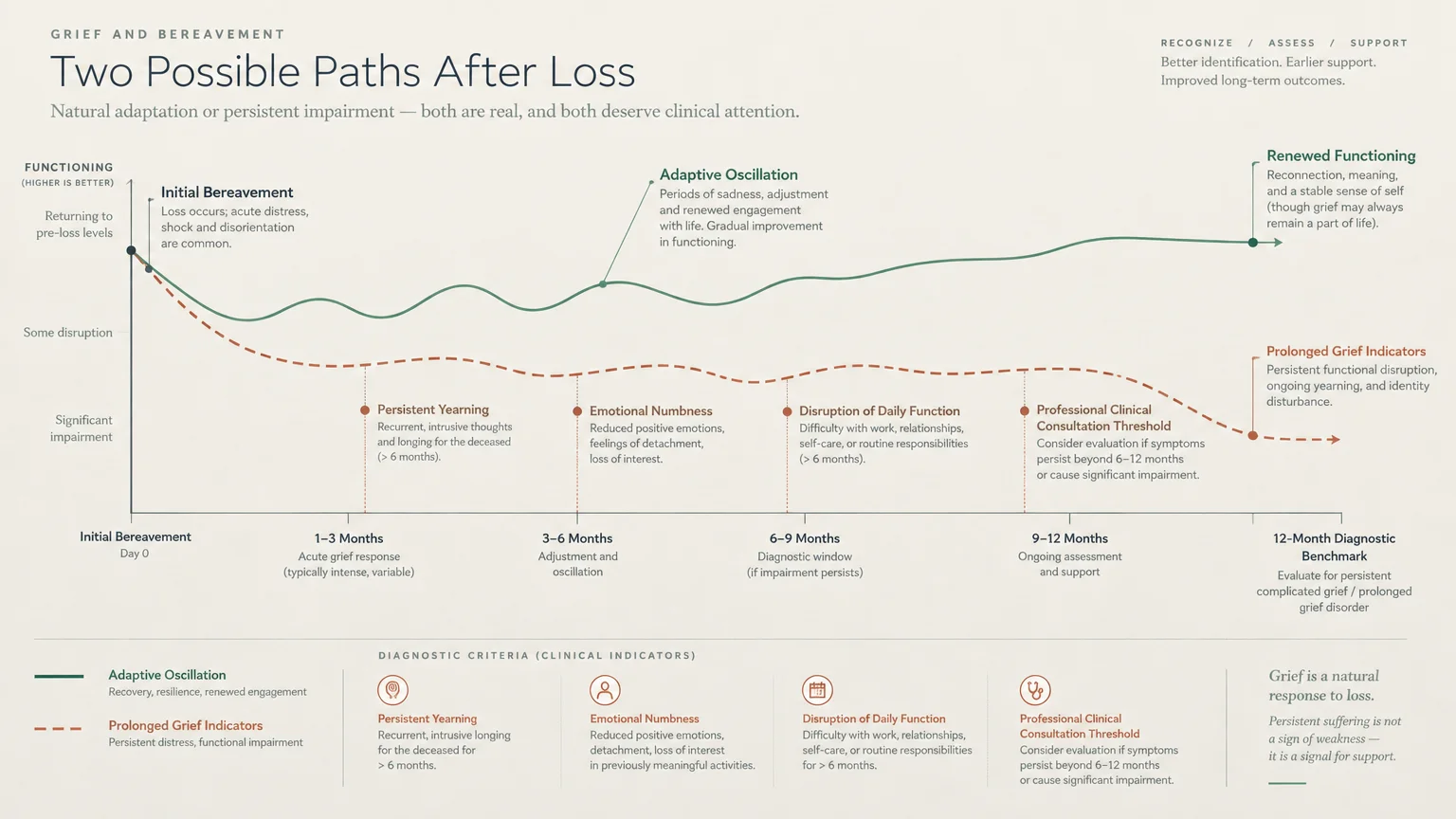
In March 2022, the American Psychiatric Association officially codified Prolonged Grief Disorder in the DSM-5-TR. This diagnostic update helps doctors recognize persistent, disabling bereavement reactions.
Under DSM-5-TR criteria, clinicians establish a twelve-month diagnostic timeline for adults following a loss. For children and adolescents, the timeline spans at least six months.
Prolonged Grief Disorder affects an estimated 7% to 15% of bereaved adults under typical circumstances. The vast majority of people recover without developing this clinical condition.
Symptoms include intense yearning, disbelief about the death, and identity disruption. Individuals may also experience emotional numbness that impairs daily living.
Licensed therapists treat this condition with specialized cognitive behavioral therapy for grief. These structured therapies help patients process trauma and rebuild their daily routines.
If your sorrow prevents basic self-care after a full year, speak with a doctor. Effective therapies exist to help you process stuck emotions safely.
Here is a sample conversation opener you can use with your doctor or counselor. Say: “I experienced a major loss over a year ago, and my daily functioning remains impaired.”
This direct statement helps your physician connect you with specialized bereavement support.
Grief and coping resources at the American Psychological Association (APA) and NIH.
Mental health support and resources at SAMHSA.
Frequently Asked Questions About Grief Resilience
Does handling loss gracefully mean I should avoid crying in public?
Grace does not mean hiding your natural tears from the world. Shedding tears releases physical tension and communicates honest emotion to caring companions.
Poise simply means treating your tears with dignity rather than shame. You can weep freely and still possess remarkable emotional strength.
How do I know if my grief has become Prolonged Grief Disorder?
Healthy grief ebbs and flows, allowing periods of normal functioning between waves of sadness. Prolonged Grief Disorder involves relentless, incapacitating sorrow that persists beyond twelve months.
If you cannot work, maintain hygiene, or connect with loved ones after a year, seek clinical guidance. Professional grief therapy offers targeted strategies to restore daily functioning.
Is it normal to feel sudden joy shortly after losing a spouse?
Moments of spontaneous joy or laughter are completely normal during bereavement. The human brain naturally shifts between sadness and positive emotion to relieve stress.
Feeling joy does not indicate a lack of love or respect for your partner. It demonstrates your biological capacity for resilience and hope.
Can spiritual practices help me cope with severe bereavement?
Meditation, prayer, and quiet contemplation provide comfort and lower heart rate during grief. Research indicates that spiritual practices reduce emotional distress when combined with practical daily routines.
Maintain healthy balance by combining spiritual habits with proper medical care and nutrition. Never substitute unverified spiritual claims for licensed mental health care.
What should I do if a family member grieves differently than I do?
Every individual possesses unique neurological wiring, personality traits, and emotional coping mechanisms. One person may process loss through quiet solitude, while another prefers busy activity.
Avoid judging family members who display different mourning habits than your own. Offer patience and respect their personal healing process without imposing your preferences.
Is it normal to feel sudden anger during bereavement?
Anger is a common and natural reaction when coping with significant loss. Frustration often emerges when you confront helplessness or sudden changes in your life.
Acknowledge your anger without directing harsh words at supportive friends or yourself. Physical exercise and journaling provide safe outlets for releasing intense frustration.
Moving Forward with Gentle Hope
Handling loss gracefully is an ongoing daily practice rather than an instantaneous achievement. You honor your loved one by living with awareness, patience, and purpose.
Take three concrete steps this week to nurture your grief resilience. First, establish a dependable bedtime schedule to protect your physical stamina.
Second, track your emotional shifts in a private notebook without harsh judgment. Third, reach out to one trusted friend for a calm, restorative walk.
Be patient with your heart as you navigate the changing seasons of life. With gentle habits and steady support, you can carry your memories with dignity and peace.
This article provides educational information only and does not replace medical, psychiatric, or legal advice. If you experience severe depression, suicidal thoughts, or disabling anxiety, consult a licensed healthcare professional or contact crisis services immediately.