A Seven-Day Observation Practice
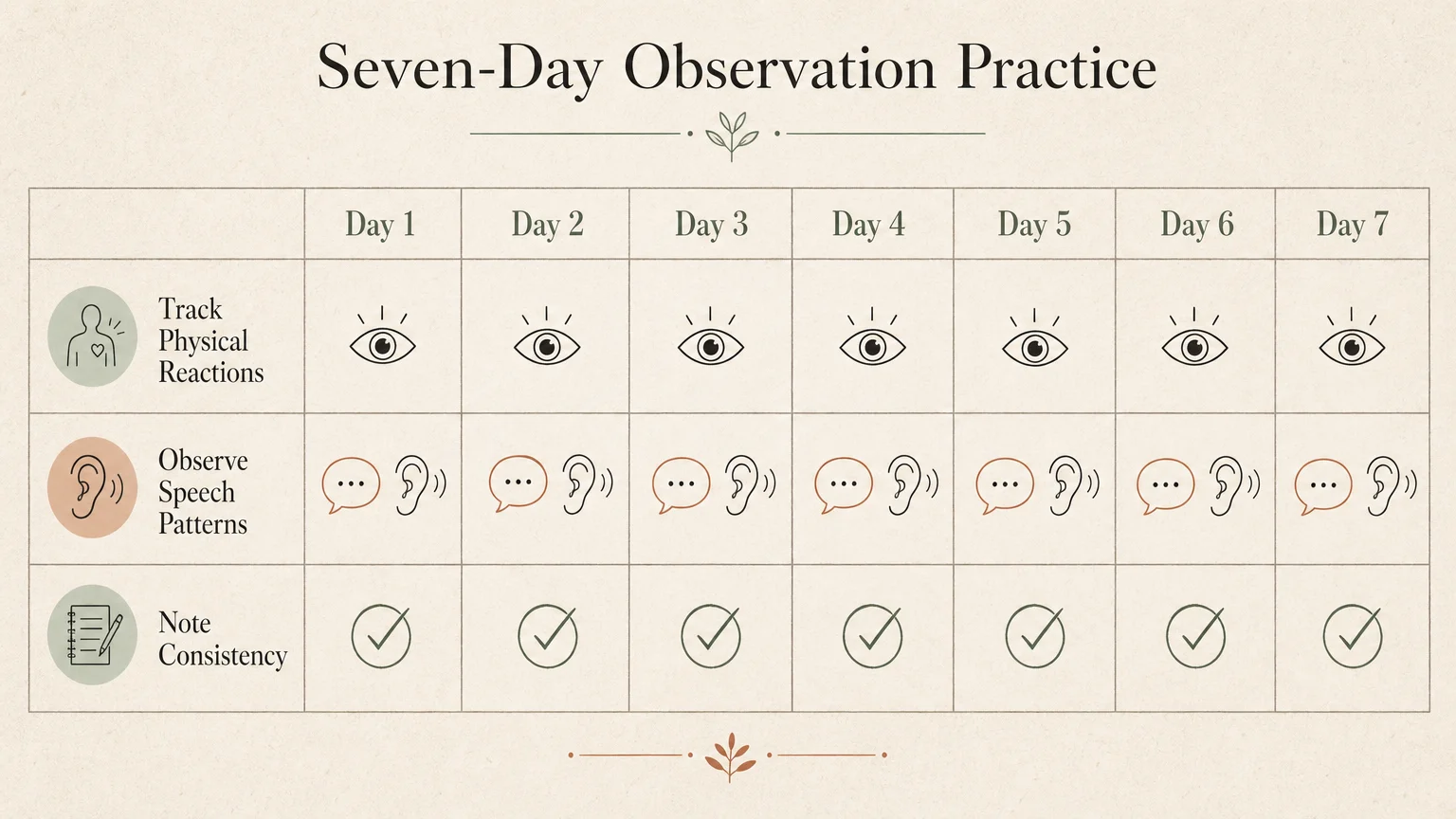
You can develop your observational skills through structured practice. This simple seven-day plan builds your awareness gradually. It requires no financial cost and minimal daily time.
Approach this practice with a spirit of gentle curiosity. You are not trying to catch people in lies. You are simply learning to observe human communication more deeply.
Days One and Two: Internal Awareness
Spend the first two days noticing your own conversational habits. Pay attention to how often you soften the truth. Observe your reasons for holding back your genuine thoughts.
Keep a small journal to record these instances. Write down the emotions you felt before modifying your words. This self-reflection builds empathy for others who struggle with honesty.
Practice a simple journaling prompt each evening. Ask yourself what uncomfortable truth you avoided today. Reflect on how avoiding that truth served you in the moment.
Days Three and Four: Baseline Observation
Focus the next two days on observing a trusted friend. Notice their posture and eye contact during casual chats. Learn their unique conversational rhythm and baseline behaviors.
Do not analyze their words for truth during this phase. Simply watch how they move and breathe. You are collecting data on their relaxed physical state.
Try a brief mindfulness exercise during these interactions. Ground your feet firmly on the floor. Take a quiet breath and focus your attention entirely on their presence.
Days Five through Seven: Gentle Inquiry
Use the final days to practice asking clarifying questions. When someone offers reassurance, gently probe for more details. Ask them how they arrived at their conclusion.
Observe any shifts in their body language when you ask. Notice if their posture tightens or their eye contact wavers. Compare these reactions to the baseline you established earlier.
Record your findings in your journal each night. Document any differences between their verbal claims and physical cues. This practice hones your intuition over time.