
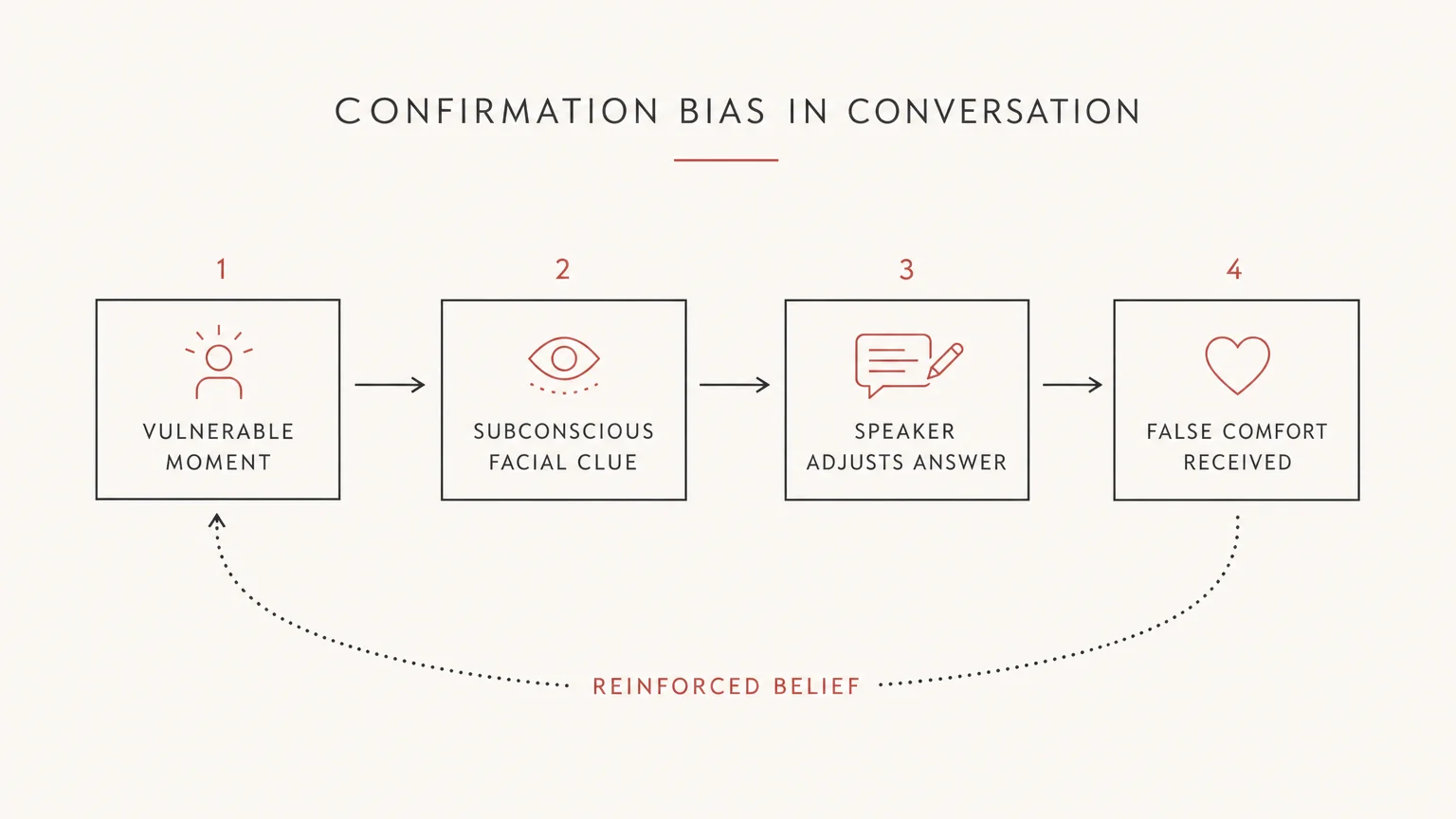
Cognitive Patterns and Comfort
Your own mind plays a role in how you receive information. The placebo effect demonstrates the power of human belief. We can experience real relief from a reassuring statement.
This relief is valuable but not always grounded in reality. You must learn to value truth over immediate comfort. This shift in perspective takes time and practice.
Recognizing Your Own Vulnerability
Periods of transition increase your vulnerability. You might desperately seek a specific answer during these times. Your judgment can become clouded by emotional exhaustion.
It is vital to acknowledge your current emotional state. Give yourself grace when you feel overwhelmed. You might not be ready to handle hard truths on certain days.
Postpone critical conversations when you feel highly reactive. Wait until you have the emotional bandwidth to process reality. Grounded decisions require a calm and rested mind.
Differentiating Intuition from Hope
Intuition is a quiet and steady inner knowing. It does not rely on frantic wishes or desperate hopes. True intuition often aligns with observable facts.
Hope is a powerful and necessary emotion. It can sometimes drown out your intuitive voice. You might ignore red flags because you hope for a positive outcome.
You can test your intuition through quiet reflection. Separate your desired outcome from the current reality. Notice how your body feels when you consider different possibilities.