10 Financial Boundaries Retirees Should Set With Adult Children
1. Cap Monthly Financial Assistance
Establish an absolute cap on any monthly cash assistance given to children. Open-ended support creates ongoing dependence and steadily drains your personal liquid reserves.
Define an exact dollar limit that fits comfortably within your disposable retirement income. Inform your child clearly that this fixed allowance will not increase.
Actionable Practice: Tally your total financial gifts over the last six months. Draft a written notice establishing a fixed monthly ceiling starting next month.
Safety Cue: Never increase your agreed monthly limit to cover non-essential consumer spending or luxury lifestyle choices. Stick to your budget limits without exception.
2. Pay Service Providers Directly
Avoid transferring unrestricted cash directly to adult children for essential bills. Unrestricted cash transfers can easily be spent on unintended non-essential items.
Pay service providers directly when assisting with necessary bills like insurance or utilities. Federal tax rules exempt direct tuition and medical payments from gift tax limits.
Money paid directly to educational institutions or medical providers does not count toward gift tax limits. This maintains clear records and ensures funds serve intended purposes.
Actionable Practice: Request a digital invoice from the provider before making any direct payment on your child’s behalf. Keep receipts for personal tax tracking.
Safety Cue: Refuse to pay service bills without first seeing a current, valid statement from the issuing company. Verify account numbers before sending payments.
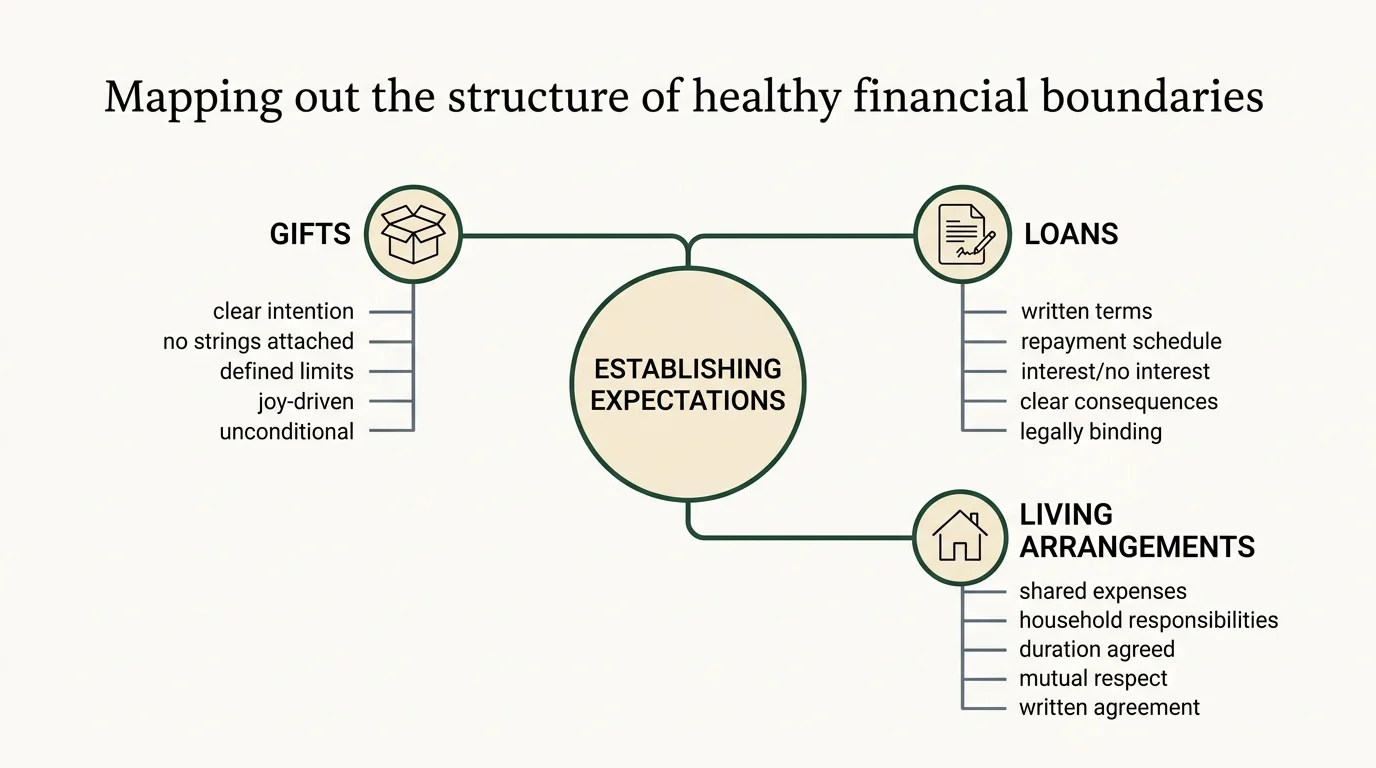
3. Distinguish Between Loans and Gifts
Retirees lending money to children often face unstated or conflicting expectations. Informal spoken loans frequently turn into unpaid gifts, creating lingering family bitterness.
Treat substantial financial assistance as a formal transaction with written terms. Outline explicit repayment timelines, interest rates, and monthly schedules on paper.
If you cannot afford to lose the money entirely, avoid lending it. Assuming a loan might not return protects your emotional peace and financial balance.
Actionable Practice: Write a simple loan agreement specifying payment amounts, due dates, and terms before sending any money. Have both parties sign the document.
Safety Cue: Pause all future loan offers if previous financial agreements remain unpaid or unacknowledged. Protect your capital from recurring default risks.
4. Protect Core Retirement Assets
Never draw down your primary investment savings to fund an adult child. Your core capital must sustain your living expenses, housing, and prospective healthcare needs.
Withdrawing funds early from qualified retirement plans can trigger tax liabilities and penalties. It permanently forfeits compounding growth on your core investment principal.
Your adult children have time to earn money or take out educational loans. You cannot obtain student loans to fund your retirement security.
Actionable Practice: List your non-negotiable living costs in a journal to highlight why primary assets must remain untouched. Review this list whenever pressure mounts.
Safety Cue: Consult a certified financial advisor before transferring money out of long-term investment accounts. Professional feedback provides impartial protection.
5. Stop Co-Signing Loans and Shared Credit
Co-signing a loan makes you legally responsible for the entire debt balance. If your child misses payments, your personal credit score drops immediately.
Lenders require a co-signer because the primary borrower represents significant risk. Taking on that financial risk puts your credit profile in danger.
Remove adult children as authorized users on your personal credit cards. Help them apply for secured cards to build independent credit histories.
Actionable Practice: Review your free credit report to verify that no secondary users are attached to your accounts. Request credit card freeze options if necessary.
Safety Cue: Refuse all requests to co-sign vehicle loans, private student loans, or residential leases. Protect your liability status continuously.
6. Set Clear Timelines for Living at Home
Allowing an adult child to move back home requires strict boundaries. Without clear timelines, temporary living arrangements can turn into indefinite financial dependence.
Create a written residential contract detailing rent contributions, maintenance tasks, and move-out dates. Charging modest rent instills financial responsibility and accountability.
You can set aside collected rent payments in a separate account for them. Returning those funds upon move-out assists their transition into independent living.
Actionable Practice: Draft a six-month housing contract specifying shared utility costs, house rules, and departure dates. Sign the agreement before move-in day.
Safety Cue: Re-evaluate co-living terms immediately if house rules or financial agreements are repeatedly ignored. Hold firm boundaries to preserve peace.
7. Require Full Financial Transparency
Require your child to show personal budget details before offering monetary aid. You should not subsidize lifestyle choices if irresponsible spending habits persist.
Review their monthly income statements, monthly debt payments, and account balances. Open financial review ensures your assistance targets genuine hardship rather than waste.
This transparent process encourages adult children to take ownership of personal finances. It shifts your role from financial safety net to wise guide.
Actionable Practice: Schedule a monthly financial check-in to review budgets together before granting any further support. Look over income and spending figures objectively.
Safety Cue: Decline requests for emergency cash if your child refuses to share recent bank statements. Transparency builds mutual trust.
8. Use IRS Tax Limits to Guide Gifting
Understand tax rules before bestowing large monetary gifts upon your children. Knowing federal gift limits helps you structure financial support safely and legally.
The IRS annual gift tax exclusion is $19,000 per recipient per year. Married retirees can jointly gift up to $38,000 per child without filing returns.
Gifts exceeding annual limits require filing IRS Form 709 with your tax returns. Using tax exclusions creates natural boundaries that protect your estate plan.
Actionable Practice: Track every financial gift in a dedicated ledger to keep annual totals below IRS thresholds. Record dates and dollar amounts accurately.
Safety Cue: Consult a qualified tax practitioner before making substantial monetary gifts near reporting thresholds. Verify tax implications in advance.
9. Establish Emergency-Only Assistance Criteria
Define clearly what constitutes a true emergency before financial trouble strikes. Routine bills, entertainment costs, and optional travel are not emergency events.
Legitimate emergencies include unexpected job loss, critical medical needs, or sudden housing disruption. Setting clear rules prevents routine requests from depleting your capital.
Maintain a small emergency allocation separate from your core retirement portfolio. Once that designated fund empties, pause all further emergency payouts.
Actionable Practice: Write down five clear emergency conditions so both you and your child understand aid rules. Share this document during budget talks.
Safety Cue: Reject emergency demands that fall outside your written conditions or exceed allocated emergency funds. Remain resolute in your decisions.
10. Preserve Your Estate and Legacy Plans
Distributing large cash amounts to one child can destabilize your estate plan. Unbalanced giving during your lifetime often breeds deep conflict among siblings.
Document all lifetime financial assistance in your personal accounting records. Work with an estate lawyer to adjust inheritance shares to balance past gifts.
Keeping accurate records ensures ultimate fairness among all your surviving heirs. It protects family harmony and honors your true testamentary intentions.
Actionable Practice: Schedule an estate plan review to reconcile past financial support with future inheritance provisions. Update legacy documents with an attorney.
Safety Cue: Update your living trust or will promptly whenever significant financial adjustments occur. Keep beneficiaries informed as appropriate.