
Healthy emotional boundaries bring quiet peace and steady clarity to your daily family interactions. You can love your relatives deeply without carrying the heavy emotional burden of their personal choices.
Many mature adults navigate demanding roles with adult children and aging parents at the same time. Understanding where your emotional responsibility ends allows each generation to flourish with authentic dignity.
Recognizing the core signs of healthy boundaries helps you evaluate your family dynamics with calm wisdom. You will discover practical ways to protect your energy while maintaining loving, supportive family connections.
Understanding Emotional Boundaries in Family Systems
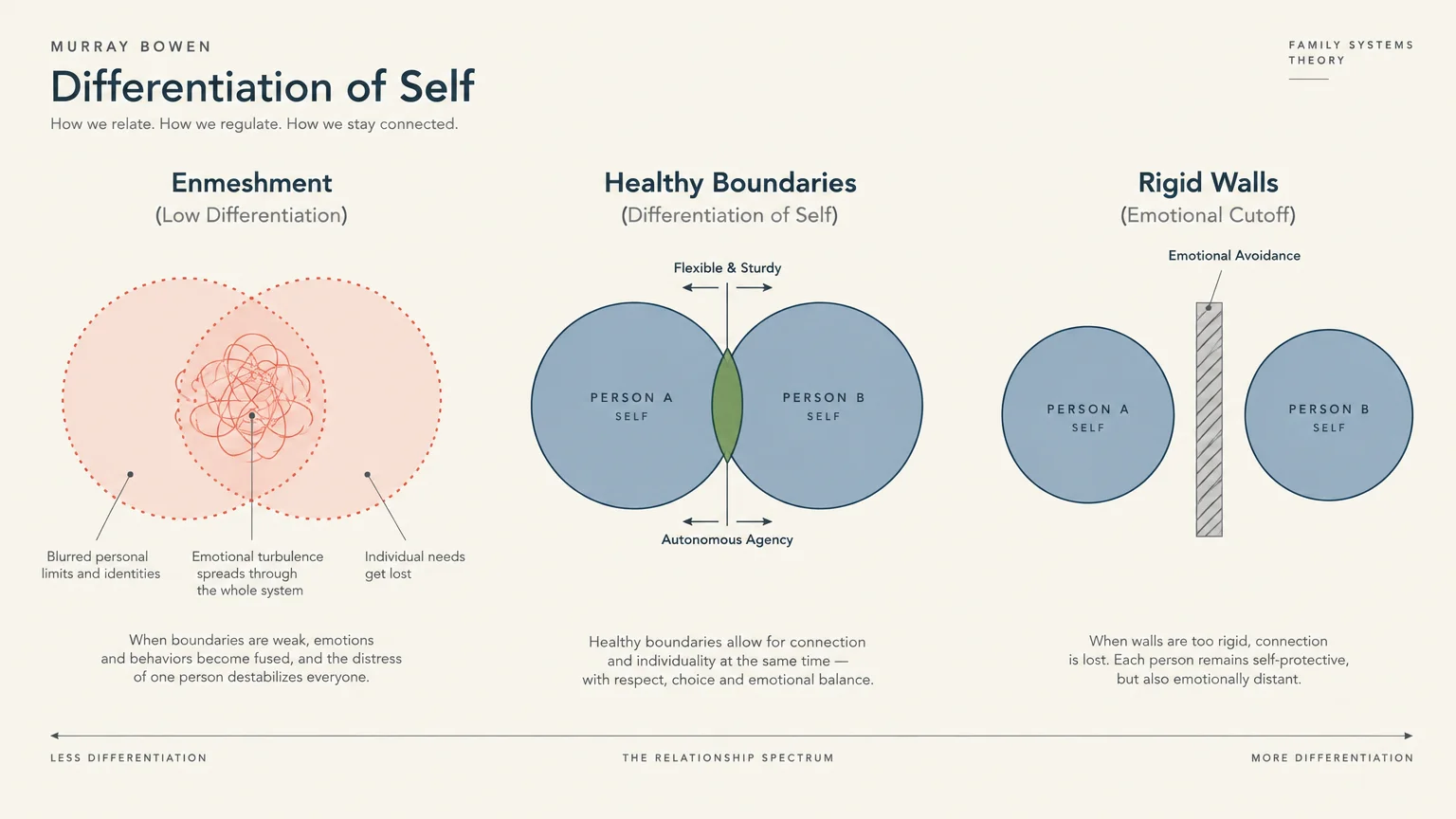
Emotional boundaries define where your personal identity ends and another person’s begins. They act as invisible borders that protect your mental peace and emotional agency.
In healthy family relationships, these borders remain flexible yet sturdy. They allow love to flow inward while keeping manipulation and emotional reactivity outside.
Family therapist Murray Bowen introduced the concept of differentiation of self. Differentiation describes your ability to remain yourself while staying emotionally connected to your relatives.
Low differentiation often causes emotional enmeshment across generations. In enmeshed families, personal limits blur and one person’s distress instantly destabilizes everyone else.
Rigid boundaries sit at the opposite extreme of the relationship spectrum. Family members build emotional walls, practice emotional avoidance, and refuse to share vulnerable feelings.
Healthy family boundaries strike a supportive balance between connection and independence. You stay caring and present, but you do not absorb emotional turbulence from others.
Developing this balance requires time, self-reflection, and steady practice. It allows you to offer genuine love without losing your sense of self.

Psychological and Spiritual Views on Personal Limits
Psychological research highlights the strong link between personal boundaries and reduced stress. Clear boundaries help you cultivate a grounded internal locus of control.
An internal locus of control means you recognize your power over your own reactions. You stop expecting relatives to validate your life choices or moods.
Many spiritual traditions view boundary setting as a form of sacred stewardship. You care for your spirit so that you can serve others from an authentic space.
Many people interpret healthy detachment as a spiritual surrender of control. Research suggests that emotional differentiation protects older adults from chronic interpersonal distress.
Spirituality encourages deep compassion for loved ones facing hardship. However, mature wisdom reminds you that rescuing others often prevents their personal growth.
Setting boundaries with family honors both your well-being and the journey of your relatives. It creates room for authentic grace and mutual respect.
When you let go of managing others, you cultivate inner peace. This peaceful presence often inspires emotional maturity in your family members as well.

The Hidden Cost of Unhealthy Emotional Boundaries
Weak emotional boundaries family members maintain can take a heavy toll on physical health. Chronic family tension keeps your nervous system in constant fight-or-flight mode.
Medical research links continuous relationship strain to high blood pressure, poor sleep, and reduced immunity. Your body often registers relationship tension long before your mind acknowledges it.
Emotional fusion is another major danger of poorly maintained boundaries. In fused dynamics, you lose touch with your own desires because you focus entirely on pleasing others.
You might also experience confirmation bias regarding your assigned role in the family. Confirmation bias is the human tendency to focus on information that confirms existing assumptions.
If you grew up as the family fixer, you may assume everyone needs your constant intervention. You overlook clear evidence that your adult relatives can manage their own problems.
Caregiver burnout frequently emerges when older adults take on disproportionate emotional burdens. You cannot pour comfort into others when your own emotional reservoir sits completely empty.
Breaking free from these ingrained family habits requires gentle self-awareness. Recognizing the physical cost of enmeshment motivates you to establish lasting emotional limits.
8 Signs of Healthy Emotional Boundaries in Families
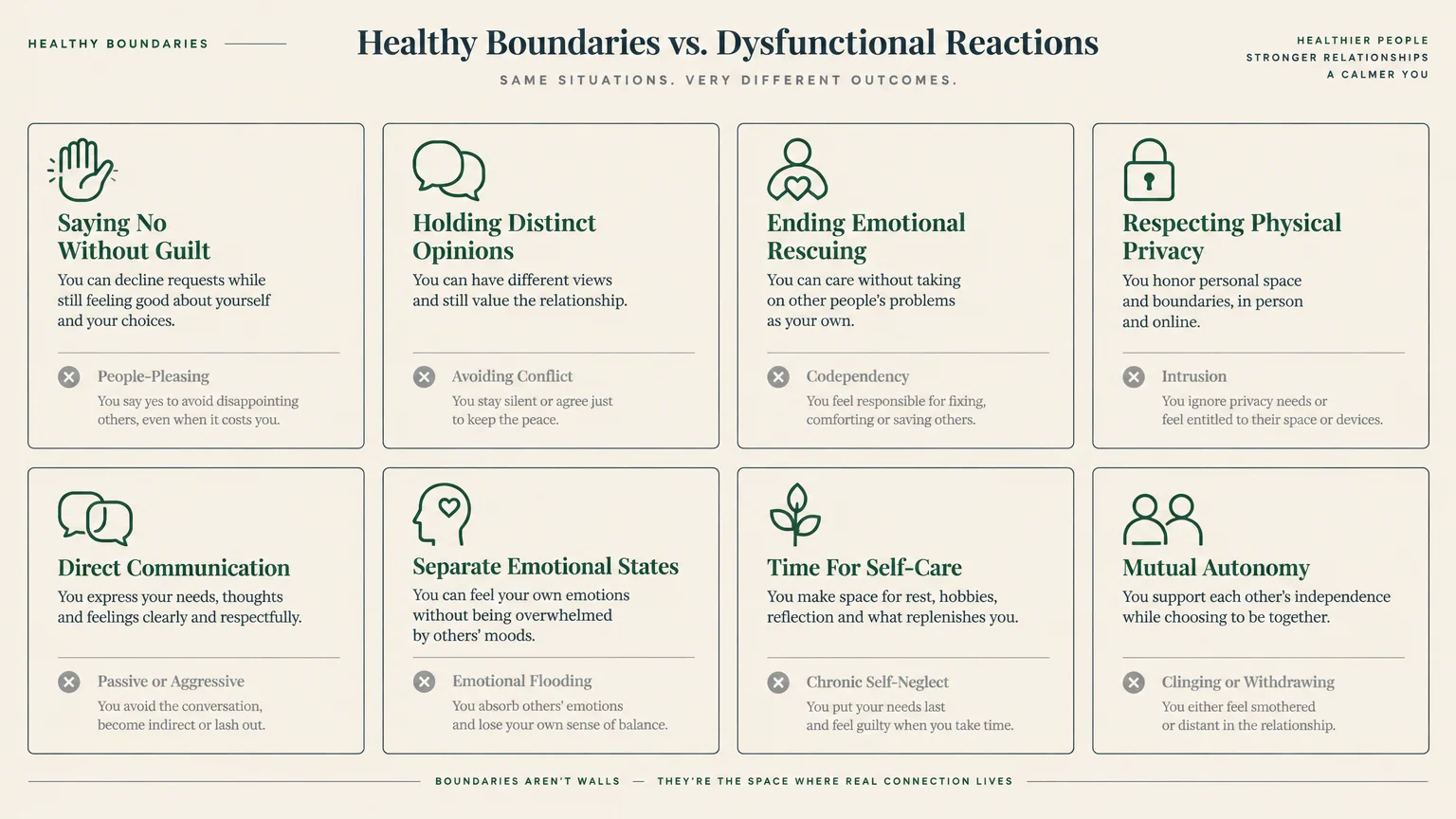
Recognizing healthy boundary signs helps you evaluate your current family dynamics. These positive patterns show that emotional respect and personal maturity guide your daily interactions.
1. Clear Ownership of Personal Feelings
In mature families, members take direct responsibility for their own feelings and reactions. Relatives do not blame you for their frustration, sadness, or anger.
When someone feels upset, they use plain language to express their internal state. They avoid blaming statements that project guilt onto innocent relatives.
You can listen with compassion without internalizing their emotional storm. You recognize that their mood belongs entirely to their internal experience.
This clarity frees you from walking on eggshells around volatile relatives. It creates a calm home atmosphere built on mutual accountability.
Actionable Practice: Use an intentional journal prompt when family tension arises. Write: “I feel concerned when voices rise, but I am only responsible for my own calm response.”
2. Respect for Adult Autonomy and Life Choices
Healthy families respect that adult children and mature relatives make their own life choices. Parents offer guidance only when their adult children invite them to do so.
Family members do not withhold affection when you choose an unfamiliar path. They honor your decisions regarding career, relationships, faith, and personal finances.
You celebrate differences in values without trying to correct or convert each other. Acceptance replaces the exhausting desire for control.
This freedom fosters genuine warmth between adult children and aging parents. Each person feels seen and valued as a distinct individual.
Safety Cue: Notice any subtle urge to control an adult child’s schedule or finances. Take a deep breath and remind yourself that their journey belongs to them.
3. The Freedom to Say No Without Guilt
A resilient family allows members to decline requests without facing emotional punishment. A simple refusal does not trigger guilt trips, silent treatments, or cold withdrawal.
You can decline a holiday invitation or a caregiving task that exceeds your capacity. Your family accepts your decision with basic courtesy and understanding.
Healthy limits prevent the quiet buildup of resentment over long periods. Saying no to an unreasonable demand protects your genuine willingness to help later.
You give your time and energy freely out of love, rather than out of fear or obligation. This keeps your family bonds authentic and joyful.
Actionable Practice: Practice the intentional pause before responding to family demands. Say: “I need to check my calendar and energy before I commit to that.”
4. Absence of Triangulation and Gossiping
Triangulation occurs when two family members direct their conflict through a third person. Healthy families avoid pulling uninvolved relatives into indirect disputes.
If a sister feels frustrated with a brother, she speaks to him directly. She does not use an aging parent as an emotional messenger or ally.
This direct habit stops gossip and protects you from unnecessary emotional fatigue. You do not have to mediate disputes that do not belong to you.
Direct communication builds mutual trust across the entire family system. Everyone feels confident that issues receive open, fair, and honest attention.
Safety Cue: Step back when a relative tries to complain about another family member. Say: “I love you both, so please discuss this directly with them.”
5. Compassionate Presence Without Rescuing
Healthy family members offer emotional comfort without rushing to solve every personal problem. They understand that overcoming struggles builds resilience and self-confidence.
You can sit beside a grieving or stressed relative with loving presence. You do not need to give unsolicited advice or fix their emotional discomfort.
Rescuing often disempowers the other person and drains your personal stamina over time. Supporting them with empathy honors their inherent strength.
This balanced dynamic creates an emotionally safe harbor for honest vulnerability. Relatives know they can share struggles without feeling managed or judged.
Actionable Practice: Use mindful listening during emotional conversations. Ask gently: “Do you want me to listen with an open heart, or would you like to brainstorm solutions?”
6. Honest Expression of Personal Limits
Relatives in healthy systems state their needs, time constraints, and preferences clearly. They do not expect family members to read their minds.
You feel safe sharing when you feel tired, overwhelmed, or unavailable. Your family listens to your limits without dismissing your experience.
This clarity eliminates passive-aggressive behavior and hidden agendas. Transparent communication prevents small misunderstandings from becoming major family rifts.
When everyone communicates limits openly, family gatherings become far more enjoyable. People know what to expect and feel secure in their commitments.
Actionable Practice: Complete a brief boundary audit in your personal journal. Write down one instance where you spoke your truth with kindness this week.
7. Mutual Respect for Privacy and Personal Space
Healthy emotional boundaries family units maintain honor physical privacy and personal space. Family members knock before entering rooms and ask before visiting your home.
Relatives do not inspect your mail, demand financial details, or pry into your personal life. They respect that adulthood requires private space and discretion.
They also honor your digital boundaries by not expecting instant replies to every text or call. You control your personal communication schedule with ease.
This quiet respect builds deep feelings of safety and dignity in your living environment. You can unwind fully without guarding your personal life.
Safety Cue: Set clear parameters around unexpected visits and late-night phone calls. Say: “Please call a day ahead before stopping by so I can prepare.”
8. Conflict Resolution Through Direct Dialogue
Healthy families do not sweep disagreements under the rug or nurse silent grudges. They address misunderstandings with calm words and mutual respect.
Disagreements focus on specific actions rather than attacking personal character. Family members listen to understand rather than to win an argument.
Apologies in mature families are sincere and accompanied by changed behavior. Forgiveness is extended without hanging past mistakes over someone’s head.
This mature approach transforms conflict into an opportunity for closer understanding. It proves that the relationship can endure honest differences.
Actionable Practice: Agree upon a twenty-four hour cooling-off period when family discussions become tense. Revisit the conversation only after resting and collecting your thoughts.

A Gentle Seven-Day Plan for Setting Boundaries with Family
Shifting old family dynamics takes deliberate practice and steady patience. Follow this simple seven-day guide in your daily life without rushing the process.
Day 1: Practice Quiet Observation. Spend your first day simply noticing your emotional reactions during family interactions. Just observe where you feel tense without trying to change anything yet.
Record your physical sensations in a notebook each evening. Notice if your shoulders tighten or your stomach drops during certain phone calls.
Day 2: Identify Energetic Leaks. Review your notes to pinpoint which family interactions leave you feeling drained. Recognize whether guilt, obligation, or fear drives your compliance.
Name the specific family requests that feel burdensome to your spirit. Admitting your limits to yourself is the first step toward honest change.
Day 3: Practice the Mindful Pause. When a relative makes a sudden request today, delay your response. Take three slow belly breaths before giving an answer.
Notice how pausing prevents automatic people-pleasing reactions. This brief pause gives you space to evaluate your real capacity.
Day 4: Craft Loving Boundary Scripts. Write down two or three short, clear phrases you can use comfortably. Keep your words kind, firm, and brief.
Practice saying these phrases out loud while standing in front of a mirror. Familiar words roll off your tongue much easier under emotional pressure.
Day 5: Ground Your Body in Calm. Take a gentle twenty-minute walk in nature to calm your nervous system. Physical movement helps release stored emotional tension from difficult family patterns.
Complementary health practices like mindful walking promote emotional regulation. Focus your attention on the feeling of your feet touching the earth.
Day 6: Deliver One Gentle Limit. Choose one low-stakes boundary to communicate to a family member today. Deliver your limit clearly without apologizing for having personal needs.
Notice how you feel immediately after speaking your truth. You may feel temporary anxiety, but your self-respect will grow.
Day 7: Reflect and Practice Release. Dedicate twenty minutes to quiet reflection or spiritual practice today. You can repeat traditional Ho’oponopono phrases: “I am sorry, please forgive me, thank you, I love you.”
Release any lingering guilt about taking care of your emotional well-being. Celebrate the courage it took to honor your boundaries this week.

Safeguards, Grief Sensitivity, and Warning Signs
Navigating family limits requires extra care during times of intense grief or major life transitions. Grieving family members often experience fluctuating emotions and temporary boundary regression.
The loss of a spouse or parent can disrupt established family roles overnight. Be gentle with relatives who are mourning, but maintain your core emotional limits.
Grief does not give anyone permission to abuse, manipulate, or exploit you. You can offer a compassionate presence while maintaining firm boundaries around your dignity.
Watch out for predatory family coaches or unqualified spiritual advisors. Some commercial programs promise instant family healing in exchange for large upfront fees.
A legitimate counselor will never demand secrecy or pressure you to sever ties abruptly. They encourage thoughtful reflection, personal safety, and gradual progress.
Beware of services that guarantee specific outcomes or claim to channel deceased loved ones for family advice. Rely on licensed clinical professionals or trusted community leaders.
Never abandon your necessary medical treatments or prescribed psychiatric medications due to family pressure. True healing works alongside established medical and psychological care.
Sample Conversation Starters for Setting Family Boundaries
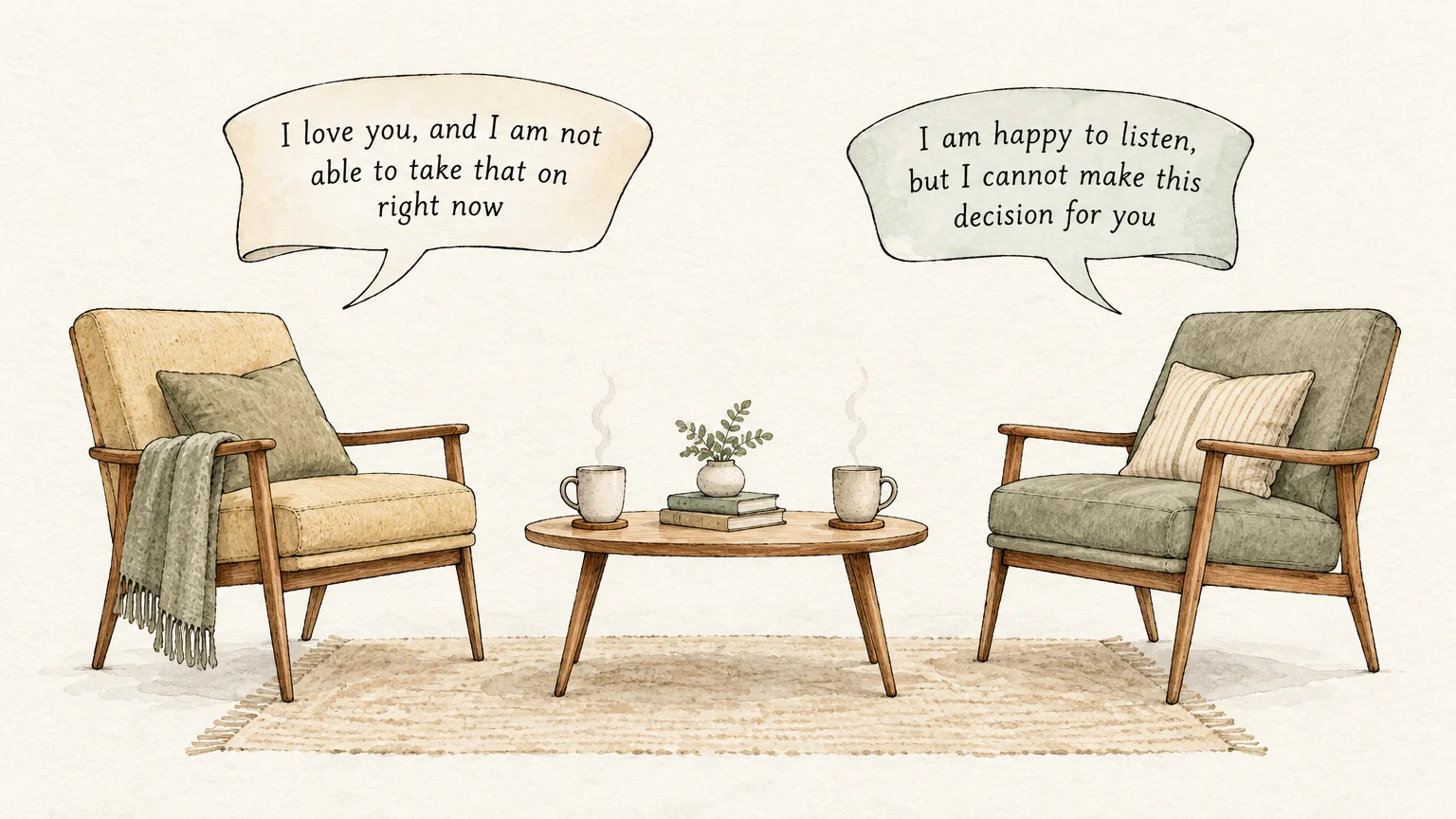
Knowing what words to say can ease the anxiety of setting limits. Use these clear scripts to initiate honest discussions with different family members.
When speaking to an adult child who expects constant assistance, be loving yet firm. Say: “I love supporting you, but I need time for my personal rest.”
When speaking to an aging parent who criticizes your choices, stay calm and steady. Say: “I value your wisdom, but I make the final decisions for my home.”
When speaking to a sibling who drags you into old family drama, step aside with grace. Say: “I care about our relationship, so I choose not to discuss this conflict.”
When meeting with a licensed family therapist, open the session with focused intent. Say: “I want to learn how to stay connected to my family without sacrificing my peace.”
These simple conversation openers keep discussions grounded and respectful. They protect your relationships while establishing necessary boundaries.
Frequently Asked Questions About Family Boundaries
Does setting boundaries mean I do not love my family?
Setting boundaries is an act of deep love and respect. Clear boundaries prevent resentment, exhaustion, and passive-aggressive conflict from poisoning your relationships.
When you set limits, you show your family how to treat you sustainably. You create an honest foundation where affection can thrive for years to come.
What is the difference between enmeshment and healthy closeness?
Healthy closeness allows two individuals to support each other while maintaining distinct identities. Enmeshment occurs when one person’s emotional state dictates the mood of everyone else.
In close families, members celebrate each other’s differences and personal achievements. In enmeshed families, independence is often treated as betrayal or abandonment.
How do I handle a relative who becomes angry when I set a limit?
Expect some pushback whenever you change established family rules. An angry reaction usually proves that the boundary was necessary and overdue.
Stay calm and do not argue, defend, or over-explain your position. Allow them to feel their anger without taking responsibility for fixing it.
Can emotional boundaries change as family members age?
Boundaries must evolve naturally as family structures shift over time. Adult children require complete independence, while aging parents may eventually need practical assistance.
The key is adapting your practical support without surrendering your emotional autonomy. Regular family check-ins help adjust expectations with mutual dignity.
How does spirituality support healthy family relationships?
Many spiritual traditions teach the power of forgiveness, humility, and loving service. However, genuine spirituality also honors personal discernment and self-stewardship.
Setting boundaries allows you to share love from a full heart rather than from empty exhaustion. It invites divine grace into your daily interactions.
Moving Forward with Compassion and Clarity
Cultivating healthy emotional boundaries in families is an ongoing journey rather than an overnight achievement. Give yourself grace as you unlearn decades of habitual patterns.
Every time you speak your truth kindly, you create a healthier legacy for the next generation. You demonstrate that love and personal limits can coexist beautifully.
Take three concrete steps this coming week to nurture your emotional health. First, identify one family dynamic that drains your daily energy.
Second, track your physical reactions during phone calls and family gatherings in a private journal. Notice when your body asks you to rest or step back.
Third, verify your emotional progress by celebrating small victories. Acknowledging your personal growth builds lasting confidence and emotional resilience.
Professional Support and Health Disclaimers
Grief and coping resources at the American Psychological Association (APA) and NIH.
Sleep facts at the Sleep Foundation.
Complementary practices via NCCIH.
Mental health support and resources at SAMHSA.
This article is for informational and educational purposes only. It does not provide medical, psychological, financial, or legal advice.
If you struggle with chronic anxiety, depression, or complex family trauma, consult a licensed therapist or physician. Seek emergency help immediately if you or someone you know is in crisis.