Understanding Why Modern Marriages End
Divorce affects millions of families each year across every demographic. Understanding these patterns removes personal shame and provides objective clarity.
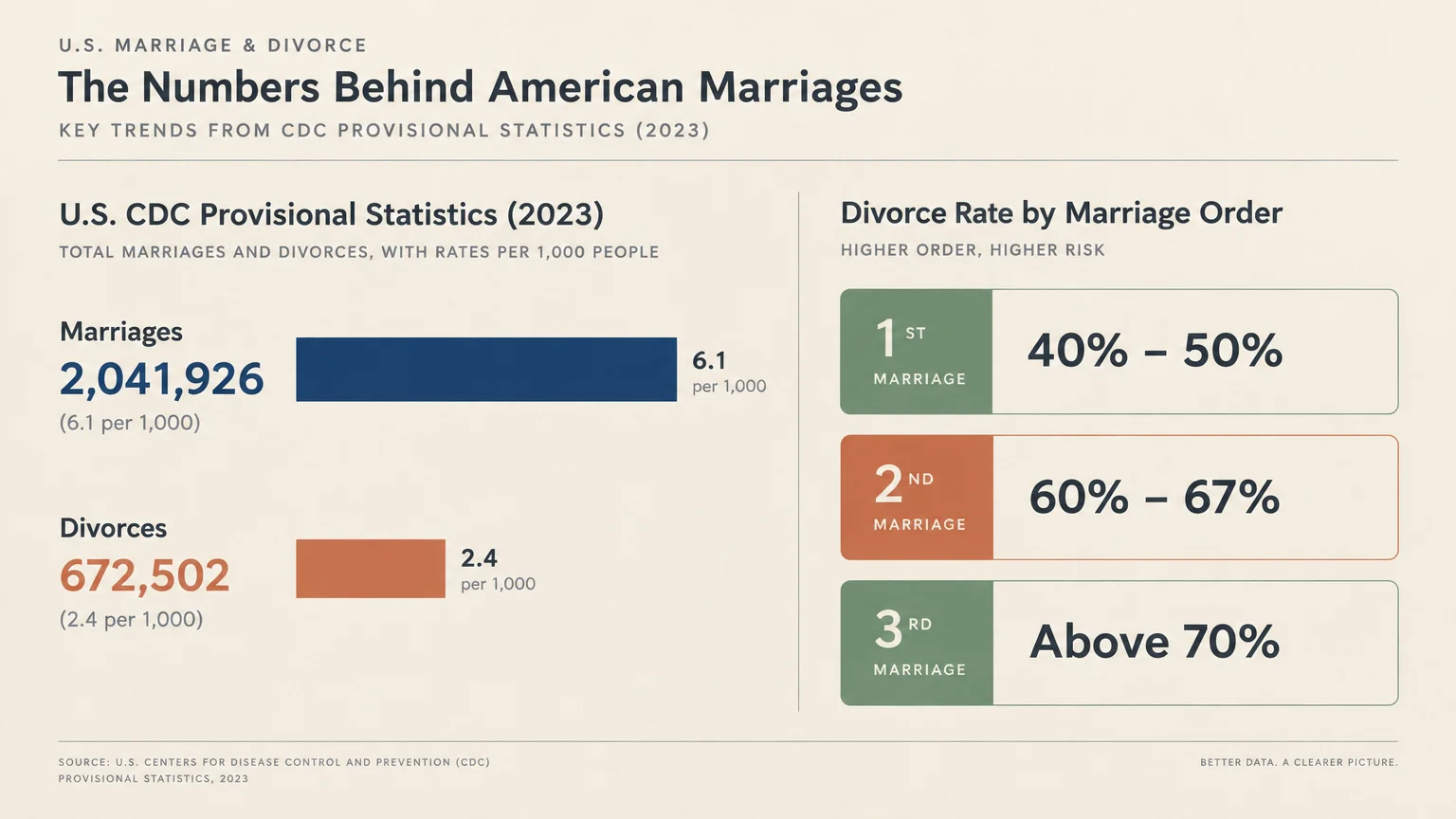
Provisional data from the Centers for Disease Control and Prevention reveals significant relationship shifts. In 2023, the United States recorded 672,502 divorces across reporting states.
This figure represents a national divorce rate of 2.4 per 1,000 individuals. During the same period, 2,041,926 marriages occurred, reflecting a marriage rate of 6.1 per 1,000.
These numbers prove that while marriage remains popular, maintaining a lifelong partnership presents profound emotional challenges. Changing economic realities and extended lifespans continuously reshape modern unions.
Cultural expectations of marriage have shifted dramatically over the past century. Couples once stayed together primarily for financial survival and social standing.
Today, people seek deep emotional reciprocity, personal fulfillment, and spiritual companionship. When these deeper needs remain unmet, partners often reconsider their long-term commitments.
Demographic research also reveals changing stability rates across successive partnerships. Roughly 40 to 50 percent of first marriages end in legal separation.
The statistical risk rises substantially during subsequent attempts at marriage. Approximately 60 to 67 percent of second marriages end in divorce.
For third marriages, the rate climbs above 70 percent. Unresolved emotional wounds and complex blended family dynamics often follow individuals into future relationships.
Recognizing these broader societal trends helps normalize your personal experiences. Relationship breakdowns rarely occur overnight; they develop through persistent, unaddressed challenges.