Understanding why your mind clings to past social blunders helps you release lingering shame and cultivate profound self-compassion. If you find yourself agonizing over a decades-old conversational misstep while trying to fall asleep, you are experiencing a perfectly normal psychological mechanism designed to protect your social standing.
By exploring the psychology of memory alongside gentle emotional practices, you can transform these cringeworthy flashbacks from sources of distress into stepping stones for personal growth. You will learn the neurological and evolutionary reasons behind these vivid recollections and discover practical, actionable ways to soothe your nervous system when unwanted embarrassing memories suddenly surface.
The Psychology of Memory and Social Survival
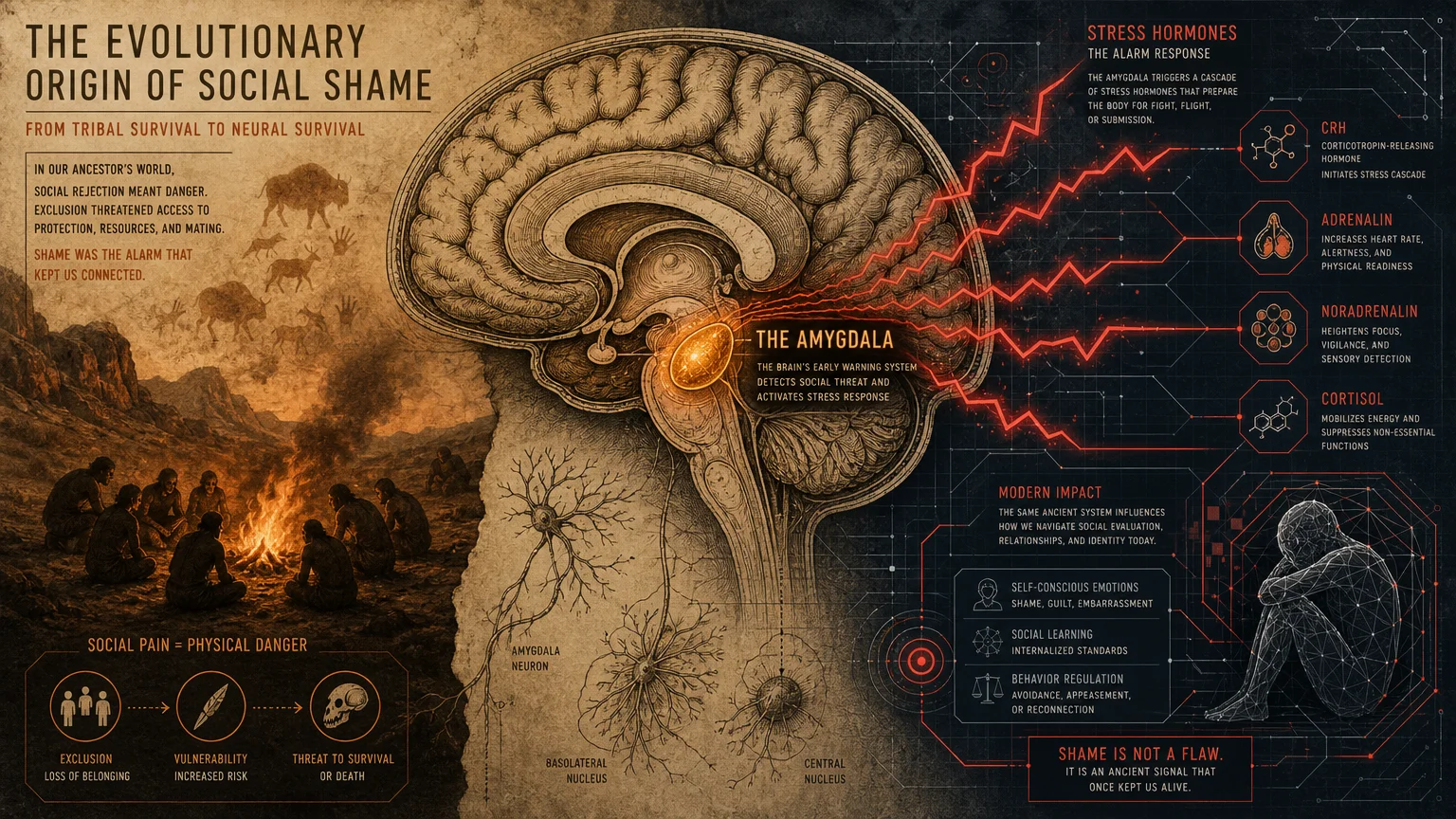
Human behavior often feels entirely mysterious until you view it through the lens of evolutionary survival. Thousands of years ago, belonging to a tight-knit community kept you safe from starvation and physical danger.
If you committed a social error that offended the group, you risked isolation—a consequence that could easily prove fatal in a harsh environment. Your brain adapted by developing a powerful negativity bias. This cognitive pattern ensures you pay significantly more attention to threatening, painful, or embarrassing memories than you do to joyful, mundane ones.
The field of memory psychology dictates that your brain highlights past awkwardness as a protective measure, creating a glaring mental stop sign that prevents you from repeating the exact same social mistake.
If you have ever researched why we remember embarrassing moments, the answer lies deep within your brain structure. The amygdala, an almond-shaped cluster of neurons responsible for processing intense emotions, acts as your internal alarm system.
During an embarrassing incident, your amygdala releases a flood of stress hormones; this chemical surge etches the memory deeply into your neural pathways. You experience memory salience, a phenomenon where emotionally charged events stand out sharply against the blur of everyday life.
This means a minor faux pas at a dinner party twenty years ago might feel clearer than what you ate for breakfast yesterday.
During your sleep cycle, particularly in the REM stage, your brain actively consolidates these memories, deciding which events are crucial for future reference and permanently storing the most embarrassing ones for easy access.
Many people interpret these recurring memories as a sign of permanent character flaws or evidence that they are inherently awkward. Research suggests, however, that these flashes of past embarrassment simply indicate a healthy, functioning brain attempting to keep you socially secure. Recognizing this biological foundation allows you to detach your personal worth from the memory.
You can begin to view these sudden recollections not as endless punishments for your past behavior, but as misguided attempts by your nervous system to keep you safe in a complex social world.