7 Signs You’re Highly Rejection Sensitive
1. You Overthink Casual Conversations
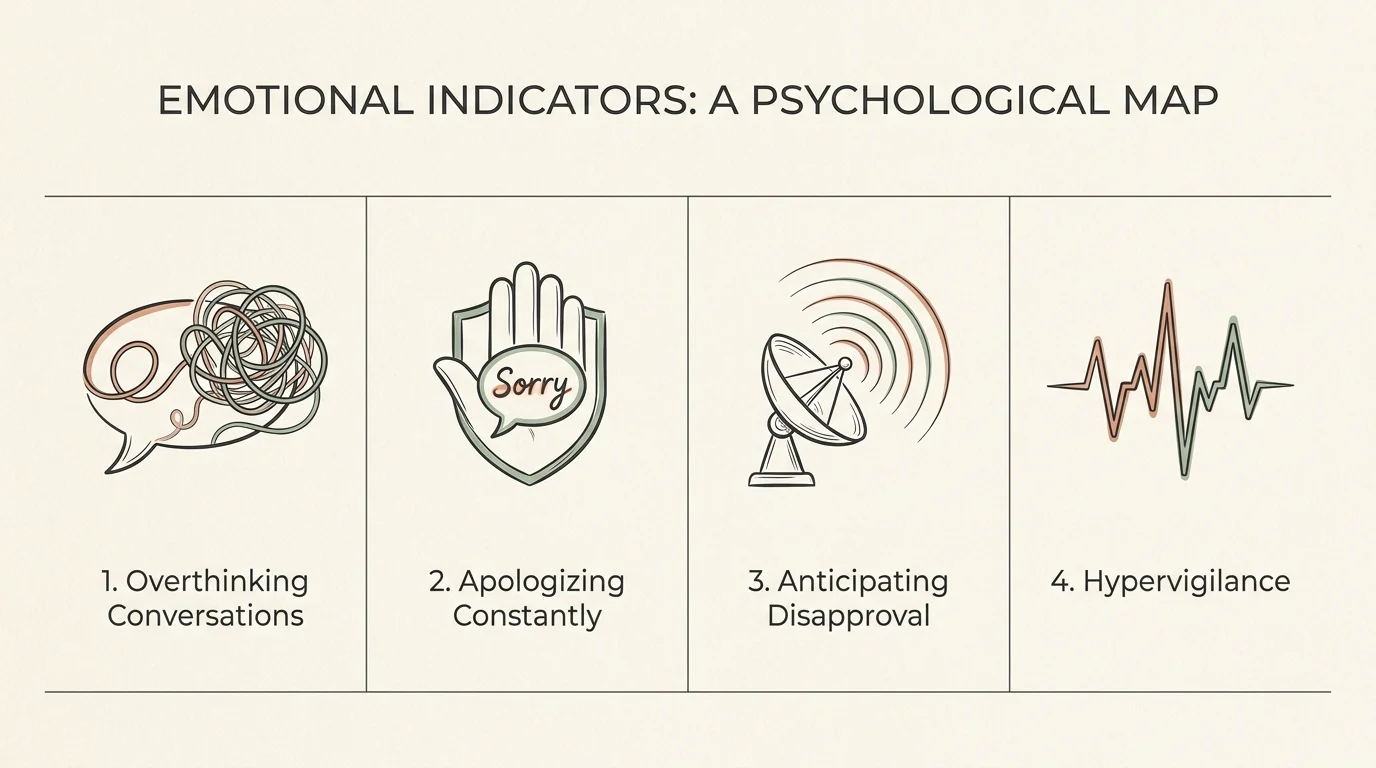
You might replay minor conversations for hours afterward. A brief chat at the store can spark deep anxiety. Your mind searches for mistakes you might have made.
This behavior stems from a fear of social missteps. You worry that a poorly chosen word ruined the relationship. This rumination drains your daily mental energy.
A gentle practice involves catching this mental loop early. Tell yourself that your memory might be biased. Try shifting your focus to a physical sensation instead.
A simple grounding exercise breaks this anxiety cycle. Name three blue objects in your room. This distraction calms your nervous system quickly.
2. You Apologize Constantly
Frequent apologizing often masks a fear of abandonment. You might say sorry for things outside your control. This habit attempts to prevent any potential anger.
You use apologies as a tool for emotional safety. It feels like an insurance policy against rejection. However, over-apologizing can dilute your genuine feelings over time.
Start tracking your apologies for a few days. Notice when you apologize for taking up physical space. Observe when you apologize for expressing a basic need.
Practice replacing apologies with expressions of gratitude. Say thank you for waiting instead of apologizing for tardiness. This small shift empowers your daily communication style.
3. You People-Please to Avoid Conflict
You might abandon your own boundaries to keep others happy. Saying no feels similar to inviting rejection. You agree to favors that exhaust your schedule.
This trait often looks like kindness from the outside. Internally, it stems from a deep fear of disapproval. Your personality traits might bend to fit expectations.
A useful journal prompt involves examining your core motives. Ask yourself why you agreed to a recent request. Did you want to help, or did you fear their reaction?
Start practicing the pause technique. Tell people you need an hour to check your schedule. This delay prevents automatic people-pleasing responses.
4. You Misinterpret Neutral Expressions
A neutral facial expression might look angry to you. Your brain interprets ambiguous signals as clear threats. You assume people are upset with you without evidence.
This cognitive pattern is a form of confirmation bias. Your mind expects rejection and finds proof everywhere. You overlook positive cues while magnifying negative ones.
Challenge these assumptions with a mindful check-in. Ask yourself if there is another explanation for their mood. Perhaps your friend is simply tired or distracted.
You can gently ask for clarification when appropriate. A simple question can clear the air. Say that you noticed they seem quiet and ask if they are okay.
5. You Experience Physical Symptoms from Perceived Slights
Emotional pain often manifests as physical discomfort. A perceived rejection might cause a sudden stomach ache. You might feel a tightness in your chest.
Your body cannot distinguish between social pain and physical danger. Stress hormones flood your system immediately. This reaction leaves you feeling exhausted and shaken.
Managing these physical symptoms requires gentle body awareness. Try a simple breathing exercise when the pain hits. Inhale for four counts and exhale for six counts.
This breathing pattern signals safety to your brain. It slows your racing heart rate down. Consistent practice builds a buffer against future stress responses.
6. You Withdraw Before Others Can Reject You
You might end relationships preemptively to protect yourself. Canceling plans feels safer than risking a potential letdown. You isolate yourself to control the emotional narrative.
This preemptive strike guarantees the loneliness you fear. You push people away to avoid the pain of abandonment. This cycle damages your long-term emotional health.
Reflect on your recent urges to cancel plans. Write down the exact fear driving your desire to withdraw. Seeing the fear on paper reduces its power.
Commit to attending one low-pressure social event. Promise yourself you can leave after twenty minutes. Taking small social risks builds emotional resilience.
7. You Struggle to Accept Compliments
You might deflect praise or assume it is insincere. Accepting a compliment feels vulnerable and risky. You suspect an ulterior motive behind kind words.
This reaction reveals a core belief of unworthiness. You reject positive feedback because it contradicts your inner critic. This habit prevents you from absorbing genuine affection.
Practice receiving compliments with a simple thank you. Resist the urge to minimize your accomplishment. Do not immediately offer a compliment in return.
Let the kind words sit with you for a moment. Imagine the compliment as a warm light. Allowing this positive input rewires your self-perception.