10 Traits You Inherit Only From One Parent
Exploring the specific characteristics passed down exclusively from your mother or father provides practical insights into your health and personality. Below are ten traits influenced by single-parent inheritance, along with simple practices to help you explore them safely.
1. Cellular Energy and Stamina
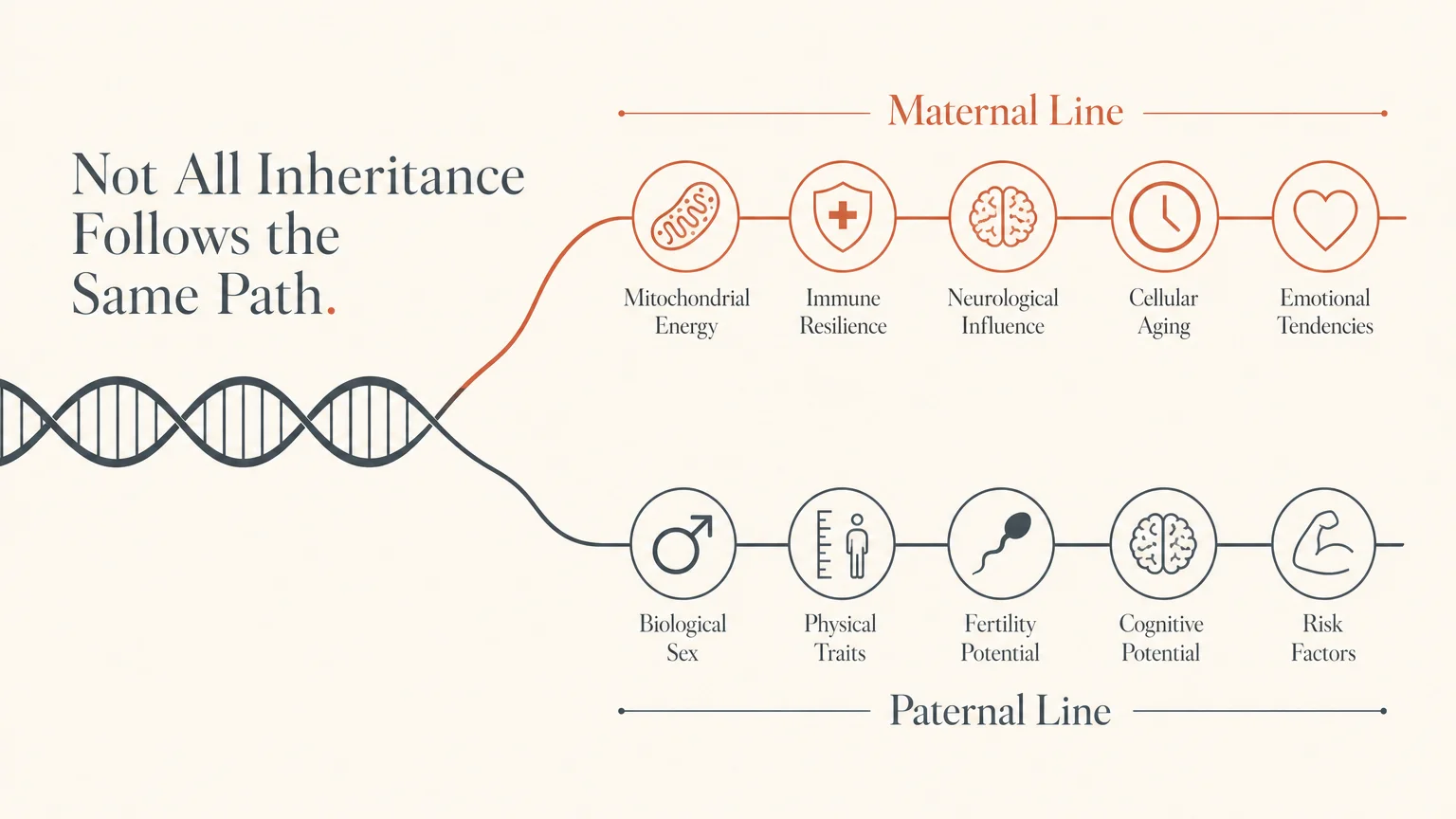
Your body relies on mitochondria to produce the energy required for every physical and mental function. These tiny structures act as the powerhouses of your cells. Fascinatingly, mitochondria contain their own unique DNA, which you inherit exclusively from your mother. The sperm does not contribute mitochondrial DNA to the embryo. Therefore, your baseline cellular energy production, your metabolic endurance, and certain stamina levels represent a direct biological inheritance from your maternal lineage.
Actionable Practice: Track your energy peaks and valleys over the next three days using a simple journal. Notice when you feel most vibrant and when you require rest.
Honor this maternal rhythm by allowing yourself to rest without guilt when your energy wanes, acknowledging that you are caring for the biological machinery inherited from your mother.
2. Biological Sex Determination
In human reproduction, the mother always contributes an X chromosome to the child.
The father determines the biological sex of the baby by contributing either another X chromosome or a Y chromosome. If you possess a Y chromosome, you inherited it entirely from your father, and it contains the specific genetic instructions for male biological development.
This genetic sequence passes down the paternal line essentially unbroken from generation to generation.
Actionable Practice: Spend a few moments reflecting on the specific traits, both positive and challenging, associated with the paternal lineage in your family. Write down three values you appreciate about the men in your family tree, focusing on resilience, kindness, or hard work, and consider how you embody those values today.
3. Certain Color Vision Variations
The genes responsible for producing the photopigments in your eyes reside on the X chromosome. Because men inherit their single X chromosome exclusively from their mothers, any variations in these genes, such as red-green color blindness, come directly from the maternal side.
Women can inherit color vision variations as well, but they require the trait from both parents, making the direct mother-to-son inheritance pattern the most prominent.
Actionable Practice: Take a mindful walk outdoors today, dedicating fifteen minutes purely to visual observation. Notice the subtle shades of green in the leaves, the distinct blues of the sky, and the varied earth tones beneath your feet.
Use this time to express quiet gratitude for your specific visual perception, recognizing it as a direct gift from your ancestors.
4. Growth and Structural Height Patterns
While both parents contribute to your overall height, research demonstrates that specific genes promoting physical growth rely heavily on paternal imprinting.
The IGF2 gene, for example, heavily influences how large a child grows during development. Due to genomic imprinting, the copy of this gene inherited from the mother is typically silenced, meaning the father’s copy actively dictates this specific growth factor.
Actionable Practice: Engage in a brief physical grounding exercise. Stand barefoot on the floor, feeling the solid structure of your bones and the height of your spine. Take three deep breaths, acknowledging the physical structure your father provided. Remind yourself that your body, exactly as it stands today, represents a sturdy, enduring biological legacy.
5. Sleep Cycles and Insomnia Risks
Your ability to fall asleep and stay asleep depends on a complex interplay of hormones and neurological signals. Scientists studying inherited characteristics have found that imprinted genes from both parents play a tug-of-war in the brain regarding sleep.
Often, maternal genes promote longer, deeper sleep cycles, while paternal genes might encourage waking and alertness. If you struggle with insomnia, you may be dealing with the expression of these specific imprinted genes. For reliable sleep facts and research, you can explore the resources at the Sleep Foundation.
Actionable Practice: Create a gentle evening wind-down routine tailored to your specific sleep needs. Instead of fighting wakefulness with frustration, calmly dim your lights one hour before bed, read a comforting book, and practice slow, deliberate breathing. Accept your unique sleep architecture rather than forcing your body into an unrealistic standard.
6. Male Pattern Hair Loss Tendencies
The most prominent gene associated with male pattern baldness sits directly on the X chromosome. Since men receive their X chromosome strictly from their mothers, they inherit this primary hair loss tendency from the maternal line.
While other secondary genes from the father play a minor role, looking at your mother’s father often provides the strongest indicator of your hair retention trajectory.
Actionable Practice: Practice physical self-acceptance by standing in front of a mirror and speaking kindly to your changing appearance. Focus your attention away from what is lost and toward the features you appreciate, such as your smile, your eyes, or the expressive lines on your face that indicate a life well-lived.
7. Tooth Size and Jaw Structure
Dental structure, including the size of your teeth and the shape of your jawline, often leans heavily on paternal genetics.
Because genes dictating jaw size and tooth spacing tend to be dominant, and paternal imprinting plays a role in bone growth, you are highly likely to inherit your father’s distinct dental features. If you require braces or have a specific bite alignment, you can often thank your paternal lineage.
Actionable Practice: Bring mindfulness to your next meal. As you eat, pay close attention to the physical sensation of chewing. Notice the strength of your jaw and the function of your teeth. Use this simple daily necessity as a grounding technique to anchor your awareness in the present moment and honor your physical body.
8. Cellular Aging Speed
At the end of your chromosomes sit protective caps called telomeres. As your cells divide throughout your life, these telomeres shorten, which dictates the biological aging process. Fascinating genetics facts reveal that the father’s age at the time of conception directly influences the length of the telomeres passed onto the child.
Longer inherited telomeres often correlate with a slower cellular aging process.
Actionable Practice: Protect your cellular health by incorporating a daily stress reduction practice. Spend ten minutes practicing guided imagery, visualizing a calm, healing light washing over your body. Engaging in relaxation techniques helps lower cortisol, which protects your telomeres. You can discover complementary practices via NCCIH.
9. Specific Emotional Regulation Baselines
Through the science of epigenetics, researchers understand that trauma, stress, and environmental factors can alter how genes express themselves without changing the DNA sequence itself. Studies suggest that certain epigenetic markers related to emotional regulation and stress response pass down strongly through the maternal line.
Your baseline nervous system responses may reflect the emotional environments experienced by your mother and grandmother.
Actionable Practice: Keep an emotional awareness journal. When you experience a sudden spike in anxiety or a deep sense of calm, write down the trigger. Follow this by writing three simple things that soothe your nervous system, such as a warm cup of tea, listening to classical music, or taking a warm bath.
This practice helps you manage your inherited emotional baselines with deep compassion.
10. Early Weight Gain and Resource Storage
How your body stores fat and gathers metabolic resources involves a battle between maternal and paternal imprinted genes.
Paternal genes generally encourage the fetus and child to extract as many resources as possible for rapid growth, while maternal genes attempt to regulate this growth to protect the mother’s resources. The dominant expression of paternal genes in this area can influence childhood weight gain patterns and adult metabolic tendencies.
Actionable Practice: Release self-judgment surrounding your body shape. Instead of criticizing your genetic tendency to store resources, reframe your thinking. Thank your body for its ancestral wisdom in keeping you safe and nourished. Focus your daily movement on how your body feels, prioritizing flexibility and joy over arbitrary physical standards.