
Dependable companions bring genuine emotional safety and peace into your daily routine. When others honor their commitments, you feel deeply respected, valued, and secure.
With maturity, you learn that quiet consistency matters far more than charming promises. Healthy relationships flourish only when personal actions match spoken statements over months and years.
Recognizing the primary integrity traits of people who keep their word protects your precious emotional energy. This practical guide details ten reliable people traits, helpful communication scripts, and gentle daily habits to enrich your life.

Understanding Personal Integrity and Trust
Integrity means living in alignment with your personal values. When you observe keeping promises in action, you witness self-discipline and empathy working together.
Historically, human communities depended on mutual reliability for basic survival. A person’s spoken oath once formed the foundation of trade, community governance, and safety.
Modern psychology views reliability as a cornerstone of secure attachment. When someone does what they promised, your brain relaxes its threat monitoring systems.
Many adults over fifty find that social circles naturally become smaller and more deliberate. During this chapter of life, you value emotional safety over large social networks.
Knowing that a companion will honor their word brings deep comfort. It removes unnecessary tension and allows authentic companionship to flourish.
Trust is not merely a warm feeling. It is a predictable pattern of behavior tested across time and changing circumstances.
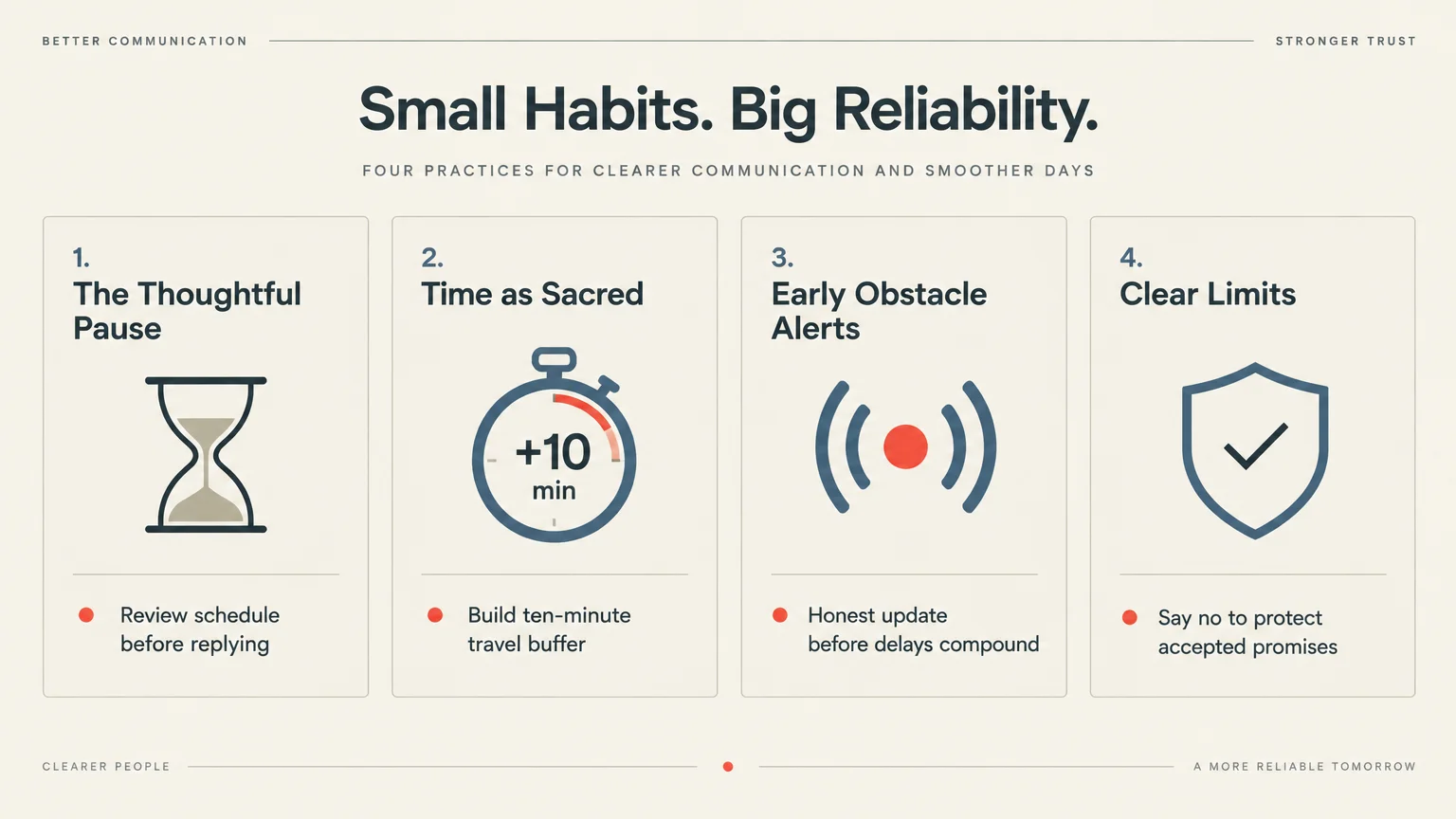
10 Traits of People Who Keep Their Word
1. They Pause Before Agreeing
Reliable people do not rush to say yes. They assess their schedule and energy before accepting a new commitment.
A thoughtful pause signals emotional maturity and self-respect. It shows that the speaker takes commitments seriously rather than making empty promises.
This deliberate pause protects both parties from broken expectations. It prevents resentment from taking root later.
Actionable practice: When someone asks for a favor, practice taking one slow breath. Tell them that you will review your calendar and reply by tomorrow morning.
2. They Respect Time as a Sacred Resource
Punctuality reflects your view of other people’s lives. Trustworthy people treat your hours with the same care they give their own.
Arriving on time honors the limited hours each person possesses. Dependable friends recognize that wasted time cannot be recovered.
If an unavoidable delay happens, they notify you well in advance. They never assume your schedule can wait for their arrival.
Actionable practice: Set your alarm ten minutes earlier than necessary for every appointment this week. Notice how unhurried travel brings calm to your body.
3. They Communicate Obstacles Immediately
Life brings sudden illnesses, vehicle troubles, and unexpected emotional sorrow. People with high integrity do not hide when problems occur.
Early communication prevents misunderstandings from damaging long friendships. It demonstrates respect for your plans and your peace of mind.
Instead, they share challenges early and offer an honest update. This transparency allows everyone involved to adjust plans without unnecessary stress.
Actionable practice: Write a simple draft message on your phone for unforeseen delays. Use it quickly whenever an emergency disrupts your daily agenda.
4. They Welcome Clear Boundaries
You cannot keep every promise if you cannot say no. Reliable people maintain firm, respectful limits on their time and attention.
Clear boundaries protect relationships from quiet exhaustion. Honest people state what they can handle, ensuring that every accepted responsibility receives full attention.
They understand that a sincere refusal is kinder than a fragile agreement. By protecting their personal capacity, they fulfill the commitments they accept.
Mindful cue: Remind yourself that declining an invitation is not a personal rejection. It is an act of honesty that preserves mutual goodwill.
5. They Maintain Consistency Across Moods
Unreliable individuals often let fleeting feelings dictate their integrity. They make grand commitments during excitement, then withdraw when energy fades.
This emotional stability offers immense comfort during challenging times. You never have to guess which version of a reliable friend will arrive.
Dependable people separate emotional weather from moral obligation. They show up for you even when personal enthusiasm feels low.
Journal prompt: Reflect on a time you honored a duty despite feeling tired. How did completing that task strengthen your self-respect?
6. They Practice Quiet Accountability
True integrity does not require an audience. People who keep their word perform moral duties without seeking applause or public praise.
They take pride in personal excellence rather than social recognition. Their inner peace comes from living in alignment with their values.
Their inner conscience serves as their guide. They clean up their messes and return borrowed items because it is right, not for status.
Actionable practice: Complete one helpful task for a neighbor or family member today in absolute secrecy. Savor the quiet satisfaction of private goodwill.
7. They Value Small Commitments Equally
Trust rarely shatters in single massive catastrophes. It usually dissolves through dozens of neglected small promises.
When someone remembers minor favors, you know they value your presence. These small moments weave the fabric of enduring trust.
Reliable individuals remember returning books, sending promised recipes, or calling at the agreed hour. They treat small agreements with deep respect.
Actionable practice: Carry a pocket notebook to record small favors you offer during casual conversations. Review your notes every evening before bed.
8. They Avoid People-Pleasing Guilt
People-pleasers often make commitments they secretly hope to escape. Their desire for immediate approval creates chronic unreliability.
People who conquer people-pleasing speak with refreshing clarity. Their clear agreements give you complete confidence in their spoken commitments.
In contrast, trustworthy people tolerate brief awkwardness to preserve genuine trust. They decline requests politely rather than offering dishonest optimism.
Actionable practice: Say no to one low-priority request this week without offering elaborate excuses. Notice that your connection remains intact.
9. They Match Body Language with Intent
When someone intends to follow through, their presence reflects that grounded commitment. They look at you attentively and listen without distraction.
Grounded presence creates an atmosphere of mutual calm. You feel heard and supported when physical attention matches spoken words.
Their actions match their posture and tone. You sense an absence of nervous deflection or hurried excuses during conversations.
Mindful cue: During your next commitment discussion, rest your feet flat on the floor. Speak from a steady center to anchor your spoken word.
10. They Take Ownership Without Defensiveness
Conscientious people occasionally fall short due to unforeseen crises. When reliable people fail to deliver, they acknowledge the shortfall without making excuses.
Genuine apologies rebuild fractured bonds quickly. A humble response restores emotional equilibrium and preserves mutual dignity.
They offer a direct apology and repair the damage swiftly. They do not blame external circumstances or criticize you for feeling disappointed.
Journal prompt: Think about a recent mistake you made. How can you offer a clean, repair-focused apology without defensive justifications?

Cognitive Patterns and Memory in Relationships
Our minds naturally search for patterns to predict the behavior of companions. Psychologists use the term confirmation bias to describe our tendency to notice details that reinforce existing beliefs.
If you believe someone is dependable, you might overlook their missed commitments. Conversely, memory salience can make a single painful letdown feel like an ongoing habit.
Research on cognitive patterns suggests that tracking objective facts helps you assess relationships accurately. Grounded observation protects you from both cynicism and naive hope.
Healthy spirituality invites you to hold compassion while honoring factual reality. You can love someone deeply while recognizing that their follow-through remains unreliable.

Setting Healthy Boundaries and Recognizing Red Flags
Healthy boundaries protect your emotional wellbeing, especially during seasons of grief or major life transitions. Disappointment hurts more intensely when your emotional reserves run low.
Watch for red flags when forming new friendships or seeking guidance. Beware of individuals who demand immediate trust before demonstrating steady follow-through.
Be cautious of high-pressure demands, grand guarantees, or requests for secrecy. Honest people allow you time to verify claims and consult your inner wisdom.
If you encounter high-pressure services or financial manipulation, step away immediately. Reliable mentors never demand large upfront sums or isolate you from loved ones.
When you need to address broken promises, a clear script can reduce interpersonal anxiety. Honest communication prevents emotional escalation.
Try this gentle conversation opener: “I value our bond, but I felt hurt when our agreed plan was missed. Let us discuss how we can coordinate better moving forward.”
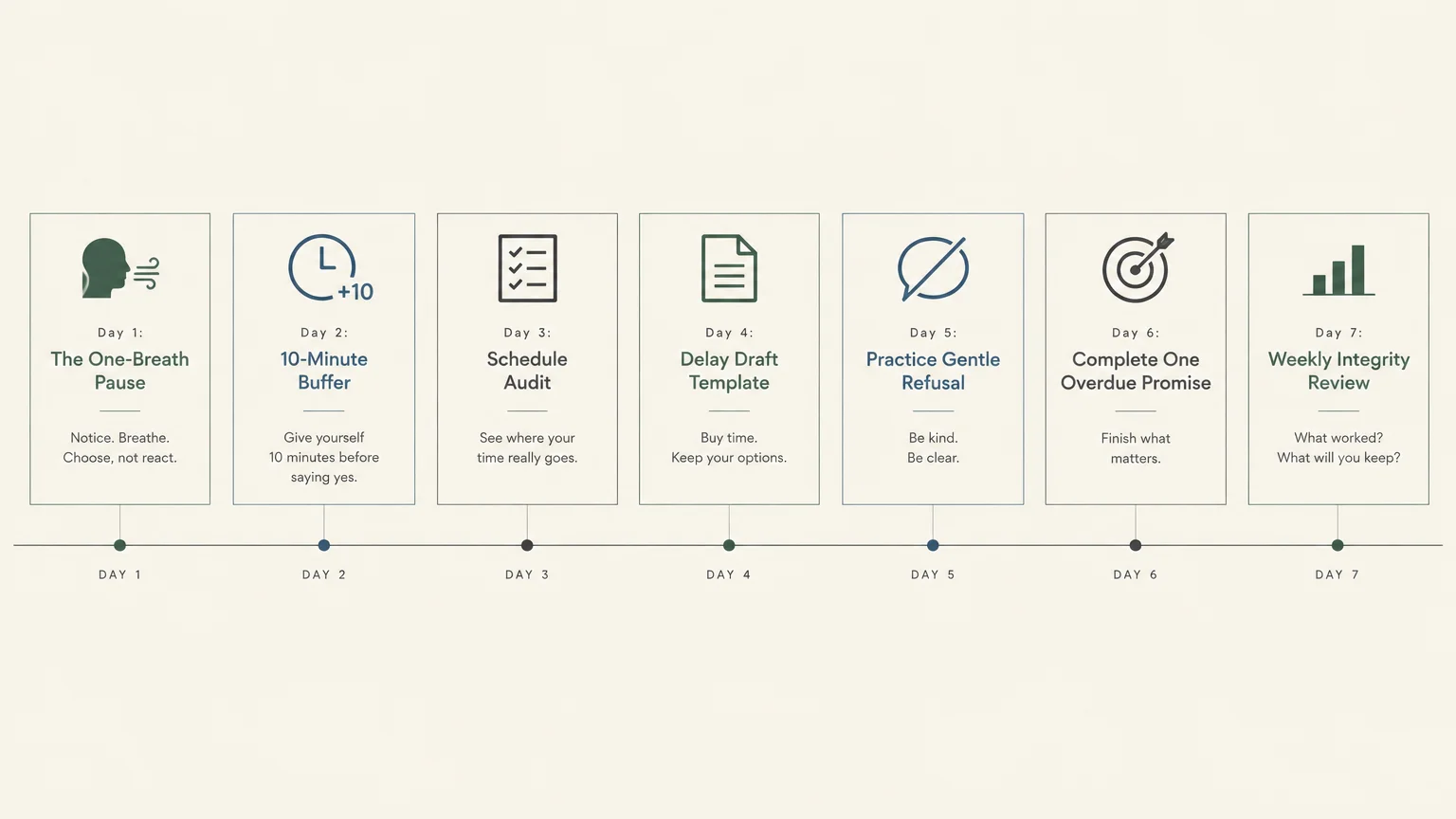
A 7-Day Practice Plan for Deepening Personal Reliability
Building personal integrity begins with small daily choices. This week-long reflective exercise helps you align your actions with your words.
On Day 1, audit your spoken commitments. Write down every promise you made to family members, coworkers, and friends during the past week.
On Day 2, identify any lingering unfinished tasks. Choose one small promise you delayed and resolve it before sunset.
On Day 3, practice the intentional pause. Count to three before answering any invitation or request for your assistance.
On Day 4, practice compassionate boundary setting. Decline an optional task that drains your energy, using polite and clear phrasing.
On Day 5, check in on your physical punctuality. Arrive five minutes early to every scheduled interaction, honoring the other person’s schedule.
On Day 6, review your promises to yourself. Treat your personal rest, nutrition, and contemplative quiet with the same honor you offer others.
On Day 7, reflect on your week through private journaling. Celebrate the inner calm that emerges when your actions mirror your stated values.

Supporting Emotional Health and Well-Being
Maintaining personal integrity requires mental focus, good rest, and emotional grounding. When chronic stress overwhelms you, keeping daily promises becomes far harder.
Gentle wellness habits support your cognitive health and emotional patience. Mindful breathing, time in nature, and quiet reflection help clear mental fog.
Complementary practices via NCCIH.
Quality sleep also plays a crucial role in maintaining everyday reliability. Rested minds regulate emotions better and track schedules with greater accuracy.
Sleep facts at the Sleep Foundation.
If prolonged grief or anxiety makes daily commitments feel impossible, professional support can help you heal.
Grief and coping resources at the American Psychological Association (APA) and NIH.
Mental health support and resources at SAMHSA.
Frequently Asked Questions About Reliable People
Can someone become more reliable later in life?
Yes, character development continues throughout adulthood. With conscious effort, anyone can build better organizational habits and strengthen their emotional honesty.
How should I respond when a close friend frequently breaks promises?
Address the pattern directly with gentle candor. If their behavior remains unchanged, adjust your expectations and avoid relying on them for critical needs.
Why do some people promise things they cannot deliver?
Many individuals struggle with people-pleasing tendencies or poor time perception. They fear disappointing others in the moment, which causes greater disappointment later.
Is it acceptable to renegotiate a promise if circumstances change?
Yes, renegotiating is healthy if you communicate as soon as conditions shift. Real integrity involves proactive updates rather than silent withdrawal.
How does keeping promises affect my mental health?
Following through on your commitments reduces cognitive dissonance and feelings of guilt. It builds authentic self-esteem and strengthens supportive social bonds.
Living in Alignment with Your Word
Walking with integrity creates a peaceful sanctuary within your spirit. When your word is steady, you attract trustworthy companions who value genuine mutual respect.
This week, focus on three practical steps to cultivate dependability in your daily routine.
First, monitor your automatic responses to requests and pause before agreeing. Second, track your completed commitments in an evening reflection journal.
Third, verify your appointments twenty-four hours in advance to prevent schedule confusion. These simple actions protect your time and build lasting self-respect.
By tending to these simple practices, you honor your community and nurture lasting peace of mind.
Important Notice and Disclaimer
This article provides educational and personal wellbeing information only. It does not replace professional medical, psychological, financial, or legal advice.
If you experience significant emotional distress, grief, or sleep difficulties, please contact a licensed healthcare provider or trusted spiritual counselor. Seek urgent help immediately if you face a personal crisis.