Recognizing when someone constantly seeks approval helps you navigate complex relationships with empathy and clarity. As we grow older, our social connections profoundly impact our emotional well-being, making it vital to understand the psychological dynamics at play. While everyone desires connection, excessive validation-seeking often masks deeper insecurities or unresolved grief.
Identifying these seven specific social behaviors provides you with practical tools to support loved ones while maintaining healthy personal boundaries. You will learn how underlying emotional patterns drive human interactions, enabling you to foster deeper trust in your daily conversations.
Through mindful observation and compassionate communication, you can gently address these behaviors and strengthen your relationships without compromising your own peace or enabling unhealthy dependencies.
Understanding the Psychological Need for Approval
We all rely on external feedback to understand our place in the world. From a young age, humans are wired to seek connection and affirmation from their community. As you navigate the later stages of life, your social landscape often shifts dramatically.
Retirement, the relocation of adult children, or the profound loss of a spouse can strip away the natural, daily sources of affirmation you once took for granted. When a lifelong partner or close companion passes away, the quiet daily validation of simply being witnessed vanishes.
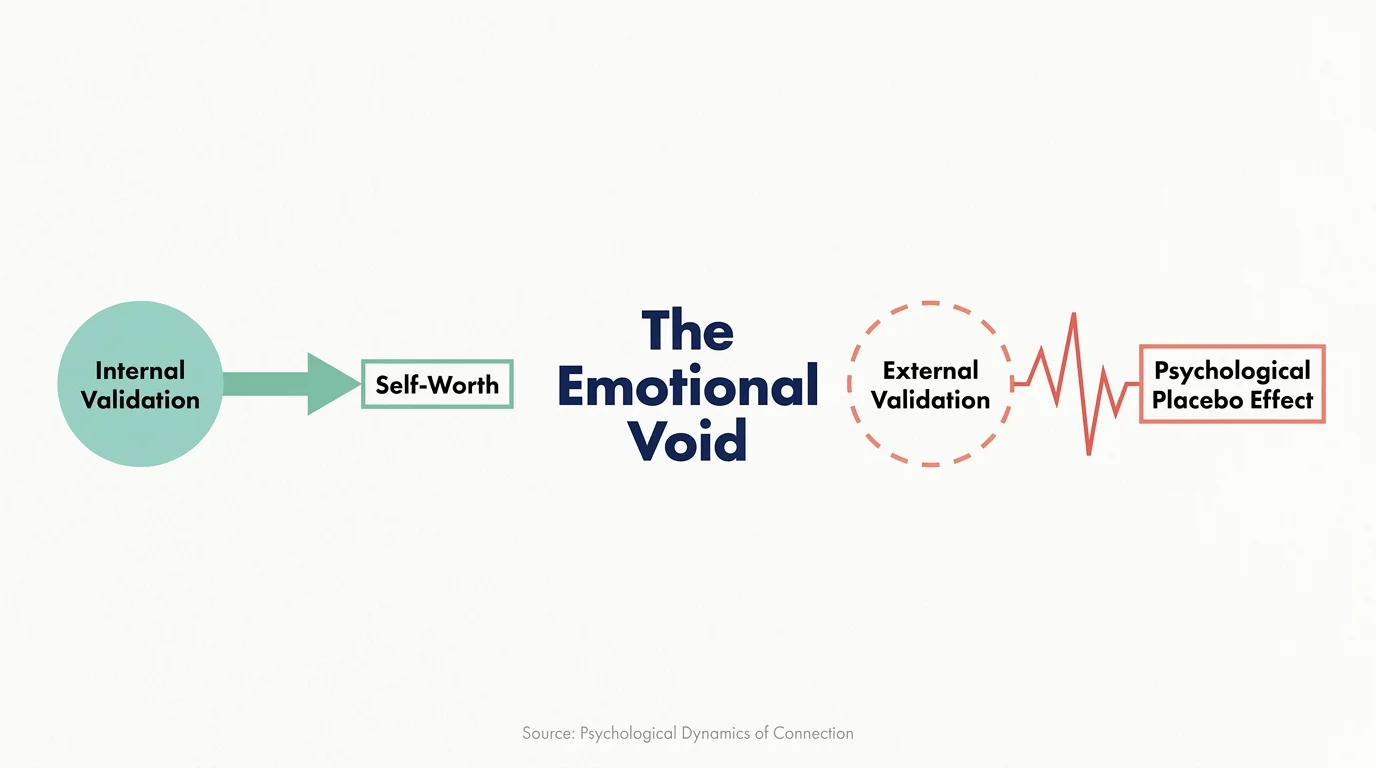
Consequently, people often attempt to fill this emotional void by seeking heightened approval from friends, acquaintances, and even strangers.
While looking for comfort is a deeply human trait, chronic validation-seeking operates differently. It often becomes an automatic response to internal discomfort. Research suggests that healthy self-esteem relies on internal validation—the ability to recognize your own worth without requiring constant external proof.
When internal validation is weak, people develop behavioral loops designed to elicit praise or reassurance from their environment. Sometimes, receiving this external praise acts like a psychological placebo effect; it temporarily relieves the pain of insecurity or loneliness without addressing the deeper root cause of the emotional distress.
Many people interpret sudden shifts in their social dynamics as personal failings, but understanding these interactions through a psychological lens offers a more compassionate perspective. Our brains naturally engage in a confirmation bias—a quick psychological term for our tendency to notice and remember only the interactions that prove our existing beliefs.
If a friend deeply believes they are a burden, they will actively seek out reassurance to soothe that specific fear, while simultaneously filtering out the genuine affection you offer them daily.
By learning to observe these underlying emotional patterns, you protect your own energy and offer a more grounded, steady presence to those who are struggling.