The 12 Signs Someone May Not Be What They Seem
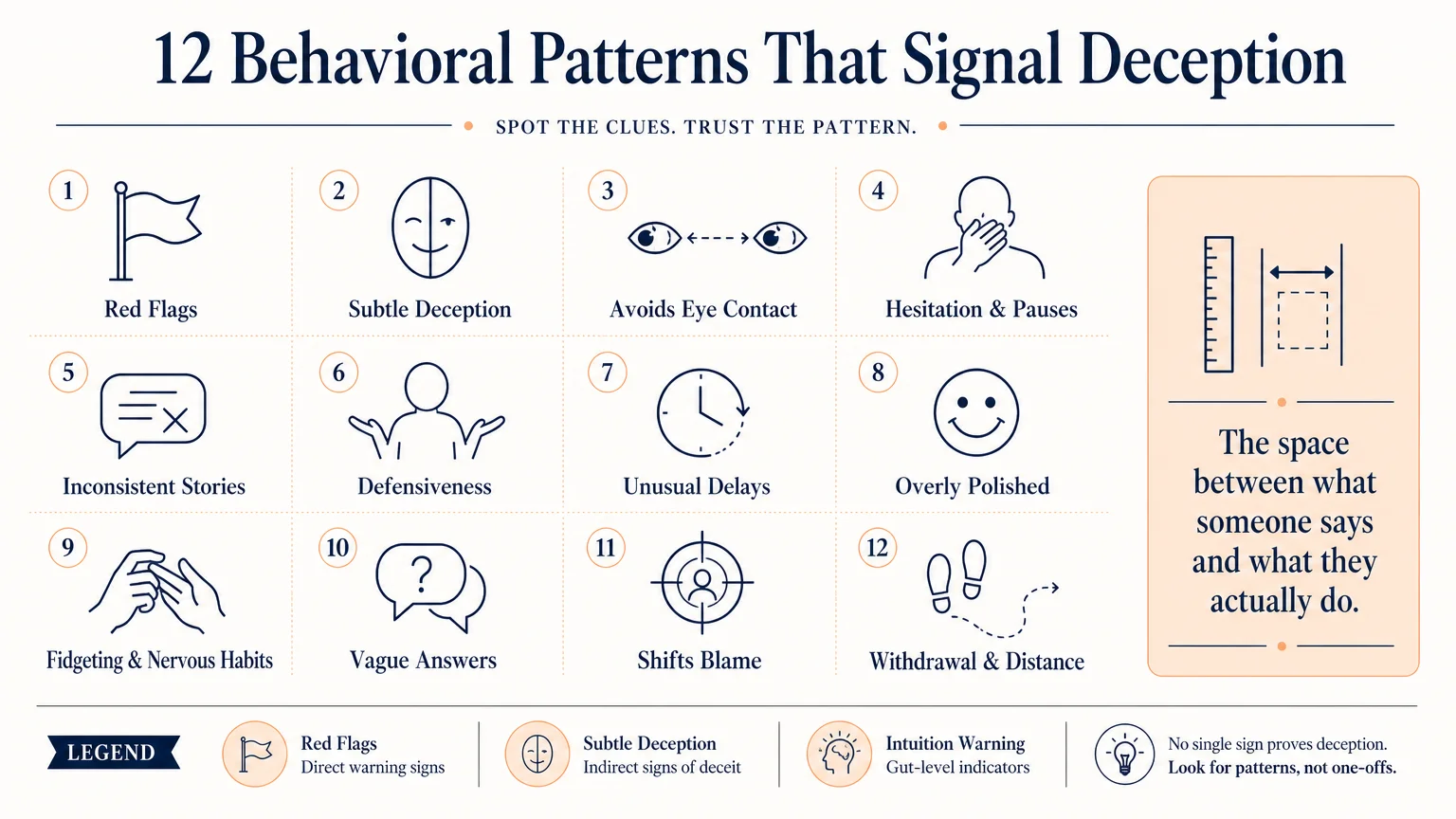
Identifying the gaps between a crafted persona and reality takes patience. These twelve signs highlight common personality red flags and behavioral inconsistencies that strongly suggest underlying hidden motives.
1. Their Life Stories Frequently Change
Authentic people generally maintain a consistent narrative about their past experiences, challenges, and relationships. When someone frequently alters the details of their personal history, they may be attempting to curate a specific image rather than share their genuine truth.
You might notice dates shifting, core characters changing roles, or the emotional tone of a story fluctuating wildly depending on who is currently listening. This psychological behavior often indicates an effort to manipulate your perception. As an actionable practice, pay attention to how they respond to simple clarifying questions.
A truthful person will comfortably explain the discrepancy, whereas someone hiding their motives will likely become defensive, irritated, or overly complicated in their explanation.
2. They Rush Emotional Intimacy
Building deep, enduring trust requires time, shared experiences, and gradual vulnerability. A significant deception warning sign involves someone demanding immediate closeness or declaring profound feelings before they truly know who you are. This tactic, often referred to as love bombing, creates a false sense of security and obligation.
They might overwhelm you with lavish praise, constant communication, or grand spiritual declarations about how you were destined to meet in this lifetime. To maintain your safety, implement a strict twenty-four-hour pause before agreeing to major commitments, joining expensive retreats, or sharing deeply sensitive personal information.
3. They Ignore Minor Boundaries
Individuals with hidden motives often test your defenses by ignoring small, seemingly inconsequential limits before moving on to larger transgressions.
If you ask them to call after a certain time and they repeatedly fail to do so, or if you politely decline a suggestion and they playfully continue to push, they are revealing a fundamental lack of respect for your autonomy. These minor boundary violations serve as a stress test for your compliance.
Practice setting a small, low-stakes boundary today—such as ending a conversation exactly when you said you needed to leave—and observe their reaction closely. Their willingness to honor a simple request speaks volumes about their character.
4. They Play the Perpetual Victim
While everyone faces hardships, a person who never takes responsibility for their circumstances often harbors underlying toxicity. If every story they tell features them as the innocent party and someone else as the villain, you are witnessing a profound personality red flag. This narrative style deflects accountability and manipulates your natural empathy.
They use their supposed victimization to extract emotional support, favors, or financial assistance while offering nothing in return. Reflect on your physical energy levels after interacting with this individual. If you consistently feel emotionally drained, overly responsible for their happiness, or exhausted by their endless crises, it is time to reevaluate the connection.
5. They Mirror Your Interests Flawlessly
Finding common ground forms the foundation of any friendship, but absolute mirroring suggests a manufactured persona. When someone suddenly claims to share every single one of your hobbies, spiritual beliefs, and obscure interests, they may be trying to manufacture an artificial soulmate connection.
This intense alignment is a common psychological tactic used to fast-track trust and bypass your critical thinking. As a simple safety cue, notice if they ever hold a dissenting opinion or enthusiastically share an independent passion.
A genuine person possesses their own distinct identity; they will not hesitate to respectfully disagree or introduce you to entirely unfamiliar concepts.
6. They Isolate You From Trusted Circles
Healthy relationships expand your world rather than shrink it. If a new mentor, friend, or partner subtly criticizes your long-time friends or suggests that your family does not truly understand your spiritual growth, they are engaging in emotional isolation.
By cutting you off from your established support network, they ensure that they become your sole source of validation and guidance. This makes you significantly more vulnerable to deception and manipulation. Protect yourself by keeping regular, intentional touchpoints with long-time friends and family members.
Schedule a weekly phone call with someone who has known you for decades, ensuring you remain firmly grounded in reality.
7. Their Actions Contradict Their Words
The most reliable metric of someone’s character is their consistent behavior over time. A person may speak eloquently about kindness, universal laws, and spiritual awakening while simultaneously treating service workers poorly or gossiping maliciously about mutual acquaintances. These discrepancies between stated values and actual conduct reveal their true nature.
Words are easily manipulated; sustained actions are not. To gain clarity, try journaling their actions versus their promises for a single week. Writing down the objective facts without the emotional context of their charming explanations often illuminates the stark reality of their hidden motives.
8. They Exhibit Conditional Empathy
True empathy flows naturally and consistently, regardless of the audience. Someone who may not be what they seem often performs acts of kindness only when others are watching or when they stand to gain something tangible in return. Their compassion is highly transactional.
You might notice them offering lavish support in public settings while remaining cold, dismissive, or unavailable when you need private comfort. Your safety cue here is to observe how they treat individuals who can do absolutely nothing for them in return.
Notice if their charitable acts always come with strings attached or if they frequently remind you of everything they have done for you.
9. They Deflect Accountability With Defensiveness
Conflict resolution provides a clear window into psychological maturity. When confronted with a mistake or a hurtful action, a trustworthy person listens, apologizes sincerely, and actively attempts to change their behavior. Conversely, someone operating with deception warning signs will instinctively deflect, deny, or attack.
They might use the classic manipulation tactic of twisting the conversation so completely that you end up apologizing to them. Watch carefully for the phrase, I am sorry you feel that way. This non-apology shifts the blame onto your emotional reaction rather than addressing their inappropriate behavior.
10. They Use Spiritual Bypassing
In wellbeing and spiritual circles, some individuals use advanced concepts to avoid dealing with practical psychological issues or emotional pain. If you express sadness over a loss and someone tells you that your grief is lowering your vibration or that you simply need to manifest more positivity, they are engaging in spiritual bypassing.
This invalidates your lived experience and prevents genuine emotional processing. Reject any guidance from individuals who quickly dismiss your complex human emotions. A true spiritual teacher or supportive friend honors your pain and sits with you in the darkness rather than forcing an artificial light.
11. They Are Highly Guarded About Their Past
While everyone deserves a degree of privacy, a complete refusal to discuss previous relationships, past residences, or career history raises a significant red flag. An overly secretive individual often hides a trail of broken promises, fractured relationships, or financial misdeeds.
They prefer to exist solely in the present moment with you because their past cannot withstand basic scrutiny. You do not need to demand a full background check, but you can safely ask an open-ended question about their history and observe their physical reaction.
If they immediately cross their arms, change the subject, or become hostile, proceed with extreme caution.
12. Your Body Reacts With Tension
Long before your logical brain pieces together the hidden motives, your nervous system registers the threat. You might experience unexplained stomach aches, shallow breathing, or a lingering sense of dread before meeting with them.
Many people interpret this somatic response as intuition, while research suggests your brain is processing micro-expressions and subtle inconsistencies faster than your conscious awareness can consciously register. Practice a mindful check-in with your physical sensations during your next conversation.
If your shoulders tighten and your jaw clenches every time they speak, your body is delivering a powerful message about your overall emotional safety.