
When unexpected life events disrupt your world, holding onto peace feels difficult. You can anchor your inner stability today, even while your outer circumstances remain intensely uncertain.
Deep distress often clouds your spiritual perspective and exhausts your emotional stamina. Choosing to trust God in hard times restores calm focus when outcomes remain outside your personal control.
This guide offers practical ways to sustain Christian encouragement and steady your heart. You will discover how to navigate personal adversity without denying your genuine pain or masking your true sorrow.

Understanding Spiritual Distress During Difficult Seasons
Painful seasons frequently bring silent confusion and deep exhaustion. You might wonder why prayers feel unanswered or why difficulties continue to multiply.
Human psychology explains part of this emotional heaviness. Your brain possesses an innate negativity bias, which means your mind naturally fixates on threats to protect you.
This protective reflex often magnifies fear and diminishes your spiritual perspective. Recognizing this biological habit helps you separate natural anxiety from spiritual failure.
Chronic stress also depletes neurotransmitters that regulate your mood and hope. Physical exhaustion makes spiritual devotion feel arduous, even when your commitment remains strong.
Grief also alters how you perceive time and stability. When sorrow weighs heavily on your shoulders, feeling distant from divine comfort is a normal human response.
Doubt does not signify a total collapse of faith. Instead, genuine wrestling can become the doorway to deeper maturity and emotional authenticity.

7 Ways to Trust God When Life Feels Impossible
1. Practice Radical Honesty in Prayer
You do not need polished words when your life feels shattered. Ancient scriptures model raw grief, honest frustration, and even respectful complaint before God.
Pouring out your unfiltered emotions prevents spiritual isolation. Expressing genuine sadness relieves emotional pressure and builds authentic spiritual strength.
Psychologists note that naming difficult emotions reduces nervous system reactivity. Speaking frankly to God allows you to release tension rather than internalizing bitterness.
Try this simple three-sentence journal exercise tonight. Name your heaviest sorrow, admit your personal exhaustion, and ask for quiet peace to sustain you.
2. Focus on Daily Portions Rather Than Distant Futures
Worry forces you to solve future problems with today’s limited energy. You cannot carry next month’s burdens using this morning’s emotional reserves.
Ancient biblical wisdom teaches people to ask for daily bread rather than yearly guarantees. Concentrating strictly on the present twenty-four hours calms your nervous system.
When you break overwhelming months into single mornings, complex challenges become manageable. You build spiritual endurance by taking life one quiet breath at a time.
Start tomorrow with a grounding morning declaration. Tell yourself that you only need grace for today, because tomorrow belongs entirely to God.
3. Create an Intentional Record of Past Faithfulness
Crisis creates temporary amnesia regarding past victories and survival. Your memory salience, which highlights recent distress, easily obscures prior moments of divine rescue and support.
Human confirmation bias also prompts you to notice current obstacles while ignoring subtle blessings. Deliberately reviewing past milestones counteracts this negative cognitive distortion.
Writing down past moments of unexpected help restores perspective. When you review concrete evidence of previous survival, your confidence begins to steady.
Open a notebook and write down three specific hardships you survived years ago. Note how unexpected support arrived when you thought all hope was lost.
4. Release the Burden of Solving Everything Alone
Trying to control every outcome creates profound spiritual and physical exhaustion. You carry responsibilities that belong solely to divine providence.
True trusting God begins when you clearly draw the line between your duties and God’s sovereignty. You can only control your character, choices, and immediate reactions.
Surrendering outcomes does not mean giving up on life. Instead, it frees your energy to focus on what you can influence constructively today.
Divide a paper into two distinct columns. Label one column My Responsibilities, and label the other column God’s Care, placing your unchangeable circumstances there.
5. Cultivate Stillness Through Meditative Scripture
Constant mental noise prevents spiritual calm from settling into your mind. Gentle contemplative practices allow your racing heart to slow down naturally.
Rhythmic breathing activates the parasympathetic nervous system, lowering your heart rate. This physical relaxation creates space for quiet spiritual reflection.
Research on complementary health practices shows that focused relaxation eases bodily stress. You can explore evidence on meditation at the NCCIH.
Select a short phrase such as The Lord is my shepherd. Inhale slowly while repeating the first half, then exhale smoothly while whispering the rest.
6. Lean on a Grounded Faith Community
Spiritual isolation makes painful trials feel far more terrifying than they are. Shame or sorrow often tempts you to withdraw from caring friends and leaders.
Sharing your burdens with mature companions distributes your emotional weight. Compassionate fellowship reminds you of divine love when your personal faith feels weak.
Choose companions who listen with empathy rather than offering quick platitudes. Healthy faith communities create safe spaces for your grief without demanding false cheerfulness.
Use this gentle conversation opener with a trusted pastor or friend: I am navigating a difficult season, and I simply need someone to listen and pray.
7. Take One Obedient Step of Daily Routine
Paralysis often accompanies sudden shock or profound grief. Waiting for emotional certainty before moving forward can keep you stuck in despair.
Behavioral activation is a proven therapeutic concept that encourages gentle physical motion to lift low mood. Simple positive actions stimulate mental clarity and motivation.
Faith during hardship often looks like simple, practical stewardship. Preparing a wholesome meal, washing dishes, or stepping outside for fresh air demonstrates active trust.
Identify one small, routine task you have neglected this week. Complete that single chore today as an intentional act of living in hopeful expectation.

Protecting Your Emotional and Spiritual Boundaries
Navigating hardship requires emotional discernment and clear personal boundaries. You must protect your heart from well-meaning people who offer toxic positivity or shallow clichés.
Spiritual bypassing occurs when people use religious phrases to ignore real emotional trauma. Suppressing valid grief harms your psychological health and delays authentic recovery.
True faith never requires you to pretend that terrible circumstances are enjoyable. You can trust God while acknowledging genuine pain, sorrow, and sorrowful losses.
Be cautious of leaders or groups demanding large financial gifts for guaranteed miracles. Legitimate faith traditions offer comfort freely and never pressure vulnerable people for personal gain.
Beware of spiritual practitioners who demand absolute secrecy or discourage outside counsel. Healthy spiritual guidance welcomes transparency, thoughtful questions, and medical collaboration.
Never substitute spiritual practices for necessary medical care or professional mental health therapy. God frequently works through trained physicians, licensed counselors, and evidence-based science.
Find licensed psychological support and grief resources through the American Psychological Association (APA). You can also consult general health data through the NIH.
If you experience acute distress or prolonged despair, contact the SAMHSA national helpline for compassionate assistance.
Severe stress also disrupts restorative sleep patterns and physical resilience. Explore clinical sleep guidelines through the Sleep Foundation to protect your physical stamina.
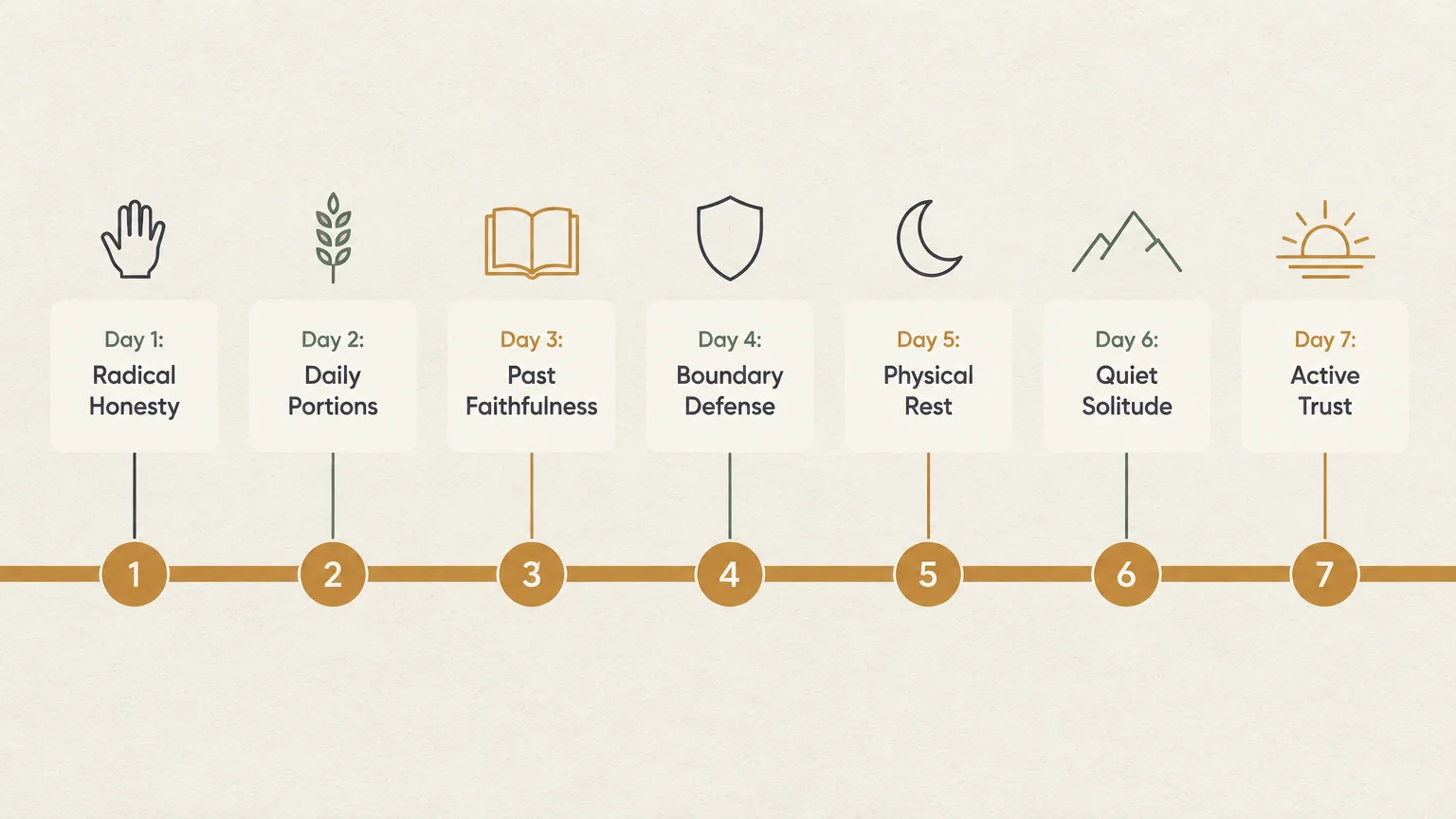
A Seven-Day Pathway to Rebuild Spiritual Strength
Rebuilding your confidence requires consistent, gentle steps over time. Use this simple daily progression in prose to renew your focus during stormy periods.
Approach this sequence as an experiment in quiet restoration. You do not need to perform each task perfectly to experience real emotional benefit.
On Monday, dedicate fifteen minutes to honest lament. Write down every raw disappointment without filtering your words or judging your emotions.
On Tuesday, audit your daily information intake. Limit sensational news and stressful social media to give your mind a quiet sanctuary.
On Wednesday, recall past survival stories from your life. Record three times when unexpected help arrived just as your resources ran dry.
On Thursday, practice the two-column worry exercise. Surrender external outcomes to divine sovereignty while claiming responsibility for your present actions.
On Friday, reach out to one trusted friend or spiritual mentor. Request prayer without feeling pressured to pretend that everything is going well.
On Saturday, spend twenty peaceful minutes walking in nature. Notice details of God’s creation, observing how birds and trees rest in steady provision.
On Sunday, rest completely from problem-solving efforts. Allow yourself to nap, read comforting scriptures, and release all striving for a single day.
Reflect on your emotional state at the end of the week. Notice any subtle increases in peace, gratitude, or quiet clarity.
Frequently Asked Questions About Faith During Hardship
Is it normal to feel angry with God during deep loss?
Yes, anger is a common and natural phase of the grieving process. Biblical figures frequently expressed deep confusion and intense frustration to God without facing rejection.
Directing your honest anger toward God keeps communication open. Divine love possesses sufficient strength to hold your bitter tears and painful questions.
How do I separate realistic caution from a lack of faith?
Prudence and faith work together rather than opposing each other. Taking practical steps to protect your finances, health, or family honors divine wisdom.
Faith does not mean ignoring reality or taking reckless chances. You demonstrate authentic faith by making wise choices while trusting God with the ultimate results.
What should I do when prayer seems to bring no answers?
Silence does not indicate divine absence or personal abandonment. When words fail, rest quietly in contemplative silence or let trusted friends pray on your behalf.
You can also read existing prayers from historical liturgies or psalms. Borrowing ancient words carries your spirit when your own voice feels entirely exhausted.
How can I tell genuine spiritual peace from wishful thinking?
Wishful thinking denies painful reality and demands a specific, immediate outcome. In contrast, genuine spiritual peace acknowledges real suffering while providing quiet inner calm.
Confirmation bias occurs when you only notice details that support what you want. True spiritual peace steadies your soul even when outer conditions remain difficult.
Can counseling work alongside spiritual prayer?
Yes, professional therapy complements private spiritual devotion effectively. Mental health counselors provide practical tools to process trauma, resolve anxiety, and regulate your nervous system.
Engaging a licensed therapist while maintaining regular prayer allows you to heal holistically. This combination supports both your psychological well-being and your spiritual growth.
Moving Forward With Quiet Confidence
Walking through profound difficulty changes you, but it does not need to break you. Trusting God in hard times is a daily practice rather than a one-time achievement.
Give yourself permission to move slowly through painful chapters. Genuine spiritual growth often happens in unseen, quiet moments of endurance rather than sudden dramatic breakthroughs.
Begin this week by selecting one actionable practice from this guide. Track your emotional stress in a quiet journal, and verify your personal boundaries with care.
Cultivate patience with yourself as you navigate complex feelings. Spiritual healing unfolds gradually, giving you greater resilience with each passing day.
Embrace each morning as an invitation to receive fresh patience. When you release outcomes to divine care, you discover enduring strength for every step ahead.
Compliance and Support Disclaimer
This article provides educational and inspirational encouragement only. It does not provide medical, psychological, financial, or legal advice.
If you struggle with severe depression, overwhelming grief, or persistent anxiety, seek guidance from a licensed mental health professional or trusted pastoral counselor.
If you or someone you know faces an acute mental health crisis, contact local emergency services or national crisis lines immediately for professional support.