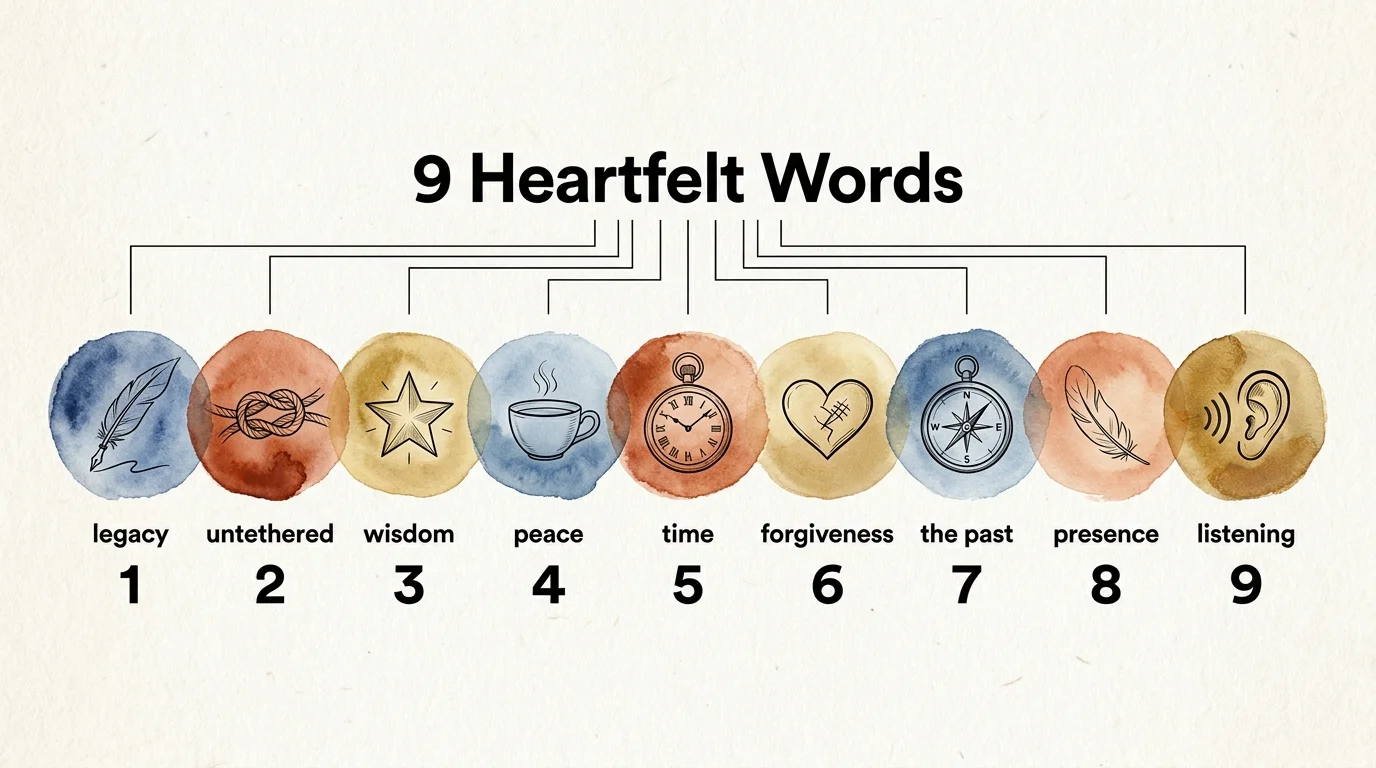
9 Heartfelt Words for a Lost Senior Parent

1. “Your legacy is still being written, and I am here to witness it.”
An aging parent frequently feels that their useful years have passed and their life story has completely concluded. Reminding them that their influence continues to shape the world provides immediate emotional relief.
Active witnessing helps rebuild their fragmented self-worth; you give them permission to exist comfortably in the present rather than dwelling solely on past achievements. This validation encourages them to share their current thoughts without feeling like a burden to a younger, busier generation.
Actionable practice: Invite your parent to try a brief journaling prompt this week. Ask them to write down three distinct things they taught you that you now use in your daily adult life. If physical writing proves difficult or frustrating, ask them to share these memories over a quiet cup of tea.
This exercise shifts their focus toward their enduring impact and creates a tangible record of their ongoing legacy.

2. “It makes sense that you feel untethered right now.”
Direct validation acts as a remarkably powerful grounding tool for a lost senior parent. Many older adults mask their confusion or sadness because societal expectations suggest they should have life completely figured out by retirement. Acknowledging their disorientation without rushing in to fix it drastically reduces their anxiety.
It fosters an environment of deep emotional safety where they do not have to perform bravery.
Safety cue: Watch out for the temptation to offer toxic positivity when they express sorrow. Phrases like “everything happens for a reason” or “just look on the bright side” often shut down authentic communication and dismiss their genuine pain. Stick to validating their current reality to keep the conversational door securely open.

3. “I value your wisdom today just as much as I ever did.”
Physical decline frequently makes an aging parent feel like a dependent rather than a dynamic contributor to the family structure. By actively soliciting their opinions on modern dilemmas, you reinforce their intellectual and emotional value.
This simple phrase reassures them that their vast life experience remains highly relevant, regardless of their current mobility or energy levels.
Actionable practice: Bring a specific, low-stakes problem to them for consultation. Ask for their perspective on a garden layout, a recipe modification, or a minor interpersonal issue at your workplace. Listen attentively to their advice, confirming that their thoughtful guidance still carries substantial weight in your daily decision-making.

4. “Let us find a small moment of peace together today.”
Anxiety about the future or rumination about the past often consumes a senior parent feeling lost in life. By inviting them into a shared moment of peace, you pull their focus back to the immediate present. This gentle redirection breaks the cycle of negative thinking without demanding that they suddenly feel joyful or energetic.
Actionable practice: Practice a simple five-minute mindful breathing exercise together. Sit quietly in a comfortable room, focus on the sensation of breathing in and out, and notice the sounds around you. Alternatively, try guided imagery—a gentle relaxation technique where you systematically visualize a calming environment to reduce stress.
A shared, silent activity builds a powerful bridge of connection without the pressure of forced conversation.

5. “You do not have to have everything figured out right now.”
Seniors sometimes experience immense internal pressure to project an image of serene wisdom. Relieving them of this burden allows them to explore their doubts, fears, and spiritual questions openly. Letting them know that ambiguity is a completely acceptable state of being gives them room to breathe and process their life transitions naturally.
Safety cue: When older adults search intensely for answers to life’s mysteries, they sometimes encounter confirmation bias. Confirmation bias is our brain’s habit of filtering information to support our pre-existing beliefs while ignoring contrary evidence.
Gently remind them that not every question requires an immediate, definitive answer, which protects them from seeking hasty conclusions from questionable spiritual practitioners.
6. “I forgive past misunderstandings, and I ask for your forgiveness too.”
As individuals age, they frequently perform a life review, meticulously analyzing past mistakes and strained family dynamics. Unresolved guilt acts as a heavy anchor, dragging down their current emotional wellbeing. Offering a mutual exchange of forgiveness cleanses the relational slate and removes a significant barrier to their inner peace.
Actionable practice: Introduce the essence of Ho’oponopono, an ancient Hawaiian practice of reconciliation featuring four specific phrases: “I am sorry, please forgive me, thank you, I love you.” You do not need to explain the entire tradition; simply incorporate the sentiment into a quiet conversation. Acknowledging mutual imperfections fosters immense relief and deepens your bond.

7. “Tell me about a time you overcame feeling adrift in the past.”
Life transitions often induce temporary amnesia regarding our own resilience. When you ask a lost senior parent to recall previous hardships they successfully navigated, you help them access their internal reservoir of strength. Narrative reflection reminds them that they have survived profound disorientation before and possess the inherent tools to survive it again.
Actionable practice: Use a storytelling prompt during your next visit. Ask them to describe their first year of marriage, their transition into a new career, or a major geographical move.
Highlighting the specific strategies they used to find their footing in the past empowers them to apply those exact same coping mechanisms to their present situation.

8. “Your presence is enough; you do not need to perform or produce.”
Many seniors grew up in eras that strictly equated personal value with constant productivity, professional output, and relentless caregiving. When those roles diminish, their self-esteem plummets. Reassuring an aging parent that their fundamental worth lies simply in their existence dismantles decades of deeply ingrained, conditional self-worth.
Actionable practice: Dedicate an afternoon strictly to shared leisure without any underlying agenda. Watch a familiar movie, look through old photographs, or sit on the porch listening to nature. Verbally affirm that simply sharing space with them brings you joy, completely untethered from any tasks they might accomplish.
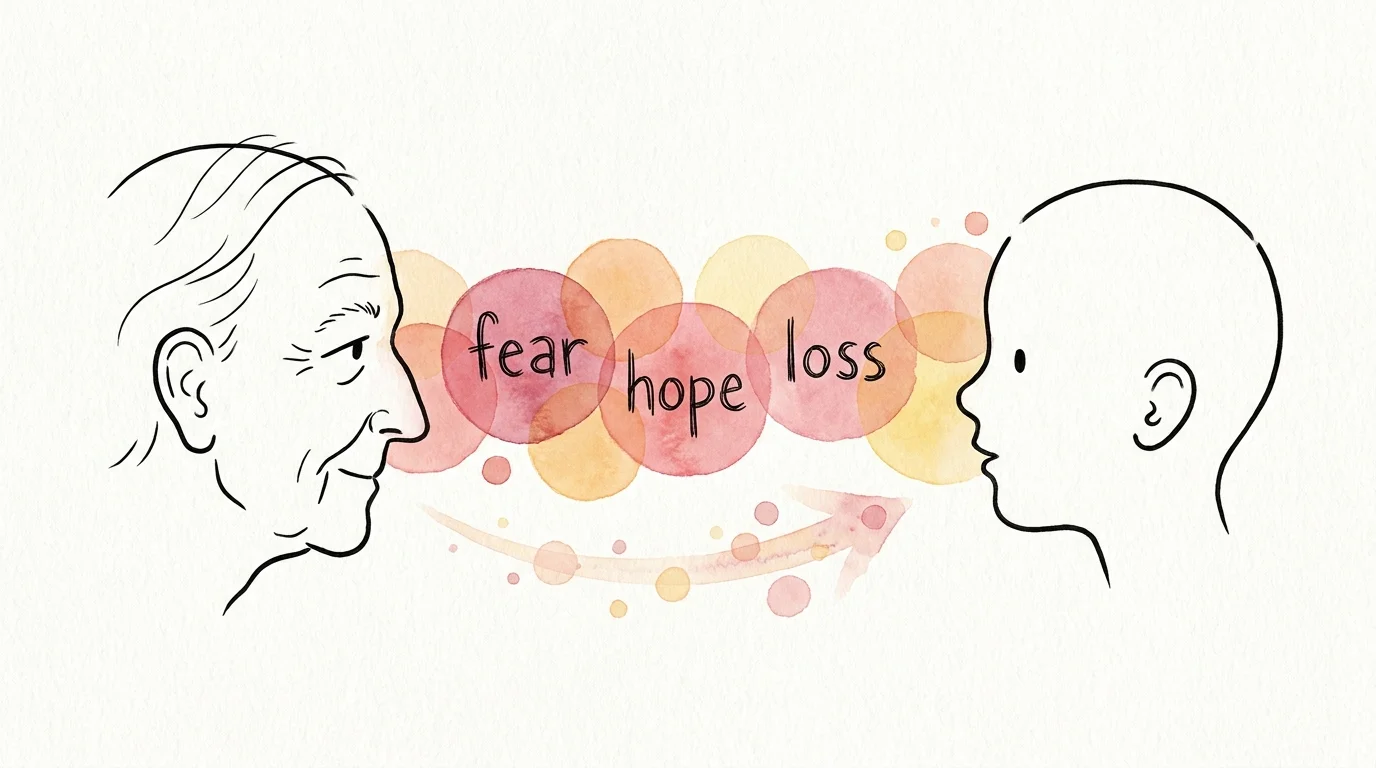
9. “I am listening, even to the parts that are hard to say.”
Seniors grappling with end-of-life anxieties, spiritual visitations, or complex grief often self-censor because they fear appearing morbid or irrational to their children. Extending an unconditional invitation to share difficult thoughts validates the entirety of their human experience. It ensures they do not have to carry their heaviest existential burdens in absolute isolation.
Safety cue: Pay close attention to the nature of their difficult disclosures. Distinguish between normal existential reflection and signs of clinical depression.
If they express persistent hopelessness, an inability to find joy in previously cherished activities, or a desire to hasten the end of their life, it is time to gently involve a licensed mental health professional.