Understanding How We Process and Remember Goodbyes
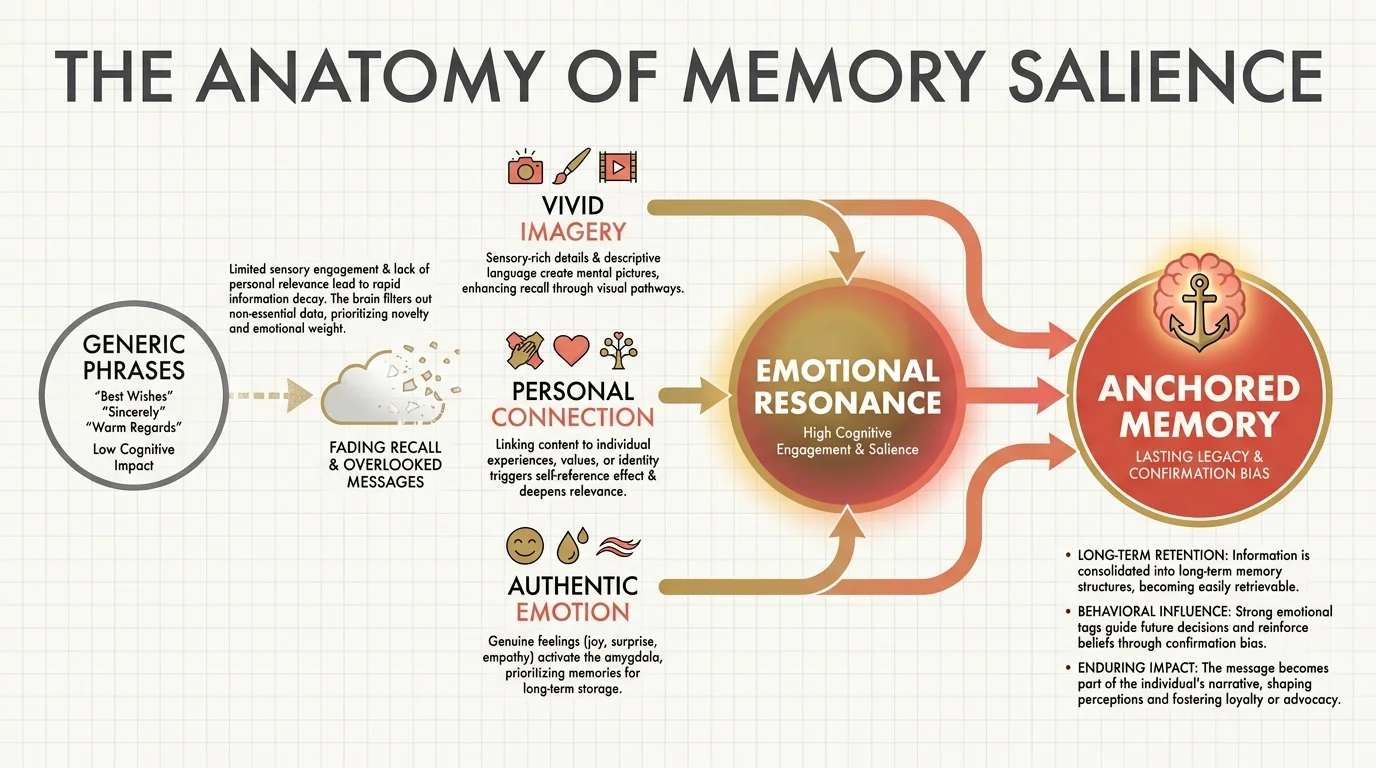
Human memory does not record events like a video camera; instead, it relies heavily on emotional resonance. Cognitive scientists refer to this as memory salience. We remember the moments, interactions, and words that evoke strong feelings. A generic phrase like wishing you the best fades quickly because it lacks the specific emotional anchors required to stick in the mind. Meaningful retirement card messages succeed precisely because they utilize vivid imagery, personal connection, and authentic emotion to bypass our tendency to forget the mundane.
When you sit down to draft your message, you might encounter a psychological phenomenon known as confirmation bias. In this context, the retiring individual might selectively look for evidence that their career mattered. If they read a card filled with specific examples of their impact, their brain actively accepts and reinforces this positive self-view. Your words literally help shape the narrative they construct about their life legacy. Offering a thoughtful testament to their character gives them tangible proof of their professional and personal worth.
To safely explore how memory and aging intersect, you can review extensive public health information through the NIH. Understanding the aging brain reminds us that older adults highly value emotional regulation and positive social connections. Keeping your language calm, specific, and deeply appreciative aligns perfectly with their natural developmental focus. You provide a gift of emotional clarity that they can revisit whenever they feel unmoored in their new chapter.