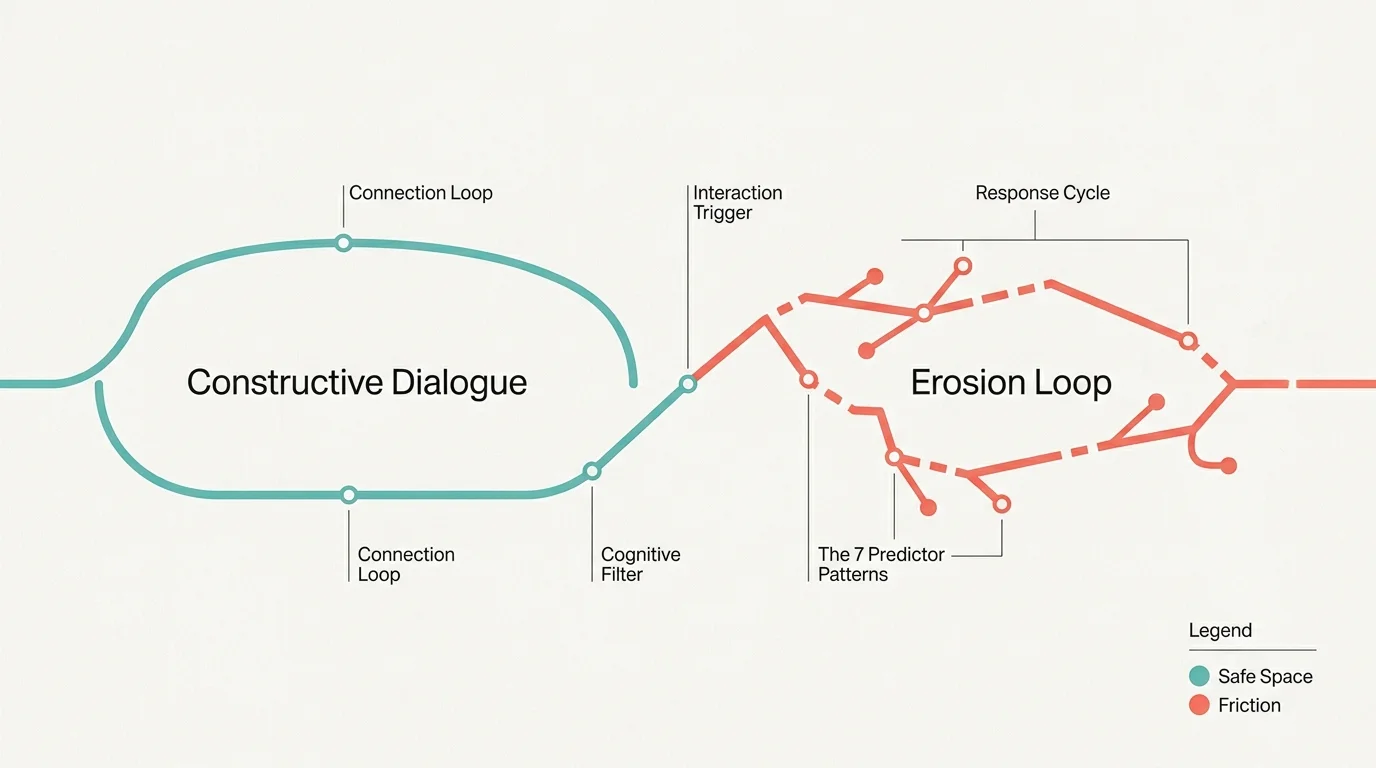
7 Communication Patterns That Predicts Divorce
Relationship experts identify specific habits that destroy marital bonds. These communication patterns predict separation with high accuracy. Understanding them helps you protect your partnership.
Here are the primary behaviors to monitor in your marriage. Addressing these issues requires honesty and consistent effort. You can transform your relationship by changing these interactions.
1. Criticizing Your Partner’s Character
Criticism attacks the core identity of your spouse. It differs from offering a basic complaint. A complaint addresses a specific action or event.
Criticism often includes absolute words. You might use terms like always or never. This language makes the listener feel attacked.
Absolute language rarely leads to productive problem resolution. It forces your partner into a defensive posture. They stop listening to your underlying message.
Try this simple journal prompt tonight. Write down one recent criticism you directed at your partner. Rewrite it as a gentle request for a behavior change.
2. Relying on Defensive Responses
Defensiveness occurs when you feel unjustly accused. You might play the victim during an argument. This strategy redirects the blame toward your spouse.
This reaction dismisses the concerns of your partner. A defensive person responds to complaints with counter-complaints. This habit prevents the original issue from reaching resolution.
This hidden insecurity drives the urge to deflect responsibility. Taking responsibility interrupts the cycle of defensiveness. You do not need to accept complete blame.
Practice a mindful check-in during your next argument. Pause and take one deep breath. Ask yourself if you can validate any part of their statement.
3. Showing Contempt and Disrespect
Contempt represents a destructive divorce predictor. It involves communicating from a position of superiority. This behavior conveys deep disgust toward your spouse.
Sarcasm is a common manifestation of contempt. Name-calling also falls into this destructive category. Eye-rolling destroys emotional safety quickly.
It leaves the targeted partner feeling worthless. Overcoming this pattern requires a shift in perspective. Building a culture of appreciation counteracts marital contempt.
Start a daily gratitude exercise this week. Identify one small thing your partner did well today. Tell them directly why you appreciate that action.
4. Stonewalling During Conflict
Stonewalling happens when one person withdraws completely. The listener stops responding to their partner. They might look away during a heated conversation.
They might also remain entirely silent. This pattern usually results from physical flooding. The stonewalling partner feels overwhelmed by the conflict.
The silent treatment is used as deliberate punishment. You must practice self-soothing to stop stonewalling. Recognize the physical signs of rising tension.
Use this safety cue to manage arguments. Agree on a neutral signal to pause the conversation. Wait twenty minutes before resuming the discussion.
5. Experiencing Negative Sentiment Override
Negative sentiment override darkens your view of the marriage. You interpret neutral statements as personal attacks. Positive actions get dismissed as random anomalies.
This psychological state makes conflict resolution difficult. Both partners assume the worst intentions in each other. Minor disagreements turn into major battles rapidly.
Restoring positive sentiment requires small gestures of affection. You must intentionally notice neutral interactions. This effort slowly rewires your relational perspective.
Try a mental reframing habit for three days. Catch yourself assuming a negative motive in your spouse. Force yourself to list one positive motive instead.
6. Using Harsh Startups for Discussions
The first three minutes dictate a conversation outcome. A harsh startup begins with intense negativity. It might also begin with direct blame.
This approach triggers defensiveness in the listener immediately. Couples use harsh startups when they feel ignored. The built-up frustration explodes into a demanding confrontation.
They spend the conversation trying to protect themselves. A soft startup ensures a productive dialogue. You should approach the topic with a calm tone.
Practice writing a soft conversation opener. Use a formula stating how you feel and what you need. Read it aloud to ensure it sounds neutral.
7. Failing to Accept Repair Attempts
Repair attempts are efforts to de-escalate tension. They can include a brief joke. They might also include a simple apology.
These gestures aim to prevent the conflict from spiraling. Couples headed for divorce ignore these olive branches. They remain focused on winning the argument.
You need to see the effort your partner is making. This willingness to yield protects the long-term relationship. Successful couples notice these small bids for peace.
Monitor your next disagreement for repair attempts. Notice if your partner tries to lighten the mood. Choose to accept the gesture and lower your guard.