
Trusting your gut can save you from emotional turmoil when navigating new relationships, friendships, or business connections later in life. You possess decades of lived experience; your brain constantly scans your environment to compare new people against past interactions. This subconscious processing often reveals itself through intuition warning signs before your logical mind spots any glaring red flags. Understanding how to decode these psychological instincts allows you to set healthier boundaries and protect your peace of mind. Here you will learn how to identify physical and emotional cues, separate genuine warnings from anxiety, and apply practical steps to safeguard your well-being while honoring your deeply rooted wisdom.
The True Nature of Relationship Intuition
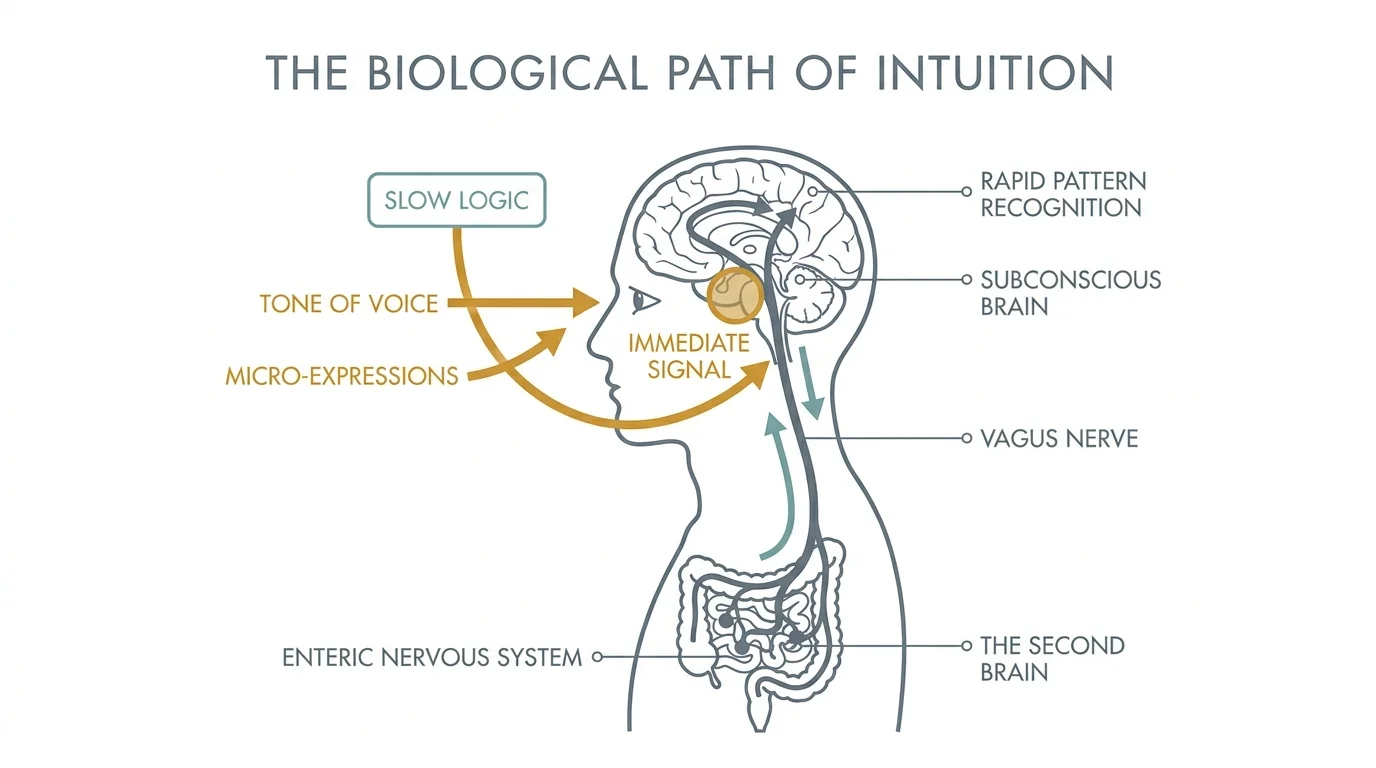
Intuition often feels deeply spiritual or mysterious, yet it rests on a solid foundation of human biology and psychology. When you meet someone new, you do not just listen to their words; you absorb their tone of voice, their micro-expressions, and their body language. Your brain processes millions of sensory inputs per second, while your conscious mind only handles a tiny fraction of that data. The rest filters down into your subconscious.
Many cultures throughout history revere this inner voice as a spiritual guide, an ancestral whisper, or a form of divine protection. Today, researchers often describe intuition as rapid pattern recognition. Your mind instantly cross-references a new acquaintance with your lifetime catalog of memories, successes, and hurts. When the new person exhibits traits resembling someone who previously caused you harm, your brain sounds an alarm. It bypasses slow, deliberate logic and sends immediate signals directly to your body.
You might have heard of the enteric nervous system—the complex network of neurons lining your gastrointestinal tract. Scientists frequently call it the second brain. This biological reality explains why trusting your gut is not just a metaphor. When your brain detects subtle relationship red flags, it sends signals via the vagus nerve directly to your stomach, creating that familiar sinking feeling or sudden flutter of unease long before you can articulate why you feel unsafe.