
Understanding the connection between your early years and your present self offers a profound roadmap for emotional healing and self-compassion. Recognizing how childhood shapes personality helps you make sense of long-standing habits, relationship patterns, and emotional triggers. Developmental psychology effects reveal that the environment you navigated as a child laid the foundation for your adult worldview, attachment style, and coping mechanisms. Unpacking these experiences does not mean blaming the past; rather, it provides a gentle opportunity to untangle automatic reactions and consciously choose healthier responses. Whether you seek to heal old wounds or simply desire deeper self-understanding, exploring these formative years empowers you to embrace your authentic self with grace and newfound clarity today.
The Psychology Behind Your Formative Years
As you accumulate life experience, it is entirely natural to look back and wonder how you became the person you are today. Many individuals in their later years find themselves engaging in a life review, a process of reflecting on early memories to find meaning and coherence in their personal history. The field of early experiences psychology offers a comforting framework for this reflection. It suggests that your brain developed its most fundamental wiring during your first decade of life. The way caregivers responded to your cries, the atmosphere of your home, and the social dynamics you navigated all served as a blueprint for your developing mind. This blueprint quietly dictates how you perceive safety, trust, and connection in your adult life.
Sometimes, what feels like an ingrained personality trait is actually a highly practiced coping mechanism. If you grew up in an environment where you had to be constantly vigilant, you might identify as an anxious or highly sensitive adult. Conversely, if your early environment was emotionally distant, you might consider yourself fiercely independent or self-reliant. These adaptations were brilliant survival strategies created by a resilient child. Recognizing this distinction is a vital step in learning how childhood affects adults. It allows you to view your current behaviors through a lens of profound self-compassion rather than harsh self-criticism.
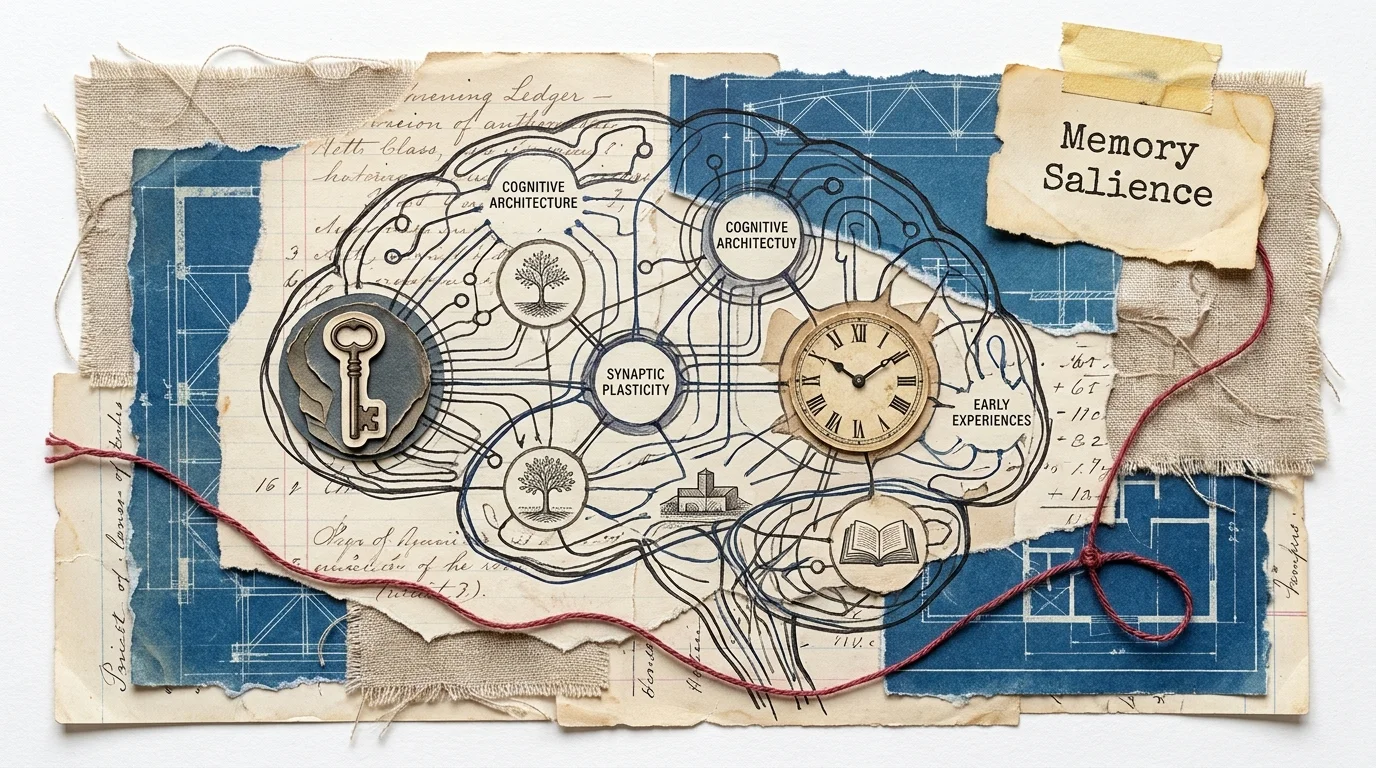
You may also notice that certain memories stand out with vivid clarity while others fade entirely. This phenomenon involves memory salience, a cognitive pattern where the brain selectively encodes events that carried intense emotional weight. Your mind naturally highlights these highly charged moments as reference points for future survival and decision-making. While some individuals interpret these recurring memories as spiritual messages or karmic lessons regarding their life path, grounded psychology views them as the brain attempting to resolve unfinished emotional business. Both perspectives can coexist peacefully. You can honor the deep personal meaning of your life story while also using practical psychological tools to process the emotions tied to those memories.