Understanding the types of friends you need transforms how you navigate life changes. Identifying these roles helps you build a supportive network today. Building strong friendships later in life protects your mental health. Research shows social connection lowers your daily stress hormones. These bonds also promote physical longevity. As you enter new life phases, your social relationships must evolve. This guide explores the diverse roles friends play in our routines. You will discover friendship advice to nurture healthy dynamics. Recognizing these social bonds lets you evaluate your current circle with clarity. Embracing different friend archetypes ensures reliable support when you need it most.
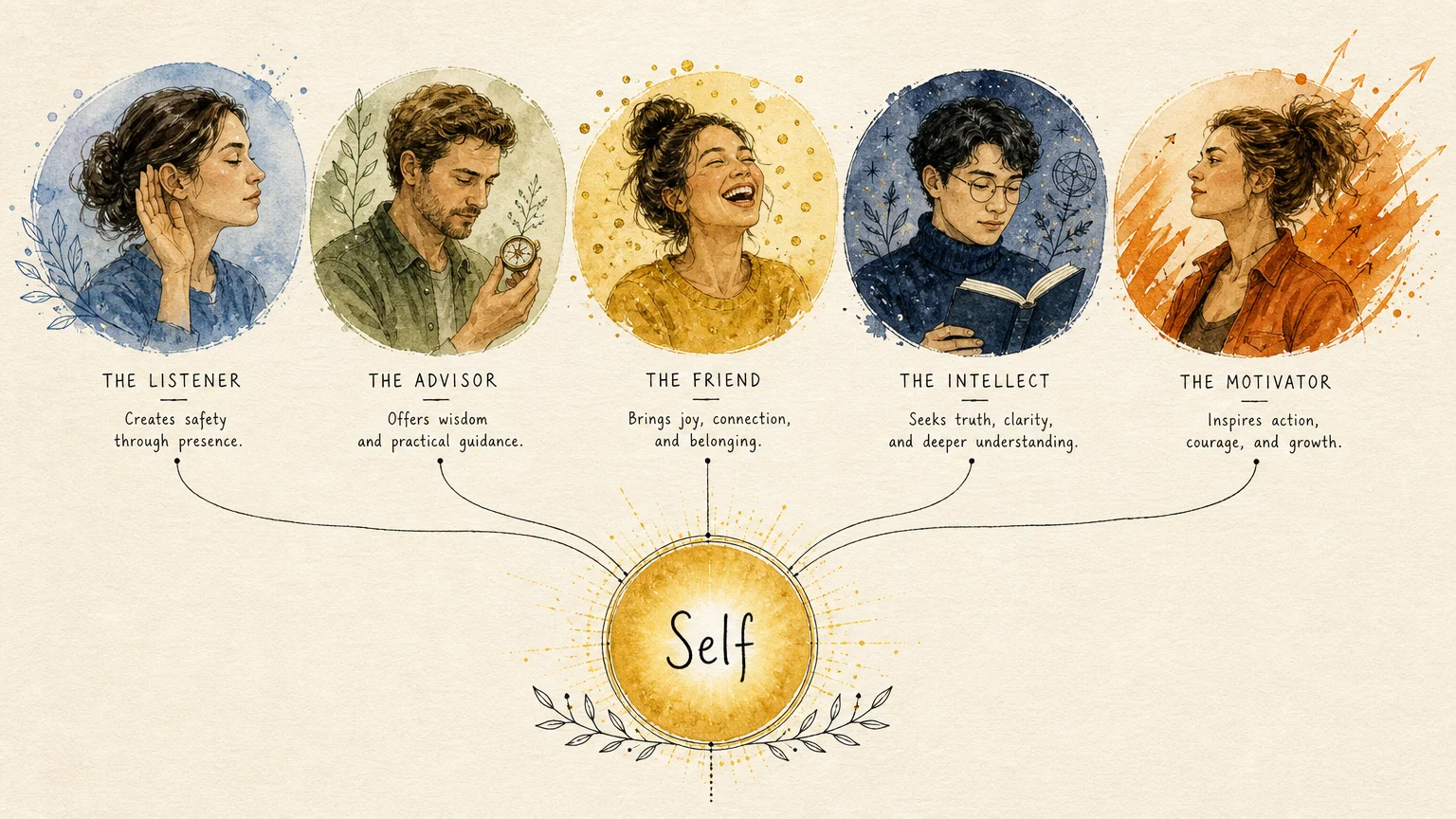
The Core Idea of Friendship Archetypes
Human connections serve different psychological needs. No single person can fulfill every relational requirement. Friendship archetypes categorize these distinct social roles.
Ancient philosophies often grouped human bonds by their specific purpose. Modern psychology validates this diverse approach to relationships. Building strong friendships requires recognizing these varied functions.
Many people expect their best friend to do everything. This unrealistic expectation causes unnecessary friction. Dividing your emotional needs across a community prevents burnout.
You might notice pattern-seeking behavior in your social choices. Your brain categorizes people to simplify complex social dynamics. This cognitive shortcut helps you navigate relationships efficiently.
Understanding these types of friends brings immense clarity. You stop demanding practical advice from your joyful friends. You learn to appreciate each person’s unique contribution.
Consider the historical context of village living. Communities naturally distributed emotional labor among many individuals. Modern society isolates us, making intentional community building vital.